There is a particular kind of exhaustion that comes from moving too fast — from ticking off cathedrals and piazzas at a pace that leaves no room for the smell of bread from a side-street bakery, or a conversation with an elderly man playing chess outside a taberna. Travelers who have felt this fatigue are discovering something the guidebooks rarely feature prominently: that slowing down, staying longer, and choosing the overlooked over the obvious isn't a compromise — it's the whole point.
The Philosophy Behind Staying Put
Slow travel, at its core, is a deliberate rejection of itinerary maximalism. Rather than spending one or two nights in each destination, slow travelers commit to a village or small town for a week, a fortnight, or even longer. The approach has deep roots in the European literary tradition — writers and artists have long retreated to rural Provence, the Alentejo plains of Portugal, or the hill towns of Umbria not as tourists but as temporary inhabitants. What distinguishes slow travel is the intention to participate in daily life rather than observe it from a distance, and that shift changes everything about how a place is experienced.
Choosing Villages Over Tourist Centers
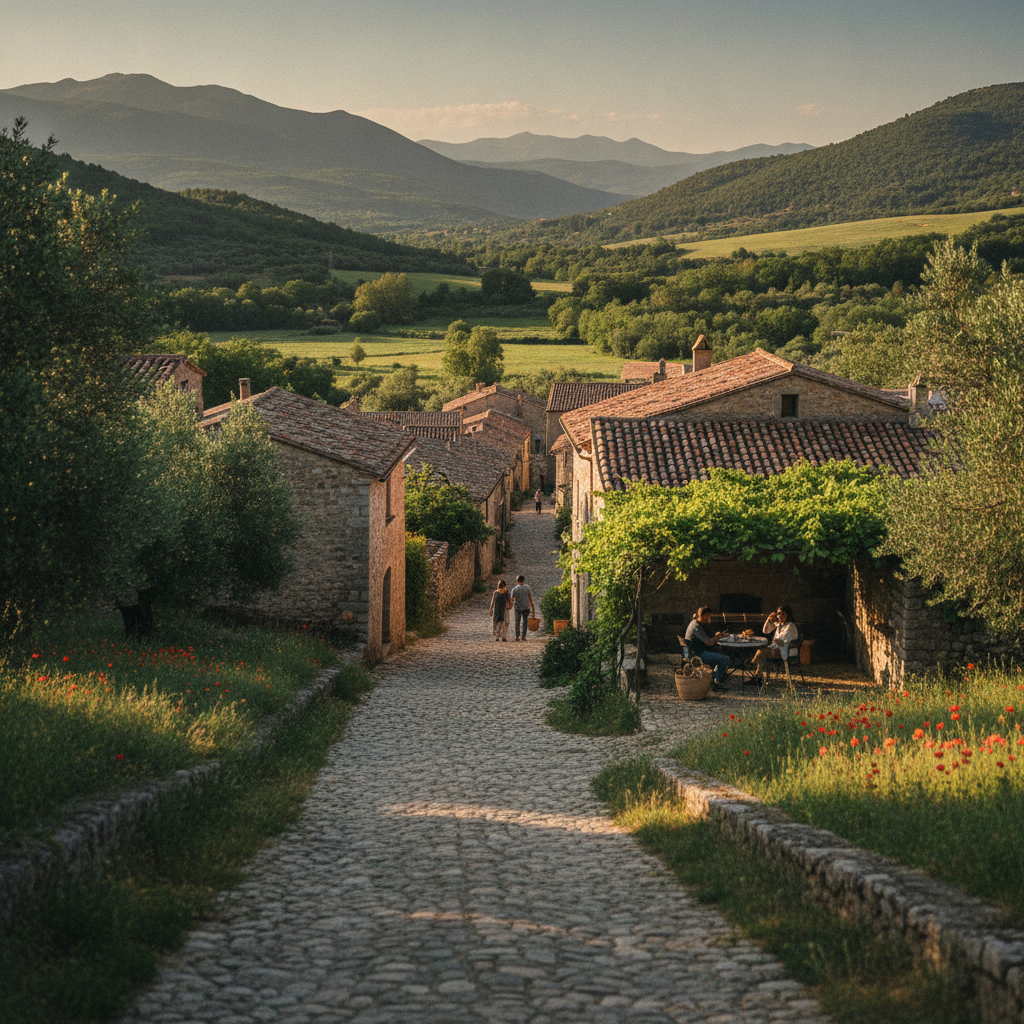
The economic logic of avoiding well-trodden cities is straightforward, but the cultural rewards are harder to quantify. In places like Civita di Bagnoregio in central Italy, Sistelo in northern Portugal, or the limestone villages of the Luberon in southern France, accommodation costs a fraction of what they do in Florence, Lisbon, or Marseille. Weekly rentals through platforms like Airbnb or local agencies often include a kitchen, which changes the entire financial structure of a trip — meals cooked with ingredients from a morning market bear no resemblance, in cost or quality, to tourist-menu restaurant dining. The weekly rental model also encourages a rhythm of living rather than sightseeing.
The Economics of Longer Stays
Staying in one place for an extended period restructures nearly every category of travel spending. Transportation costs fall sharply when there's no daily movement between cities; a single train ticket or a modest car rental spread across two weeks becomes nearly negligible per day. Landlords and small guesthouses, particularly in off-season months, frequently offer informal discounts for longer commitments — the kind of arrangement that emerges from a direct email rather than a booking app. Grocery shopping at local mercados, preparing simple meals, and eating lunch at the one trattoria or tasca where locals actually eat rather than tourists drift are habits that compound into significant savings over time without any feeling of deprivation.
Learning the Rhythms of Local Life
One of the most underrated aspects of slow travel is what happens when the pressure to see things lifts. The siesta — the midday rest observed in much of southern Europe — stops feeling like an inconvenience and starts feeling like an invitation. The passeggiata, the Italian tradition of an evening stroll through the village center, becomes a natural anchor to the day. In these moments, travelers stop being spectators and start being participants, however imperfectly. Language barriers soften over time; a few words of Italian, Portuguese, or French, practiced daily at the same café or market stall, open doors that no phrasebook can quite reach. The village begins to feel, in a modest way, like somewhere one belongs.
Navigating Seasonal Timing for Better Value
Timing matters enormously in slow travel, and the shoulder seasons — roughly March through May and September through November across most of Europe — offer conditions that high season rarely provides. Prices drop, crowds thin, and the texture of village life becomes more authentic when it isn't performing for summer tourism. In a place like Alberobello in Puglia, or the medieval streets of Óbidos in Portugal, visiting outside of peak months means sharing a piazza with residents rather than tour groups, and finding accommodation with considerably more flexibility. Weather in shoulder season across southern Europe remains genuinely pleasant, and the quality of light — lower, softer, more golden — rewards anyone traveling with even a passing interest in photography or simply in looking carefully at things.
Building Meaningful Connections Along the Way
The relationships that slow travel makes possible are qualitatively different from those formed on a fast itinerary. A week at the same agriturismo — an Italian farmstay that often includes home-cooked meals and a working farm — is enough time to learn something real about the family running it, the land they tend, and the food they produce. Returning each morning to the same baker, the same market vendor, or the same square creates the small continuities from which genuine connection grows. These encounters rarely produce lasting friendships in a dramatic sense, but they consistently produce something travelers describe as the most memorable part of the experience — a sense of being, briefly, known somewhere.
Making the Shift to Slow Travel
For those ready to try a different way of moving through Europe, the practical starting point is simple: choose one region rather than one country, and resist the temptation to fill every day. Research lesser-known villages using resources like the *I Borghi più belli d'Italia* — Italy's official list of its most beautiful small towns — or Portugal's Aldeias Históricas network, which preserves and promotes its historic villages. Book accommodation directly when possible, stay for at least a week, and set a loose intention rather than a rigid schedule. Let the days take shape around what's available — the morning market, the afternoon light, the conversation that develops slowly over a shared carafe of house wine.
There is a particular kind of exhaustion that comes from moving too fast, and there is, as it turns out, a particular kind of replenishment that comes from stopping. The lesser-known village — with its slower pace, its lower costs, and its quiet willingness to be itself without any performance — offers something that no highlight itinerary can manufacture: the feeling of actually having been somewhere.