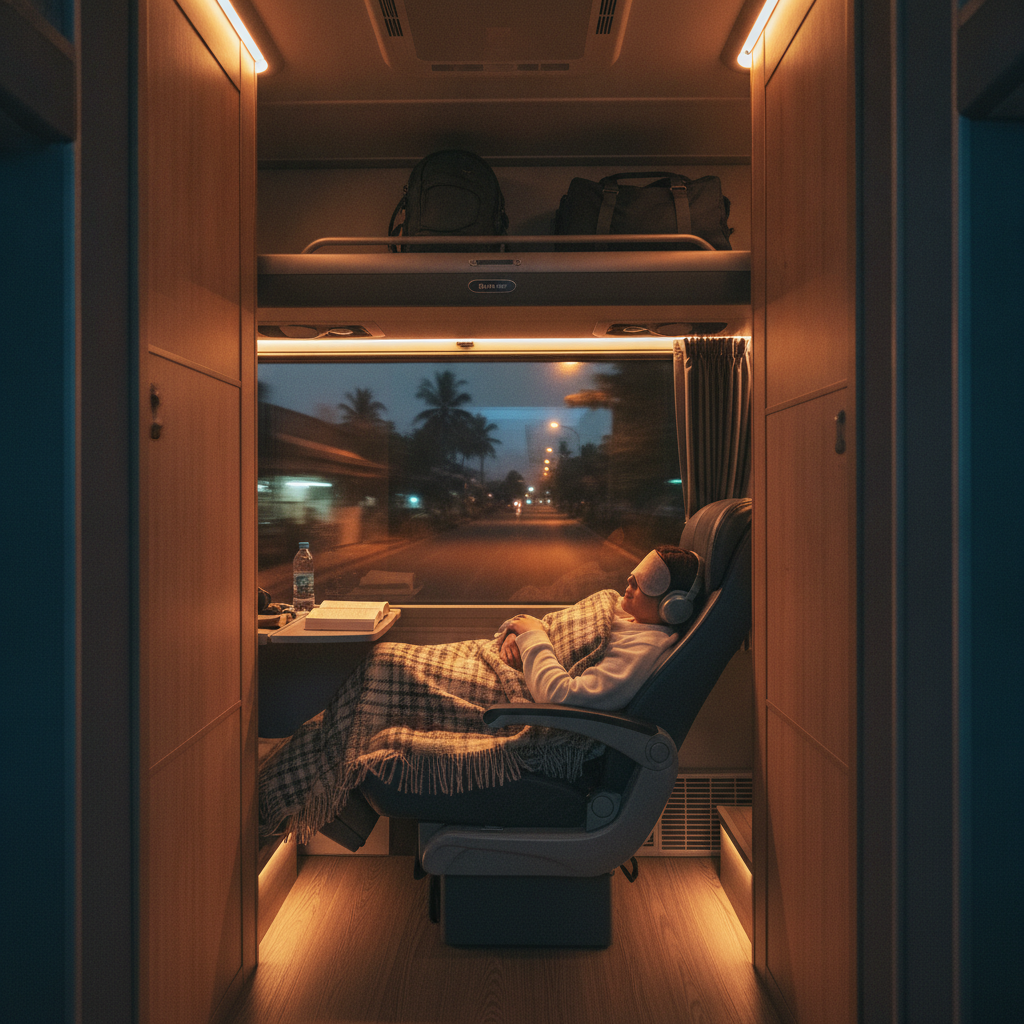
Overnight sleeper buses are one of Southeast Asia's great travel bargains — a way to cover serious ground between cities while saving a night's accommodation cost. From the winding mountain roads between Chiang Mai and Luang Prabang to the long coastal stretches of Vietnam's Highway 1, these buses have carried backpackers and budget travelers for decades. They're genuinely comfortable when you know what to expect, and genuinely miserable when you don't. A little preparation goes a long way.
Book Through Reputable Operators, Not Random Counters
The difference between a decent overnight journey and a chaotic one often comes down to which company you choose. Operators like The Sinh Tourist in Vietnam and Giant Ibis in Cambodia have built real reputations for reliability, cleaner buses, and actual customer service. Booking through 12Go Asia lets you compare routes and read recent reviews across multiple countries in one place. Avoid buying tickets from street-front kiosks with no clear affiliation — they sometimes resell seats on inferior buses at inflated prices. Spending a bit of time on research before departure protects both your comfort and your schedule.
Choose Your Berth Position Carefully
Most sleeper buses in the region offer two-tier bunk configurations, and the choice between upper and lower matters more than you'd think. Lower berths are easier to access during the night and feel less claustrophobic, but they're also the first stop for anyone walking through. Upper berths give you more privacy and a sense of separation from the aisle traffic. If you're a light sleeper, upper is generally the better call. On longer routes through Vietnam, the front upper berth offers a surprisingly cinematic view through the windshield — worth requesting if you can get it.
Secure Your Luggage Before the Lights Go Out
Luggage theft on overnight buses is not rampant, but it does happen, and the moment of maximum vulnerability is while you're asleep at a rest stop. Large bags typically go into the undercarriage storage before departure — take a photo of your bag going in and note what it's surrounded by, so you can confirm it at every stop. Keep your day pack, electronics, passport, and cash with you in the berth. A small combination lock threaded through your bag's zippers adds a meaningful deterrent without any real inconvenience. Treat your valuables as if you're in a busy train station the entire night.
Pack Your Berth Bag the Night Before
The hours between boarding and falling asleep are usually chaotic — the bus is loading, the lights are still on, and everyone is rearranging themselves. If you've already packed a small personal bag with everything you need for the night, that chaos stays manageable. Think earplugs, an eye mask, a light layer for the air conditioning (which tends to run aggressively cold), a phone charger, and a snack. Having it all ready before you board means you're not digging through a full backpack at midnight when the bus is dark and moving. Small prep, big payoff.
Manage Your Expectations Around Sleep Quality
Sleeper buses offer horizontal space, but they're not hotel rooms. Roads through Laos and northern Vietnam in particular involve curves, bumps, and occasional abrupt stops that no amount of padding fully absorbs. Going in with realistic expectations keeps the experience from feeling like a failure. Ear protection and melatonin help considerably, and avoiding heavy meals or alcohol before boarding tends to make the physical experience much more tolerable. Think of it less as a night's sleep and more as a few hours of decent rest — you'll arrive functional, if not fully refreshed.
Arrive at the Drop-Off Point Awake and Alert
Overnight buses in Southeast Asia rarely pull into a proper terminal. More often, you're dropped at a roadside point somewhere on the outskirts of a city, sometimes before dawn, surrounded by waiting tuk-tuk and taxi drivers who are well-practiced at charging disoriented arrivals inflated rates. Knowing roughly where your drop point is in relation to your accommodation before you board lets you make quick, confident decisions on arrival. Apps like Maps.me work offline and are worth downloading with the relevant city map loaded in advance. Being awake and oriented for the last thirty minutes of the journey makes the transition much smoother.
Use Rest Stops Strategically
Most long-haul routes include one or two roadside rest stops, typically lasting fifteen to twenty minutes. These stops exist for bathroom breaks and snacks, but they're also a good moment to stretch, move your luggage claim check from your wallet to your hand, and confirm your bag is still in undercarriage storage. Some travelers skip these stops entirely and sleep straight through, which is fine — but knowing a stop is coming lets you plan around it rather than being startled awake. If you need to use the toilet, go at the stop rather than hoping the bus has a working one onboard.
Know What to Do If Something Goes Wrong
Delays, wrong drop-offs, and the occasional mechanical issue are part of the overnight bus experience in Southeast Asia. Having the operator's contact number saved, knowing the name and address of your accommodation in the local script, and keeping a small amount of local currency accessible (not buried in your bag) covers most scenarios. Giant Ibis, for example, has a functioning customer line and will rebook you if something goes sideways on their end. The goal is to have just enough backup information that a disruption becomes an inconvenience rather than a crisis. Most issues resolve faster than they feel like they will in the moment.
Overnight sleeper buses reward the travelers who treat them like what they are — functional, affordable, occasionally bumpy transit tools with a few quirks worth knowing in advance. Get your berth right, keep your valuables close, and set your expectations at a sensible level. You'll arrive at the other end with a story or two and your luggage intact.