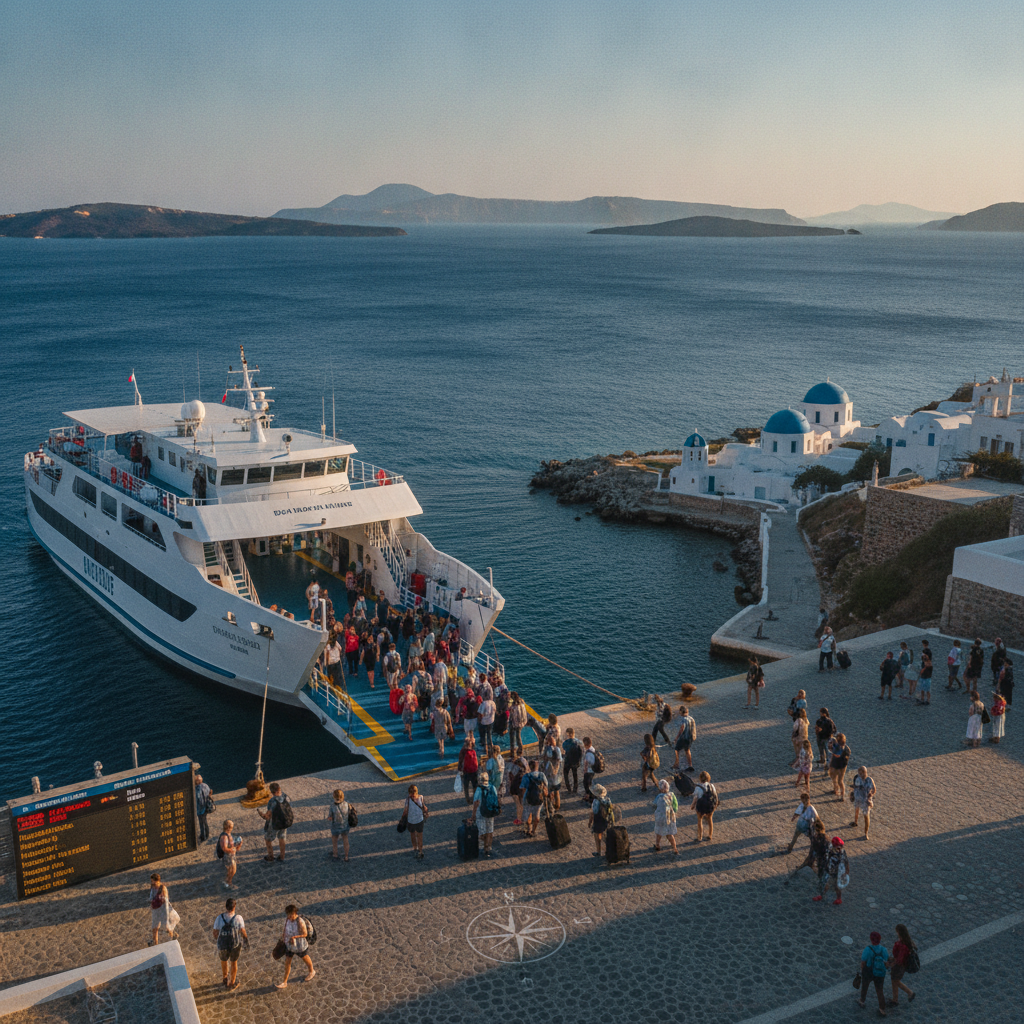
The Greek island ferry system is one of travel's great improvisational playgrounds — a web of routes, schedules, and ports that rewards flexibility more than meticulous planning. If you've been staring at your laptop trying to lock down every crossing weeks in advance, take a breath. While some pre-booking makes sense, treating every hop as a commitment you can't change robs the islands of their best quality: the freedom to follow the wind.
The good news is that with a few smart habits, you can move through the Aegean with confidence and very little advance paperwork.
Start With a Skeleton Itinerary, Not a Rigid Plan
The most useful thing you can do before leaving home is sketch out a rough arc — not a timetable. Know which island you're starting from, which direction you're heading, and roughly how many days you have. That's enough. Piraeus, the main port near Athens, is your most logical starting point for most routes, and understanding its layout before you arrive saves genuine confusion. Choose two or three must-see islands and treat everything else as optional additions that depend on weather, mood, and what a fellow traveler mentions over coffee.
Learn the Difference Between Ferry Types
Not all ferries in the Greek islands move at the same speed or cost the same money, and knowing the difference matters. Conventional ferries — large, slow, often overnight — are the workhorses of the network and handle most inter-island routes. High-speed catamarans, operated by companies like SeaJets and Hellenic Seaways, cut crossing times dramatically but cost more and are far more sensitive to wind conditions. During peak summer months, the catamarans fill quickly on popular routes like Santorini to Mykonos. For less-traveled routes in the Cyclades or Dodecanese, a conventional ferry with a deck seat is often the only option — and honestly, one of the best ways to experience island life.
Use Ferryscanner or Openseas to Check Routes on the Fly
You don't need to plan from home if you have the right tools on your phone. Ferryscanner and Openseas both aggregate schedules and availability across multiple operators, which means you can sit in a café in Naxos, pull up the app, and see what's leaving for Paros or Ios tomorrow morning. The interfaces are straightforward, prices are transparent, and you can often book directly without a fee. Getting comfortable with one of these apps before your trip makes spontaneous decisions feel effortless rather than stressful.
Book Only Your First Night and Arrival Ferry in Advance
There are two moments when pre-booking genuinely protects you: your very first crossing and your first accommodation. Everything after that can remain open. Arriving in a new country with nowhere to stay and no way to get there is a recipe for a rough start — but after that initial landing, you'll have your bearings, you'll know who to ask, and you'll be able to read the pace of local ferry traffic yourself. Pre-booking your departure ferry home also makes sense, especially during August when capacity gets tight on the main routes out of Santorini and Mykonos.
Ask at the Port, Not Just Online
Port agents and small ticket booths near the dock are an underused resource. These are people who know exactly what's sailing today, whether a crossing is likely to be canceled due to Meltemi winds, and which boats are nearly full. The Meltemi — the fierce summer wind that sweeps through the Aegean — can halt or delay catamarans with very little warning, and a local agent will tell you honestly whether tomorrow's fast ferry is a safe bet or whether you'd be smarter booking the conventional option. Apps are useful, but a two-minute conversation at the port often tells you more.
Keep Your Accommodation Flexible for the Middle of the Trip
Mid-trip is where rigid pre-booking causes the most headaches. If you've paid for a non-refundable room on Milos and the morning ferry is canceled, you're stuck managing a mess. Instead, use platforms like Booking.com with free-cancellation filters, or look for smaller family-run guesthouses in island villages that take bookings directly and understand last-minute changes. Owners in smaller spots like Folegandros or Sifnos are often far more flexible than large resort properties, and those islands reward spontaneous visits more than the well-trodden ones do anyway.
Build In at Least One Longer Stay
Moving every one or two days is exhausting and actually costs more when you factor in ferry tickets and the time spent packing, transiting, and settling in repeatedly. Choosing one island where you stay three or four nights gives you a proper base, lowers your overall spending, and creates space for the kind of unhurried exploration that makes Greek island travel feel genuinely restorative. It also gives you a buffer day if weather delays a crossing — which, during high summer, is less a question of if than when.
Embrace the Occasional Unexpected Detour
Some of the best island experiences happen because a direct route wasn't available and you ended up somewhere you hadn't considered. Syros, the elegant capital of the Cyclades, gets far fewer visitors than its neighbors yet sits at one of the busiest ferry intersections in the Aegean. Stopping there for a night because it was the next available sailing is exactly the kind of happy accident that flexible travel is built for. The islands don't all look the same, and the ones that surprise you often leave the deepest impression.
Armed with a loose plan, the right apps, and a willingness to ask questions at the dock, you're already better prepared than most travelers who show up with color-coded spreadsheets and anxiety to match. Pick your first island, book that initial crossing, and let the rest of the Aegean reveal itself as you go.