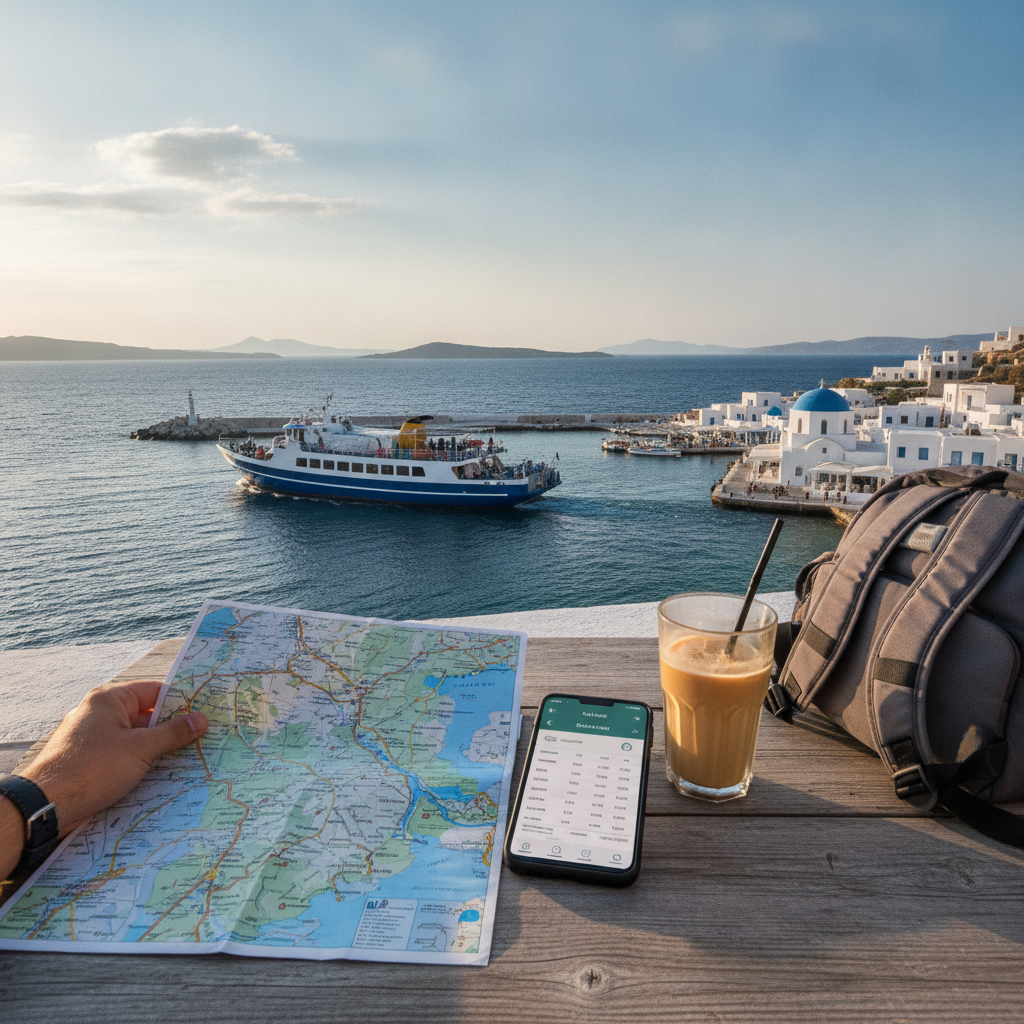
The Greek island ferry system is one of the most rewarding — and most misunderstood — ways to travel in Europe. Thousands of visitors lock themselves into rigid schedules months in advance, convinced that spontaneity is too risky in a region where boats run on unpredictable winds and ancient timetables. The truth is more forgiving. With a little knowledge and a flexible mindset, you can move through the Cyclades, the Dodecanese, or the Ionian islands at your own pace, adapting as you go.
The key is understanding how the system actually works before you step foot on a dock.
Understand the Hub-and-Spoke Logic First
Greek ferries don't run in neat point-to-point lines between every island. They operate through a hub system, where major ports like Piraeus, Heraklion, and Rhodes serve as the main arteries, and smaller islands branch off from there. Once you grasp this, your whole mental map shifts. Instead of searching for a direct route from Milos to Patmos and finding nothing, you'll know to route through Piraeus or check what ferries stop along the eastern Cyclades corridor. Spending an hour with the Ferryscanner or Greek Ferries websites before your trip — not to book, just to study routes — saves a lot of confusion at the port.
Keep Two or Three Nights Loose at Every Stop
The biggest mistake fixed-schedule travelers make is booking accommodation the same night as their ferry arrival. Ferries in Greece run late, get canceled due to Meltemi winds, or simply don't operate on certain days in shoulder season. Give yourself a cushion. When you arrive on an island, secure two nights minimum and treat the third as optional. This approach costs almost nothing extra — last-minute rooms on smaller islands like Folegandros or Tilos are often available and reasonably priced outside of peak August weeks. The buffer also lets you actually enjoy a place rather than spend your last evening watching ferry apps in a panic.
Use Ticket Offices at the Port, Not Just Apps
Apps like Ferryhopper are genuinely useful for checking schedules and booking in advance when you want to. But the port ticket offices — usually a row of small booths right at the dock — carry real-time information that no app updates fast enough to match. Staff there know which boats are actually running that day, which are delayed, and occasionally which ones have open-deck seats not listed online. On smaller islands, talking to the ticketing agent for five minutes can reveal a shortcut route or a boat you didn't know existed. It's one of those situations where analog information is still faster than digital.
Build Your Trip Around Ferry Frequency, Not Just Distance
Two islands can sit close together on a map and still be awkward to connect if ferries only link them twice a week. The Cyclades tend to have excellent connectivity in summer, but the eastern Aegean and some Dodecanese islands thin out quickly by late September. Before falling in love with a particular island sequence, check how frequently ferries run between those specific stops. Ios to Santorini? Multiple boats daily. Karpathos to Kasos? Maybe three times a week. Matching your pace to ferry frequency rather than fighting against it makes the whole trip feel effortless instead of stressful.
Pick One or Two Anchor Islands and Radiate Out
Complete flexibility sounds freeing but can lead to decision fatigue fast. A smarter approach is choosing one or two anchor islands — well-connected hubs with reliable ferry links — and using them as your base for shorter day or overnight trips. Naxos is a great example: it has excellent ferry connections north to Mykonos and Paros, south toward Ios and Santorini, and even east toward Amorgos. You can leave your bags at a guesthouse, hop to a quieter island for a night or two, and return without rebuilding your whole logistics chain. It's a simple structure that keeps options open without chaos.
Travel Tuesday Through Thursday When You Can
Ferry crowds in Greece peak on weekends, especially during July and August when Greek families travel alongside international tourists. Boats that depart Friday evening or Sunday morning can be genuinely packed, with deck space limited and ticket availability tighter. Traveling mid-week usually means calmer boats, more relaxed embarkation, and occasionally lower fares on certain routes. It also means you're arriving on islands during quieter periods, when accommodation options open up and restaurant tables don't require a reservation. Scheduling even one or two legs of your trip on a Tuesday or Wednesday makes a noticeable difference.
Know When Pre-Booking Actually Makes Sense
All this said, spontaneity has its limits. There are situations where booking ahead is genuinely worth it — high-speed catamarans like the Seajet routes fill up quickly because of limited capacity, and overnight ferries with cabin berths on longer routes such as Piraeus to Rhodes or Piraeus to Heraklion sell out days in advance in peak season. Knowing which legs of your trip fall into this category lets you plan strategically: book the one or two critical connections that have real capacity constraints, and leave everything else open. You get the best of both worlds — security where it matters, freedom everywhere else.
Download Offline Maps and Screenshots Before Every Leg
Port towns in Greece vary wildly in cell service quality, and arriving at a small dock in the dark without a downloaded map is more stressful than it needs to be. Before each ferry, take screenshots of your accommodation location, the walking route from the port, and any relevant bus or taxi information. Apps like Maps.me work well offline for Greek island roads, which aren't always detailed on Google Maps. This takes about five minutes per stop and removes a whole category of arrival stress, letting you focus on the part that actually matters — the first look at a new island.
Greek island hopping without a fixed itinerary is genuinely one of the most satisfying ways to travel, and the ferry system rewards people who understand it rather than fear it. Start with a route study, pick your anchors, and let the rest unfold. The boats go where you want to go — you just need to know how to read the timetable.