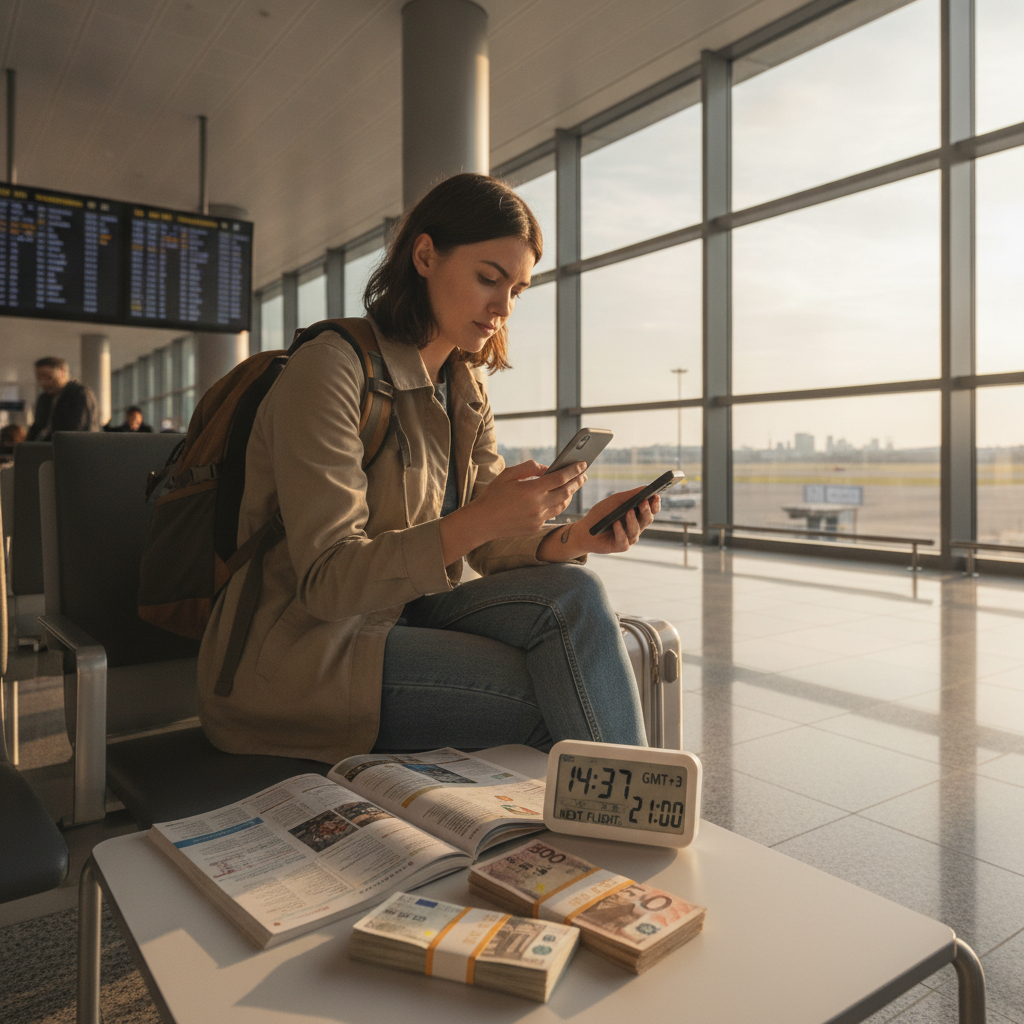
Timing matters more than most travelers realize when it comes to currency exchange — and so do those long airport layovers that most people just try to survive. Together, these two overlooked variables can quietly drain or quietly protect your travel budget, depending on how you handle them. The good news is that both are entirely within your control once you know what to look for.
If you've ever arrived at a destination only to realize you exchanged money at the worst possible rate, or killed six hours in an airport without doing anything useful with your time or money situation, these strategies are worth building into your planning process.
Exchange Currency Before You Hit the Airport Terminal
Airport currency exchange booths are convenient, and that convenience comes at a steep price. The rates at terminal kiosks — including well-known operators like Travelex — are consistently worse than what you'll find through your bank or a dedicated exchange service before you leave home. Most major banks allow you to order foreign currency in advance and pick it up at a branch or have it delivered. Ordering even a modest amount of local currency before departure means you arrive with cash on hand and zero pressure to accept whatever rate the nearest booth is offering.
Use ATMs Strategically at Your Destination
Withdrawing cash from a local ATM at your destination is often one of the most competitive exchange options available to everyday travelers. Banks like Charles Schwab offer checking accounts that reimburse international ATM fees entirely, which removes one of the most annoying recurring costs of international travel. The key is to withdraw a meaningful amount at once rather than making frequent small withdrawals — each transaction may carry a flat fee from the local bank, so fewer, larger withdrawals work in your favor. Avoid airport ATMs when possible; rates there tend to mirror the inflated booth prices nearby.
Watch Rate Trends Without Obsessing Over Them
Currency rates shift constantly, and no traveler can time them perfectly — but watching general trends in the weeks before a trip is worth doing. Apps like Wise (formerly TransferWise) and XE Currency make it easy to monitor exchange movements without needing any financial background. If your trip is still a month out and the rate has moved meaningfully in your favor, locking in some currency through a service like Wise can preserve that advantage. The goal isn't to speculate — it's simply to avoid exchanging on a bad week when a little patience might have served you better.
Turn Long Layovers Into Productive Budget Moves
A layover of four hours or more is often long enough to leave the airport, particularly in cities with well-connected transit systems. Dubai, Singapore, and Amsterdam are well-known for efficient airport rail links that put the city center within easy reach. Spending a few hours exploring a city during a long connection rather than buying overpriced airport food and drinks can actually save money while adding genuine value to your trip. Check visa requirements for your passport in advance, since some countries allow airside transit without entry, while others require a transit visa.
Use Layover Cities to Handle Currency in Advance
If your layover city happens to be in the same currency zone as your final destination — or if you're connecting through a major financial hub — it can be a smart place to exchange money. Currency exchange competition is often higher in city centers than in smaller destination airports, which can translate to meaningfully better rates. Amsterdam's Schiphol airport, for example, has exchange options that compete more favorably than many smaller regional airports do. Pairing a city layover excursion with a quick stop at a reputable in-city exchange counter is one of those small moves that adds up across a longer trip.
Avoid Dynamic Currency Conversion at Every Turn
Dynamic currency conversion — when a merchant or ATM offers to charge you in your home currency instead of the local one — sounds helpful but almost always works against you. The conversion rate applied by the merchant's payment processor is rarely competitive, and you lose the benefit of your card's own exchange rate. Always choose to pay in the local currency when given the option, whether at a restaurant in Tokyo or an ATM in Lisbon. This single habit, applied consistently, protects a meaningful slice of your spending across the entire trip.
Build a Buffer Into Your Exchange Plan
Exchanging exactly what you think you'll need rarely works out cleanly. Prices vary, plans change, and unexpected expenses appear. Building in a reasonable buffer — not an excessive one, just enough to cover a few unplanned meals or a taxi — means you won't find yourself in a position where you're forced to exchange small amounts at bad rates out of necessity. Leftover currency from a trip can often be deposited back into a Wise multi-currency account or held for a return visit, so it doesn't have to go to waste.
Reload and Reassess Mid-Trip, Not Just Before Departure
Most travelers think about currency once before they leave and then react as needed during the trip. A smarter approach is to check rates at a natural midpoint — halfway through a longer journey, or at the start of a new country — and reload through the best available option at that moment. Mid-trip rate checks take five minutes with any currency app and can surface opportunities you'd miss by staying on autopilot. Travelers who treat their currency strategy as an ongoing process rather than a one-time task consistently get more out of the same budget.
As digital payment infrastructure expands globally, some of these tactics will evolve — more destinations are accepting card-only payments, and multi-currency cards are becoming more widely usable in places that once required cash. Still, understanding the mechanics of exchange rates and layover logistics will remain relevant for years, because the underlying principle doesn't change: small, deliberate decisions about when and where you move money have a real cumulative effect on what your trip actually costs you.