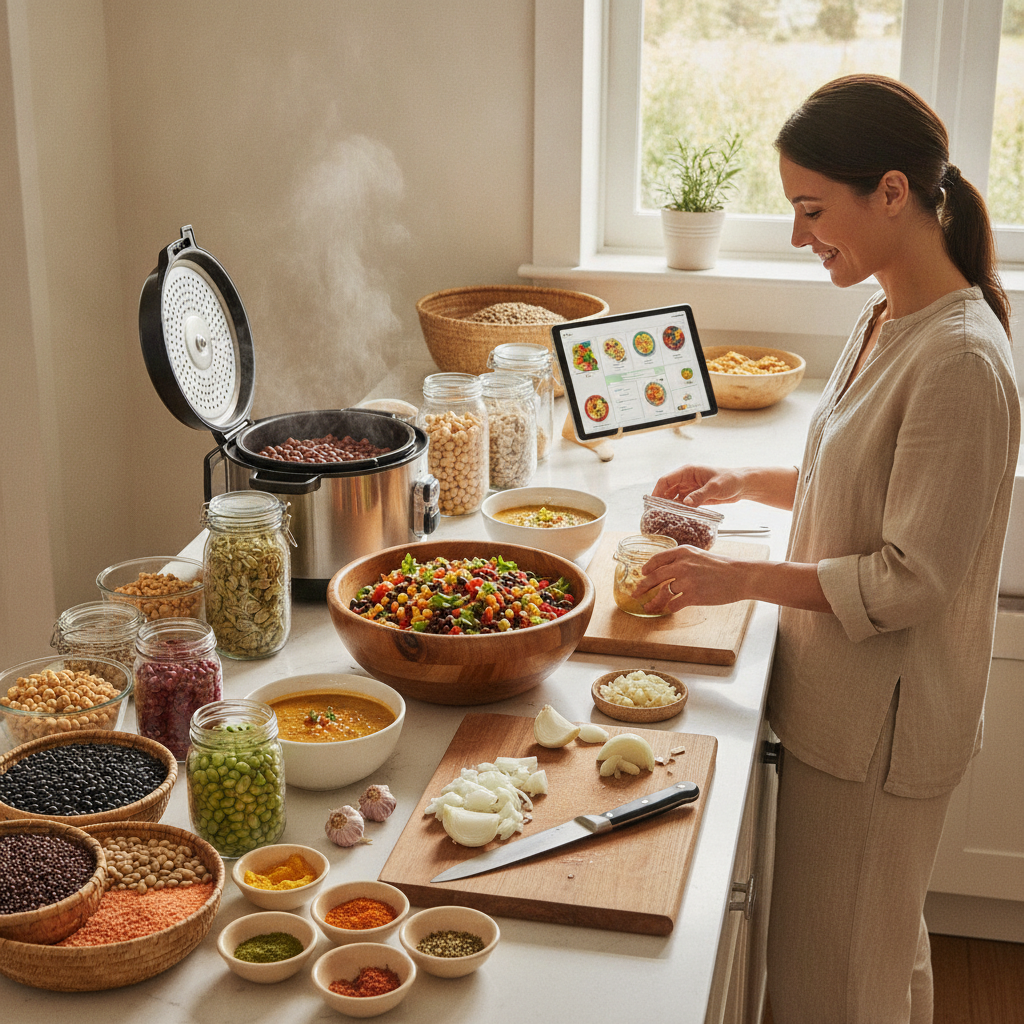
The modern weekday has a way of eroding good intentions. By Tuesday evening, the question of what to eat feels less like a choice and more like a small, grinding burden — one that arrives at exactly the moment when mental energy is lowest and the path of least resistance looks most appealing. This is not a failure of willpower. It is a predictable consequence of asking an already-taxed mind to make yet another decision. One of the quietest, most effective remedies for this pattern sits in an unlikely place: a pot of gently simmering legumes prepared once a week, on a Sunday afternoon.
What Makes Legumes Such a Reliable Foundation for Weekly Meals?
Legumes — the broad family of lentils, chickpeas, black beans, white beans, and split peas — have anchored diets across the Mediterranean, South Asia, and Latin America for centuries. In Ayurvedic tradition, the word *dal* refers both to split legumes and to the nourishing preparation made from them, a dish considered deeply stabilizing. What makes legumes so nutritionally consistent is their composition: dense plant protein, soluble fiber, slow-digesting carbohydrates, and a range of minerals that support steady energy throughout the day. They require no exotic sourcing. A bag of green lentils from Bob's Red Mill or dried chickpeas from any bulk-food aisle provides the same nutritional integrity that has sustained entire culinary cultures.
How Does Batch Cooking Actually Reduce Mental Load?
The concept behind decision fatigue is straightforward: every choice made throughout a day draws from a finite cognitive reserve, and food decisions — repetitive, value-laden, and emotionally weighted — are among the most draining. Batch cooking disrupts this cycle by front-loading the decision into a single, low-pressure moment. When a container of cooked cannellini beans already sits in the refrigerator, Tuesday's lunch stops being a question and becomes an assembly. It transforms meal preparation from a creative burden into a simple act of reaching and combining. Research into behavioral nutrition consistently supports the idea that reducing the number of active decisions around food leads to more consistent, nutritious choices across the week.
What Does a Practical Sunday Batch Session Actually Look Like?
A functional batch session takes roughly ninety minutes and produces the base for four to five different weekday meals. The session begins with two or three legume varieties cooking simultaneously — lentils on one burner, chickpeas soaking overnight and then simmering, black beans in a slow cooker. No single recipe needs to be committed to at this point. Aromatics can be kept neutral: garlic, bay leaf, a halved onion. The neutrality is intentional. Plain-cooked legumes accept the flavor profile of whatever meal surrounds them, making them genuinely versatile across cuisines. A container of cooked lentils can become a warm salad with roasted vegetables, the protein base in a quick bowl inspired by Ethiopian *misir wat* (a spiced red lentil dish), or simply stirred into a broth with greens.
How Can Legumes Anchor Different Cuisines Without Monotony?
One of the more common concerns about batch cooking is flavor repetition — the sense that eating from the same base produces a dull, repetitive week. This concern dissolves when legumes are understood as cultural chameleons. Chickpeas, for instance, appear in Moroccan tagines, Indian *chana masala*, Spanish *cocido*, and Middle Eastern *fatteh* — each preparation so distinct that the underlying ingredient is nearly unrecognizable across them. By keeping the base neutral and varying the spice combinations, acidic elements, and accompanying grains each day, the weekday meals feel genuinely different. A jar of smoked paprika, a block of tamarind paste, and a bottle of harissa on the pantry shelf is enough to pivot the same chickpeas through three entirely different culinary traditions across a single week.
What Are the Tangible Nutritional Benefits of This Approach?
Beyond the convenience, the nutritional case for legume-centered weekday eating is substantial. The soluble fiber in legumes — particularly in lentils and black beans — feeds beneficial gut bacteria and contributes to the kind of gradual blood sugar regulation that prevents mid-afternoon energy crashes. The plant protein, while incomplete on its own, becomes nutritionally complete when paired with grains like rice, quinoa, or whole wheat bread — pairings that occur naturally in most traditional legume dishes. Over weeks and months, a diet anchored even partially in legumes has been associated with improved cardiovascular markers, more stable digestive rhythms, and better satiety between meals. These are not dramatic changes; they are the quiet cumulative effects of a reliable weekly habit.
How Do You Start Without Overcomplicating the First Session?
For you, the reader considering this approach, the entry point matters. The first batch session does not need to be ambitious. Start with one legume — green or red lentils are ideal because they require no soaking and cook in under thirty minutes. Use a simple ratio: one cup of dry lentils to three cups of water, simmered with a pinch of salt and a garlic clove. Store the cooked lentils in a glass container in the refrigerator, where they will keep for five days. From that single container, build three different meals across the week by changing what surrounds them: a simple vinaigrette and roasted vegetables one day, a warm spiced tomato sauce the next, a chilled grain bowl with a tahini dressing on Wednesday. Apps like Paprika or Mealime can help bridge the gap between a batch of cooked legumes and concrete meal ideas without requiring rigid planning.
The weekday kitchen does not need to be a place of inspiration. It can be a place of ease — a space where good decisions were already made on Sunday, and the only task left is to follow through. That single pot of lentils cooling on the counter at the end of a quiet afternoon is not just a practical act. It is a form of care directed at the version of yourself who will arrive home tired on Wednesday, open the refrigerator, and find that the hardest part is already done.