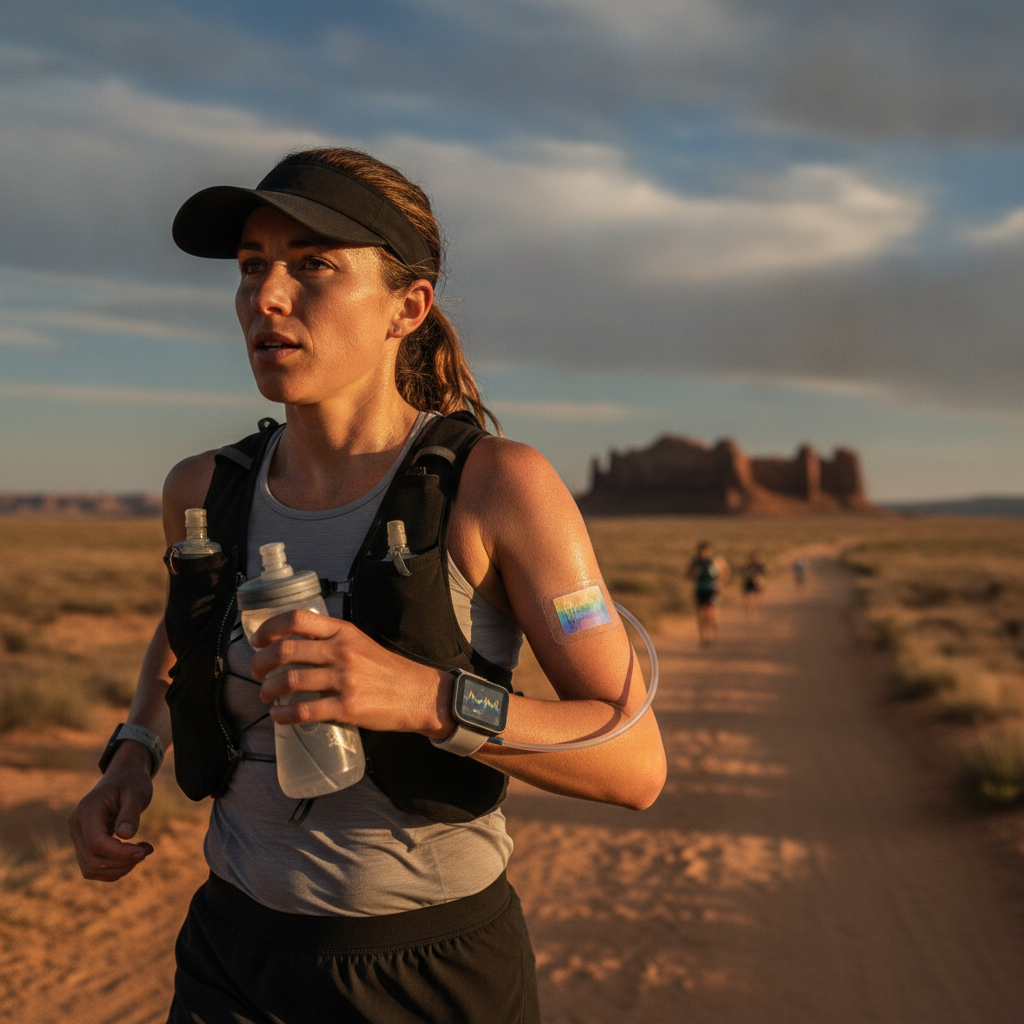
Hydration has always been central to athletic performance, but the way endurance athletes understand and manage it is changing in fundamental ways. For decades, the prevailing approach was built on general guidelines — drink a certain volume per hour, replace fluids lost through sweat, and hope the rough estimates were close enough. Wearable hydration monitors that analyze sweat composition in real time are replacing that guesswork with precise, individualized data, giving athletes a clearer picture of what their body actually needs mid-effort rather than after the damage is done.
What These Devices Actually Measure
Unlike basic fitness trackers that estimate sweat loss through skin conductance or heart rate patterns, dedicated hydration monitors measure the biochemical content of sweat directly. The most capable devices use microfluidic sensors embedded in adhesive patches or wristbands to detect sodium, potassium, chloride, and lactate concentrations as they exit the skin. Brands like Epicore Biosystems and Gatorade's Gx Sweat Patch have brought this technology out of sports science labs and into practical training environments, making real-time electrolyte tracking available to serious recreational athletes as well as professionals.
Why Sweat Composition Matters More Than Volume
Two athletes running side by side in the same conditions can have dramatically different sweat profiles. One may lose sodium at twice the rate of the other, creating a deficit that plain water cannot correct and that a standard sports drink may only partially address. Replacing fluid volume without accounting for electrolyte concentration can lead to hyponatremia, a condition where blood sodium drops to dangerous levels — a known risk in long-distance events like marathons and ultramarathons. Sweat rate and electrolyte density vary not just between individuals but across training days, temperature shifts, and fitness phases, which is why static hydration plans have always carried inherent limitations.
How Real-Time Data Changes In-Race Decision-Making
The practical shift these devices enable is the move from pre-planned hydration schedules to responsive, in-moment adjustments. When a monitor detects rising sodium loss during a long training ride or race segment, the athlete receives an alert through a paired app — platforms like FLOW by Epicore or integrations with Garmin Connect — indicating the need to consume an electrolyte supplement rather than plain water. This feedback loop closes a gap that coaches and sports dietitians have long struggled to address remotely. Athletes can act on what their body is actually doing rather than what a general protocol predicts it should be doing.
The Role of Machine Learning in Personalizing Hydration Profiles
Over multiple sessions, these platforms build increasingly accurate models of individual sweat chemistry. Machine learning algorithms compare electrolyte loss patterns against workout intensity, ambient temperature, humidity, and duration to generate hydration recommendations that grow more precise over time. An athlete training for an event like the Boston Marathon or an Ironman triathlon can arrive at race day with a refined protocol built from months of real physiological data rather than a generic plan adapted from population averages. This kind of individualization has traditionally required expensive sports science testing in controlled lab settings, which most athletes never access.
Limitations Worth Understanding Before Committing
Despite their promise, wearable hydration monitors carry practical constraints. Adhesive patches have a limited lifespan and must be replaced regularly, adding ongoing cost. Sensor accuracy can be affected by skin preparation, placement, and heavy sweat flow that overwhelms the microfluidic channels. The devices perform best during moderate to long steady-state efforts and are less reliable during highly variable intensity sessions where sweat rate fluctuates rapidly. Battery life on active sensor patches is also shorter than most fitness wearables, requiring planning around longer training blocks. For athletes considering adoption, understanding these constraints helps set realistic expectations for what the technology can and cannot deliver.
How to Get Started With Smarter Hydration Tracking
If you're an endurance athlete curious about integrating this technology, starting with a single-session sweat patch test during a representative training effort — same intensity, duration, and environmental conditions as your target event — gives you a useful baseline. From there, comparing results across two or three sessions in different conditions reveals how much your electrolyte loss actually varies. You don't need to replace your entire hydration approach immediately. Use the data to identify your sodium loss range, then work with that information to select electrolyte supplements or adjust drink concentration. Platforms paired with these devices typically include guidance tools that translate raw sweat data into actionable product and timing recommendations, which simplifies the interpretation process considerably.
Wearable hydration technology is still maturing, and the next generation of sensors is expected to track additional biomarkers — magnesium, calcium, and even hydration status at the cellular level — with greater miniaturization and longer wear times. As integration with GPS training watches and coaching platforms deepens, the data will feed into broader performance models that connect hydration status with recovery metrics, sleep quality, and training readiness. For endurance athletes willing to engage with the technology thoughtfully, these devices represent a genuine shift toward physiology-driven preparation — one where fluid strategy becomes as individualized as a training plan rather than a universal afterthought.