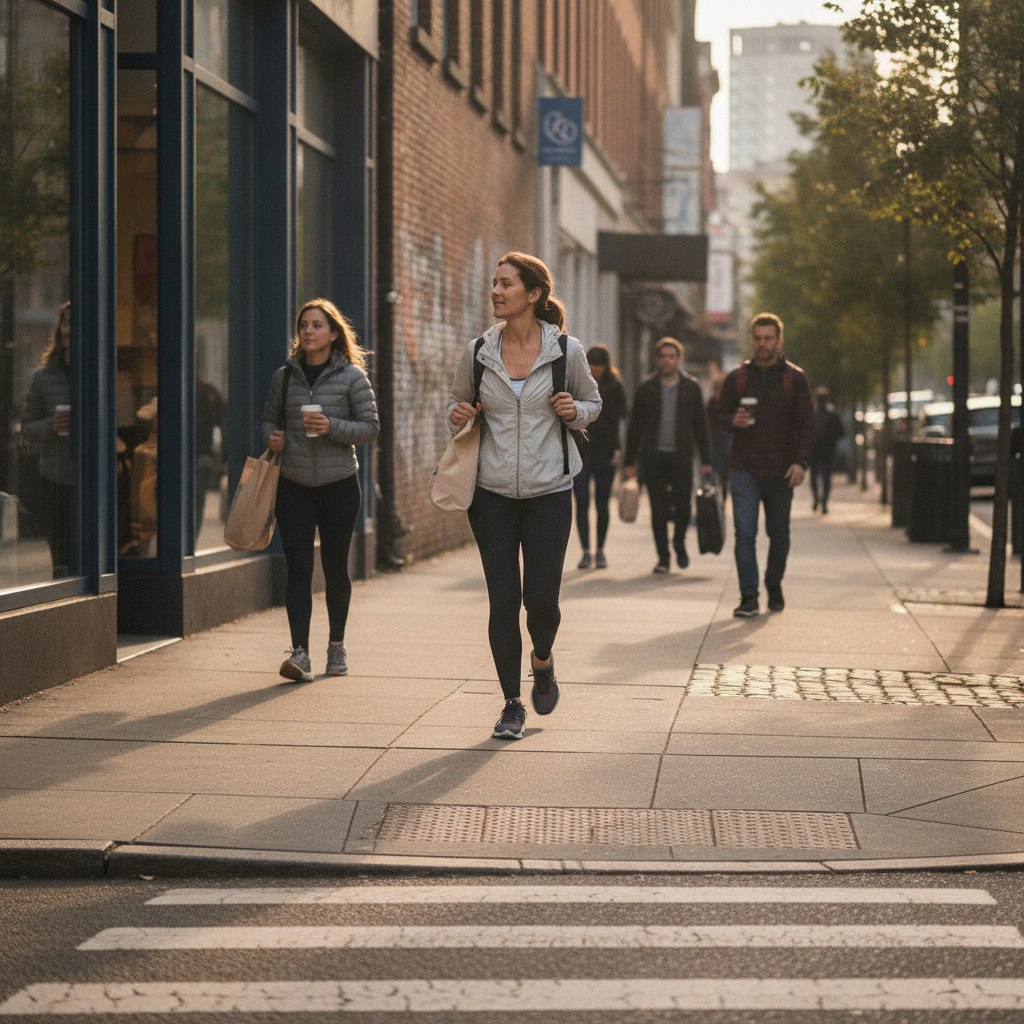
Most people feel a quiet, persistent guilt about not exercising enough — not because they're sedentary, but because the movement they already do doesn't feel like it counts. You're walking through the grocery store, cutting across parking lots, moving between rooms at work, and covering real ground every single day. The problem isn't a lack of movement; it's that most of that movement happens at a single, comfortable pace that rarely challenges your cardiovascular system in any meaningful way. Varying your walking speed deliberately — even in small, informal bursts — can change that equation entirely, turning ordinary errands into a surprisingly effective form of cardiovascular training.
Why Steady-Pace Walking Has a Hidden Ceiling
Walking at one comfortable speed is efficient, but efficiency isn't always the goal when it comes to heart health. When your body operates at the same effort level repeatedly, it adapts quickly and stops making further cardiovascular improvements. The heart, like any muscle, responds to variation — it needs to move through different effort levels to build genuine adaptability. Pace variability, the deliberate act of speeding up and slowing down rather than maintaining a constant rhythm, creates small but meaningful demands on your circulatory system that steady walking simply doesn't produce. Think of it as micro-intervals built into the fabric of your day.
Treat the Parking Lot as Your First Interval
The stretch between your car and the store entrance is one of the most underused opportunities in a typical errand run. Instead of strolling at your default pace, pick it up to a brisk, purposeful walk — not a jog, but the kind of speed that makes conversation slightly harder. Hold that effort for the full distance, then let your pace settle naturally once you're inside. This brief spike in intensity gets your heart rate moving before you've even grabbed a cart. Over time, doing this consistently across multiple errands per week adds up to dozens of short cardiovascular challenges that your body gradually learns to handle more efficiently.
Use Aisle Length to Alternate Your Effort Level
Grocery stores like Whole Foods or Trader Joe's offer natural intervals disguised as shopping aisles. Walk the longer aisles at a brisker clip and slow down when you stop to read labels or compare products. This natural alternation — push, pause, push, pause — mirrors the structure of interval training in a completely informal way. Your cardiovascular system doesn't distinguish between a treadmill interval and a purposeful surge down the cereal aisle. What matters is the change in demand, which prompts your heart rate to rise and fall repeatedly, building the kind of adaptability that supports long-term cardiovascular health.
Introduce Deliberate Speed Changes on Familiar Routes
If you walk the same neighborhood streets or cut through the same blocks to reach the post office or pharmacy, those routes offer a reliable canvas for pace play. Choose a landmark — a specific tree, a corner, a particular storefront — and commit to walking faster from one point to the next, then recovering at a normal pace. Apps like MapMyWalk can help you track where these bursts happen over time, though they're not necessary. The landmark method works on its own because it removes the need to think about pace in the moment; the environment does the cueing for you.
Use Inclines and Stairs as Natural Intensity Anchors
Any errand that involves stairs, ramps, or hills is already offering you a built-in intensity shift. Rather than bracing against the added effort, lean into it by keeping your pace consistent even as the terrain gets harder. The cardiovascular load increases naturally on an incline, which means your heart has to work harder without you needing to speed up at all. City neighborhoods like Capitol Hill in Seattle or the slope-heavy streets of Pittsburgh make this almost unavoidable. On flat terrain, you can simulate the same effect by simply tightening your stride and driving your arms more actively for a block or two.
Recover Intentionally Between Effort Bursts
Pace variability only works as a cardiovascular tool if the recovery phases are real. Slowing down after a faster push isn't laziness — it's the other half of the equation. During recovery, your heart rate drops, your breathing settles, and your body clears the metabolic byproducts of the harder effort. This cycle of stress and recovery is what builds cardiovascular adaptability over time. If you maintain a moderate pace throughout without any true pushes or true recoveries, the training effect diminishes. Give yourself permission to walk slowly sometimes, knowing that the deliberate contrast between paces is the whole point.
Build a Mental Cue System for Consistent Variability
One of the easiest ways to make pace variability habitual is to anchor it to existing cues in your environment. Red lights become recovery phases; green lights signal a brisk push to the next corner. Entering a building means slowing down; crossing an open lot means picking up speed. Fitness wearables from Garmin or Apple Watch can nudge you if your heart rate has stayed too flat for too long, which serves as a useful reminder to introduce a burst of effort. Over weeks, these environmental cues become automatic, and the habit of varying your pace stops requiring conscious thought.
Stack Pace Variability Across Multiple Errands per Week
The cumulative effect of pace variability matters more than any single errand. One purposeful grocery run won't transform your cardiovascular fitness, but three or four errands per week — each punctuated by deliberate speed shifts — creates a consistent stimulus that compounds over months. This is the same principle behind low-structure training approaches used by recreational runners who weave effort into everyday movement. You don't need a gym, a schedule, or a coach. You need errands, which most people already have, and a willingness to treat the ground between destinations as an opportunity rather than a gap.
The beauty of pace variability is how quietly it fits into a life that's already in motion. There's no commute to the gym, no workout clothes to pack, no time blocked off. Your cardiovascular system responds to demand, and demand can be created anywhere — between the pharmacy and your car, across a crosswalk, up a flight of stairs you take every week anyway. Starting small is entirely the right approach. Pick one errand this week and introduce just a few deliberate speed changes. That's enough to begin building something real.