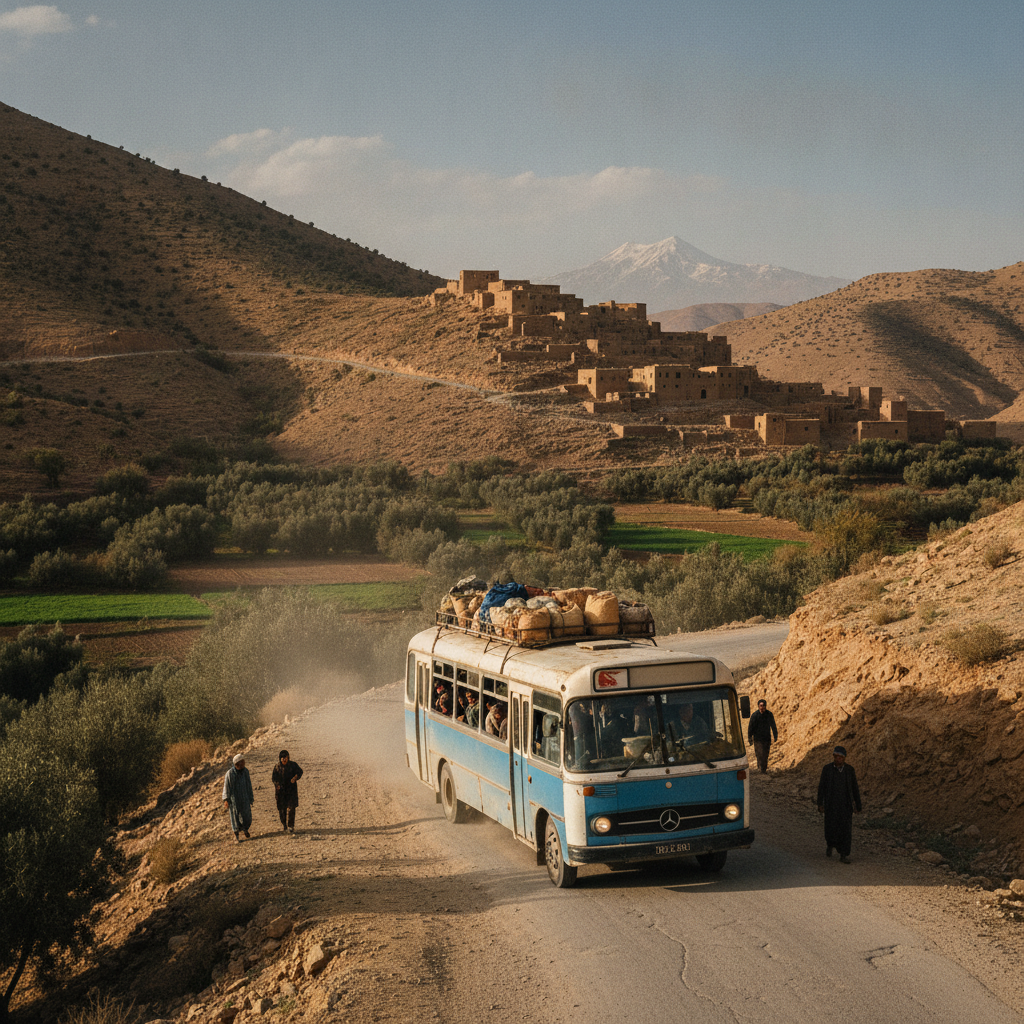
Most travelers who visit Morocco stick to the well-worn circuit — Marrakech's medina, a night in the Sahara, maybe a quick stop in Fes. The Atlas Mountains sit right there on the map, dramatic and inviting, yet the vast majority of visitors see them only through a tour van window on the way to a desert camp. What they're missing is one of the most rewarding travel experiences in North Africa: the slow, unhurried rhythm of moving between Berber villages by local bus, sitting alongside farmers, students, and families carrying everything from chickens to hand-woven rugs.
This isn't a complicated system to work once you understand it. It just takes a bit of patience, some flexibility, and the willingness to let the road decide your schedule. Here's how to make it work.
Start Your Route From Marrakech's Bus Station
The journey into the Atlas begins at Marrakech's Bab Doukkala area, where a mix of grand taxis and CTM-adjacent local buses depart throughout the morning. For deeper mountain access, the town of Azilal is a practical launching point, reachable in a few hours and often overlooked in favor of the more tourist-heavy Ouarzazate route. From Azilal, you're positioned to reach smaller villages that rarely appear in travel guides. Getting there by bus rather than private transfer immediately shifts your perspective — you're already inside the local rhythm before you've even reached the mountains.
Understand How the Berber Bus Network Actually Operates
The Atlas Mountain bus network doesn't run on precise timetables the way European rail does. Buses and shared grand taxis depart when they're full, which usually means mornings are your best window. Routes connect market towns, and many of the smaller villages are only accessible on the days their weekly souk runs. Knowing the souk schedule for towns like Demnate or Tabant means you can time arrivals to catch the market at full energy, when the roads are busiest and transport between villages is easiest to find. Flexibility isn't just helpful here — it's the whole strategy.
Pack Light Enough to Move Without Hesitation
Local buses in the Atlas region have limited luggage space, and the roads between villages often involve transfers on foot or via mule track. A 35-liter pack that fits on your lap or overhead changes what's possible. Heavy rolling luggage isn't a disaster, but it does close doors — literally, when the vehicle is a packed minibus bouncing down a switchback. Traveling light also means you can say yes to an unexpected invitation from a guesthouse owner who mentions a village two valleys over that nobody visits. That kind of spontaneity is the whole point of this style of travel.
Use Imlil as a Navigation Anchor, Not a Destination
Imlil is the most accessible Atlas village for travelers coming from Marrakech, and while it gets genuine foot traffic, it functions well as a transport hub rather than a final stop. From Imlil, local guides and informal transport connections extend into the Aït Mizane Valley and toward the Tizi n'Tamatert pass, where the villages thin out and the tourist infrastructure essentially disappears. Think of Imlil as a base for orientation — pick up trail maps, confirm road conditions, and arrange onward transport to places like Aremd or Setti Fatma, which sit just far enough off the main track to feel genuinely remote.
Learn a Few Phrases in Tamazight or Darija
Arabic works in Morocco's cities, but in the Atlas villages, Tamazight — the Berber language family — is the first language for most residents. You don't need fluency. Even a handful of greetings, thank-yous, and basic direction words in Tamazight creates immediate warmth and signals that you're there as a genuine visitor rather than a tourist passing through. Darija, Moroccan Arabic, also goes a long way for practical communication at bus stops and market stalls. A translation app like Google Translate can handle the gaps, though connectivity in remote valleys is inconsistent, so downloading an offline language pack before you leave Marrakech is a smart move.
Time Your Village Arrivals Around the Weekly Souk
The weekly market, or souk, is the social and economic engine of Atlas mountain life. Each village runs its market on a different day — Demnate holds its souk on Sundays, while other towns rotate through the week so locals can travel between them. Arriving on souk day means you'll find the village at its most alive: vendors selling fresh produce, spices, livestock, and household goods alongside clusters of people catching up after weeks apart. It's also the easiest time to find onward transport, since more vehicles are moving between villages. Plan your week around the souk calendar and the whole region opens up differently.
Budget for Guesthouses Run by Local Families
Accommodation in the deeper Atlas villages is almost entirely informal — family homes that have added a room or two, small auberges run by local Berber families, occasionally a certified gîte d'étape along a hiking route. These places charge modest rates, often including a shared dinner of tagine or couscous that alone justifies the stay. Apps like Booking.com have limited coverage in these areas, so asking at the bus station or local café for a recommendation is often more reliable. Paying in dirhams, keeping small bills on hand, and not expecting Wi-Fi are all standard operating assumptions once you're outside the main valleys.
Go Deeper Than the First Pretty Valley
The villages that most reward slow travel are the ones that require two or three bus transfers to reach — places like Aït Benhaddou's quieter neighbors, the upper reaches of the Aït Bou Guemez valley (sometimes called the Happy Valley), or the hamlets above Ouirgane that most hikers walk past on their way to higher peaks. Each additional transfer filters out a layer of casual tourists. By the time you're sitting in a village guesthouse where your host's grandmother has never seen a tourist with a rolling suitcase, you're experiencing something that no guided tour can replicate — a genuine exchange, shaped entirely by your willingness to take the slower road.
The Atlas Mountain bus network will likely see modest improvements in coverage and reliability over the coming years as Morocco continues developing its rural infrastructure, but the core experience — unhurried, human-scale travel through one of the most visually stunning mountain regions in the world — isn't going anywhere. The villages are still there, the weekly souks still run on their ancient schedules, and the local buses still wait until they're full before they leave. That's not a flaw in the system. That's the invitation.