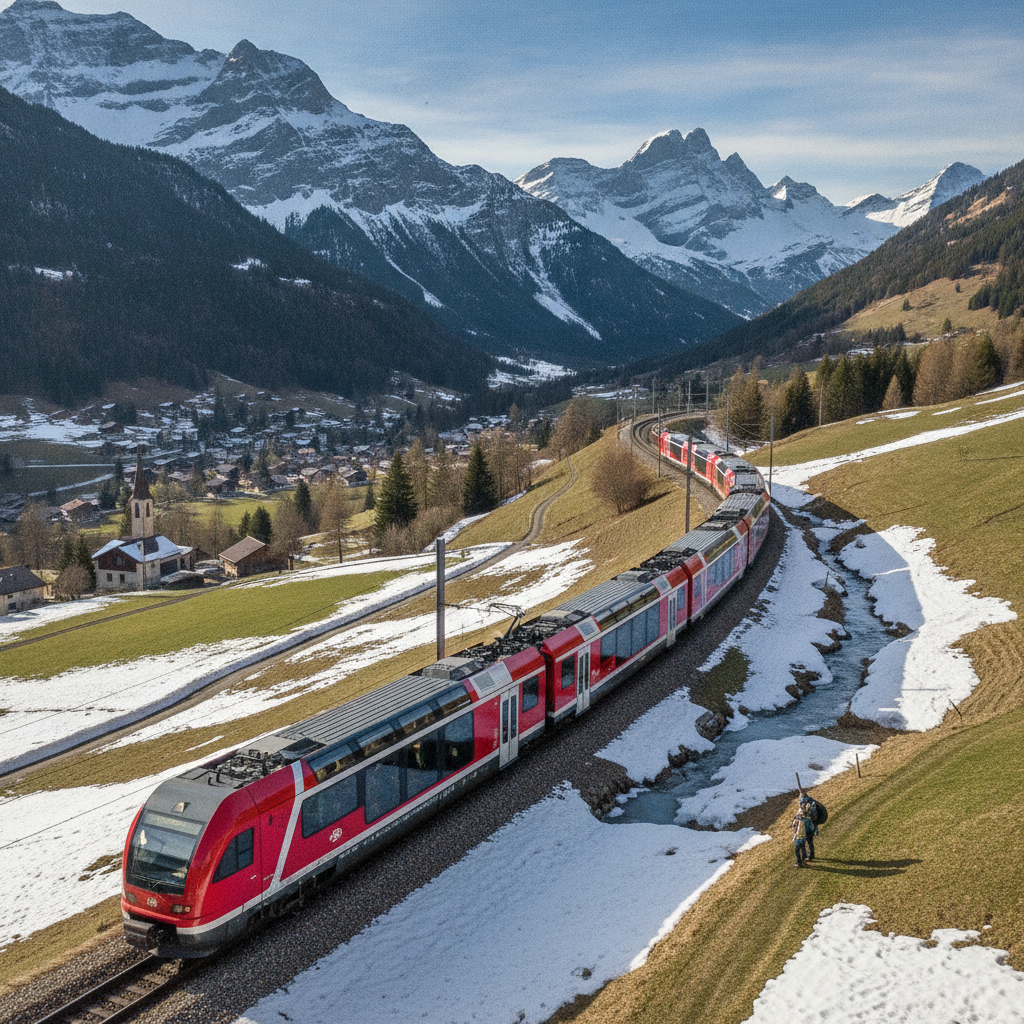
Few travel experiences match the quiet thrill of watching snow-dusted alpine peaks slide past a warm train window while the rest of the world hasn't yet realized the season has changed. Early spring in the Swiss Alps occupies a rare and rewarding window — the ski resorts are winding down, the summer hikers haven't arrived, and the mountain villages exist in a kind of unhurried stillness that peak-season travelers rarely encounter. For those willing to plan around this timing, the rewards are considerable: lower fares, emptier platforms, and a slower, more genuine connection to one of Europe's most spectacular train networks.
Why Early Spring Is the Sweet Spot for Alpine Rail Travel
The shoulder period between late February and mid-April represents a genuine shift in how the Swiss rail network behaves. Train cars that run at capacity during December ski season and July's summer rush operate with room to breathe. Hotel prices in towns like Zermatt and Grindelwald drop noticeably, and the mountain light during this period takes on a particular clarity — long golden afternoons with snow still on the high ridges and the first green beginning to push up in the valley floors. Travelers who time this window correctly often find themselves in near-empty panoramic cars on routes that would otherwise require advance booking weeks out.
Understanding the Thermal Train Concept
The term "thermal train routes" in the Alps refers to scenic rail lines that cut through thermally active valleys and natural corridors where the mountain geography creates dramatic temperature variations between altitude zones. These routes — including portions of the Glacier Express and the Bernina Express — pass through ecosystems that shift from winter to spring within a single journey, offering a visual contrast that summer visitors simply don't experience. In early spring, that contrast is most vivid: high-altitude snowfields alongside lower valley wildflowers, all visible from the same panoramic window.
What Changes After Mid-April
Once Easter weekend passes and spring holidays begin in earnest across Germany, France, and the UK, the calculus shifts quickly. Popular routes fill, accommodation prices reset to high-season levels, and the quiet village cafes start operating reservation-only. Targeting the weeks before that transition — particularly mid-March through the first week of April — gives travelers the best combination of accessible weather, open trails, and manageable costs.
Planning Your Route With the Right Tools
Building an early spring alpine itinerary requires a bit more deliberate research than peak-season travel, where everything is clearly marked and heavily documented. The SBB Mobile app, operated by Swiss Federal Railways, is the most reliable starting point. It allows route planning across all regional and scenic lines, shows real-time availability, and includes pricing tiers that reflect how early spring fares compare to high-season equivalents. Booking two to three weeks ahead during this shoulder period is generally sufficient — a significant contrast to the months-in-advance planning that July routes often demand.
Using Rail Passes Strategically
The Swiss Travel Pass remains one of the most practical tools for this kind of multi-route itinerary. It covers the Glacier Express scenic surcharge at a discount, includes most regional mountain railways, and extends to selected lake ferries and postal buses that connect smaller villages not served by main rail lines. For early spring travelers spending five or more days in the country, the pass consistently offers better value than purchasing individual tickets, particularly when building in spontaneous detours to lesser-known stops like Andermatt or Brig.
Scenic Routes Worth Prioritizing
The Bernina Express between Chur and Tirano remains one of the world's great train journeys regardless of season, but in early spring it operates with a quietude that summer simply doesn't allow. The Glacier Express from Zermatt to St. Moritz passes through 91 tunnels and across 291 bridges, and in March the light across the Furka Pass has a sharpness that photographers specifically seek out. Both routes can be booked through the Rail Europe platform, which aggregates Swiss rail options for international travelers and often surfaces discount windows that aren't prominently advertised through other channels.
Finding Accommodation Along the Route
Sleeping in the mountain towns rather than commuting from larger cities is central to getting the most from an alpine rail journey. In early spring, properties in Pontresina, Chur, and Brig that charge premium rates in July often offer mid-week rates that represent a meaningful reduction. The key is to book directly through property websites or through smaller regional platforms rather than large aggregators, which tend to hold rates higher. Many alpine guesthouses in this season are transitioning between ski and summer staff and are genuinely happy to fill beds at accessible prices.
Timing Arrival Days Carefully
Mid-week arrivals — Tuesday through Thursday — consistently offer better rates than weekend bookings, and this effect is amplified in shoulder season when business travel drops off and leisure travelers haven't yet peaked. Arriving on a Tuesday in mid-March and departing the following Monday gives a full week in the mountains while capturing the lowest accommodation and dining prices the region offers. Some travelers further extend value by spending their first and last nights in Zurich or Basel, where transit connections are seamless and urban hotel options provide an affordable bookend to the mountain segment.
Staying Informed and Adjusting as You Go
Early spring mountain weather is beautiful but variable. Passes can close briefly after late snowfalls, and some high-altitude rail segments operate on reduced winter schedules through early March before switching to spring timetables. Checking the SBB Mobile app daily and supplementing with the Meteoswiss app — Switzerland's national weather service platform — gives real-time confidence about conditions. Most scenic trains run regardless of snow, but knowing what's ahead allows for smart schedule adjustments without stress.
The early spring alpine travel window is still relatively underdiscovered compared to the peak seasons on either side of it, and that's precisely what makes it worth pursuing. As more travelers recognize the value of shoulder-season planning, this window will likely tighten — but for now, the combination of accessible fares, uncrowded platforms, and dramatic mountain scenery in transition makes it one of the most genuinely rewarding rail experiences available in Europe. Starting the planning process even a few weeks earlier than feels necessary is the simplest way to ensure the best routes, the best rooms, and the most unhurried version of this particular alpine moment.