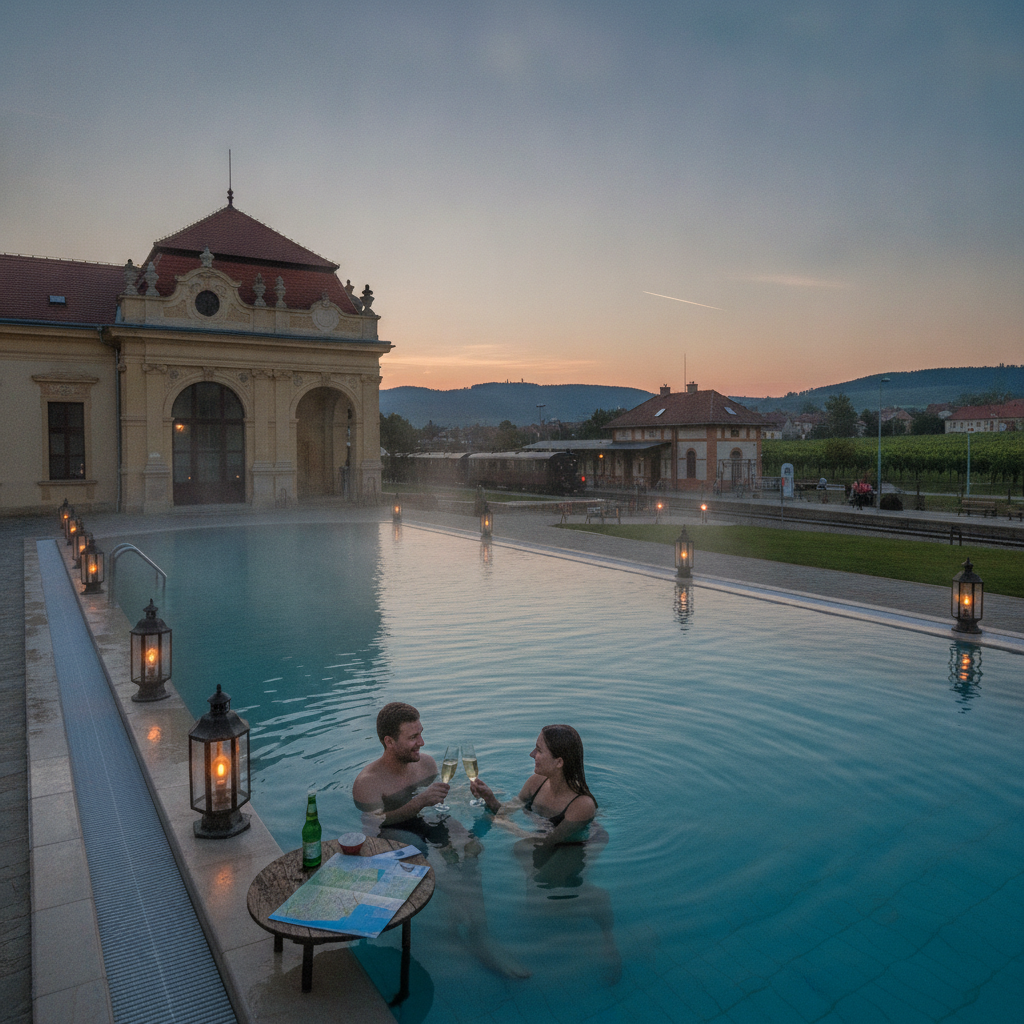
The stretch of Central Europe between Budapest and Vienna is one of the most traveled corridors on the continent, yet most people treat it as a simple A-to-B transfer — a direct train, a few hours, and done. What that approach misses is a quiet belt of Hungarian spa towns sitting right along or just off that route, offering thermal baths, remarkably low accommodation costs, and a pace of life that makes the big cities feel slightly overwhelming by comparison. Using one of these towns as a multi-night base doesn't just save money — it reframes the whole trip.
Pick Your Anchor Town Before You Book Anything Else
Hungary has dozens of towns built around thermal springs, but for the Budapest–Vienna corridor, a handful stand out as genuinely practical bases. Győr sits almost exactly halfway between the two capitals with fast train connections in both directions. Sopron, closer to the Austrian border, has a beautifully preserved medieval center and feels almost absurdly undervisited given its proximity to Vienna. Hévíz, near Lake Balaton, is slightly further south but pairs thermal bathing with lakeside scenery. Choosing your anchor town first — rather than booking hotels impulsively — shapes everything else, from day trip logistics to how far your daily budget actually stretches.
Run a Realistic Budget Comparison Early in Planning
The cost difference between basing yourself in a Hungarian spa town versus paying for consecutive nights in Budapest or Vienna can be striking. Guesthouses and smaller hotels in places like Győr or Sopron typically run a fraction of what comparable rooms cost in either capital, and meals at local restaurants follow the same pattern. Factor in that thermal bath entry is usually just a few euros per session, and the savings compound quickly across three or four nights. A quick spreadsheet comparing accommodation, food, and transport costs from each location to both cities often reveals that the spa town option pays for itself within the first day.
Use Rail Connections as Your Day Trip Engine
Hungary's rail network is the quiet backbone of this whole strategy. From Győr, for instance, direct trains reach Budapest in under two hours and Vienna in roughly the same time, which means both cities become viable day trips without the cost or fatigue of staying in either. The MÁV-START network, Hungary's national rail operator, runs regular services across the corridor, and tickets booked a few days in advance are consistently affordable. Travelling into a capital city for the day and returning to a calmer, cheaper home base each evening changes the entire energy of the trip — you get the museums and restaurants without the noise and the price tag.
Build Your Schedule Around Thermal Bath Hours
Thermal bathing isn't a bonus activity in these towns — it's the organizing principle of the day, and treating it that way makes the experience far richer. Most thermal complexes, including the well-regarded Széchenyi-style outdoor pools found in towns like Győr and Hévíz, have both morning and evening sessions worth planning around. Many experienced visitors prefer a morning soak before a day trip, returning in the late afternoon for a second session before dinner. This rhythm — bath, train journey, city, return, bath — sounds almost too relaxed, but it's precisely what makes a multi-night stay in one of these towns feel genuinely restorative rather than just logistically convenient.
Choose Accommodation That Includes a Kitchen or Breakfast
Self-catering options and guesthouses offering generous included breakfasts are widely available in Hungarian spa towns, and either choice significantly reduces daily food costs. Hungarian markets — even in smaller towns — are stocked with excellent produce, cured meats, fresh bread, and local cheeses at prices that feel almost laughably low compared to Western European equivalents. Booking through platforms like Booking.com or Airbnb often surfaces apartment-style rentals that aren't heavily marketed elsewhere. A kitchen also means you're not locked into restaurant schedules on days when you'd rather eat early and catch a morning train.
Layer in Local Culture Between the Day Trips
The temptation with this kind of base strategy is to spend every day in Budapest or Vienna and treat the spa town purely as a cheap hotel alternative — but that undersells what these places actually offer. Sopron has Roman ruins and Gothic churches that most tourists walking its streets seem genuinely surprised by. Győr has a baroque old town center that rivals anything in Austria at a fraction of the tourist density. Even smaller thermal villages tend to have weekly markets, local wine bars, and community festivals worth an evening's attention. Mixing day trips with genuine engagement in your base town produces a far more textured trip.
Plan Your Entry and Exit Points Strategically
One of the most underused aspects of this approach is treating the spa town as a genuine directional midpoint rather than a detour. Flying into Budapest, spending two nights in the capital, then moving to a spa town base for three or four nights before finishing in Vienna — or reversing the sequence — creates a logical arc that avoids backtracking and keeps transport costs low. One-way train tickets between Hungarian cities and Vienna are easy to book through the ÖBB website, Austria's national rail operator, often at lower prices than booking through third-party aggregators. Mapping out entry and exit before finalizing accommodation prevents the common mistake of booking hotels that make routing unnecessarily complicated.
Keep a Flexible Day or Two for Pure Slow Travel
Every multi-night stay in a place like this benefits from at least one day with no train, no city, and no agenda beyond wandering. Hungarian spa towns are built for exactly this kind of idle morning — coffee at a streetside café, a long soak, lunch at a restaurant where the staff aren't rushing anyone, and an afternoon spent reading or exploring on foot. That kind of day costs almost nothing and often becomes the one travelers remember most clearly. Leaving space for it in the schedule, rather than filling every slot with planned activity, is what separates a genuinely refreshing trip from one that simply exhausts you in a different location.
As more travelers in 2026 look for ways to stretch budgets without sacrificing quality, the Hungarian spa town model is drawing growing attention from those who've grown tired of crowded capitals and predictable itineraries. The towns themselves are investing in improved visitor infrastructure without losing their local character — which means now is a particularly good time to explore this approach before it becomes the kind of well-worn secret that stops being either well-kept or affordable.