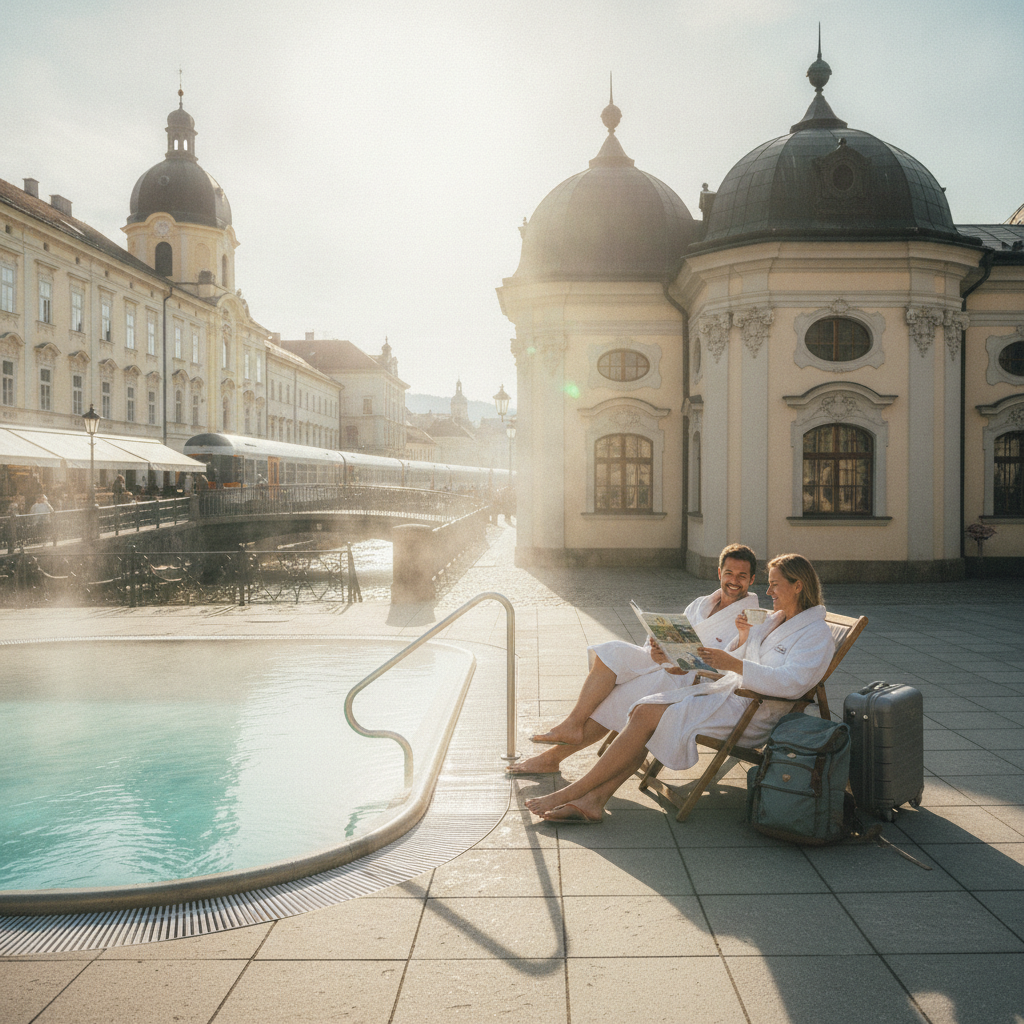
Long-haul travel through Central Europe has a rhythm that can quietly wear you down. You're moving fast — Vienna one day, Budapest the next, Prague the day after — and somewhere between the cobblestones, the late dinners, and the packed train carriages, your body starts quietly asking for a break. The good news is that Central Europe has built exactly that into its geography, in the form of thermal spa towns that sit conveniently between the big-ticket cities. They're affordable, genuinely restorative, and wildly underused by travelers who don't know they exist.
Pick Towns That Sit Along Your Existing Route
The easiest way to work a thermal spa town into your trip is to choose one that's already close to your planned path. You don't need a detour — you need a scheduled pause. Hévíz in western Hungary sits near the Austrian border and slots naturally between Vienna and Budapest. Piešťany in Slovakia falls between Bratislava and Brno. Karlovy Vary in the Czech Republic is a two-hour train ride from Prague. When you plan your route with a map rather than a city-to-city flight search, these towns reveal themselves as logical stopping points rather than side trips.
Book a Mid-Week Night to Keep Costs Low
Thermal spa towns are popular with weekending Europeans, which means Friday and Saturday nights carry a premium. If you can shift your recovery stop to a Tuesday or Wednesday, you'll find room rates noticeably lower and the bathhouses far less crowded. Many guesthouses in towns like Trenčianske Teplice or Baden bei Wien offer midweek packages that include accommodation, breakfast, and a day pass to the thermal complex. These packages rarely advertise loudly online, so it's worth calling the property directly or checking local booking platforms like Szallas.hu for Hungarian options.
Treat the Thermal Experience as Actual Recovery
It's tempting to race through a spa town the same way you race through a museum, but the whole point is to slow down. Thermal pools work best when you spend time rotating between different temperature pools, resting between sessions, and actually hydrating. Most Central European bathhouses — including the famous Széchenyi in Budapest, which borders the spa-town experience even as a city facility — have rest areas, steam rooms, and outdoor pools that reward patience. Plan at least four hours in the water rather than ninety minutes, and you'll leave feeling like a different traveler.
Keep Accommodation Simple and Central
You don't need a luxury wellness resort to benefit from a thermal spa town. A clean, family-run guesthouse within walking distance of the bathhouse is the right call. Most spa towns are compact enough that you can walk everywhere, which means you can skip rental cars and taxis entirely. In Eger, Hungary — a town better known for its wine but home to excellent thermal facilities — you'll find guesthouses in the historic center that cost a fraction of what a comparable room runs in Budapest. Staying central also means you can return to the baths in the evening when the light changes and the crowds thin.
Budget for the Baths, Not the Extras
Entry to most Central European thermal facilities is remarkably affordable by Western European standards. A full-day pass at major complexes in smaller towns typically costs less than a museum entry fee in Paris or Amsterdam. The extras — massages, private cabins, mud treatments — are where spending can creep up. Decide before you arrive which add-ons are genuinely worth it to you, and skip the ones that feel like upsells. A basic soak in a centuries-old thermal pool with a mineral-rich source is the core experience. Everything else is optional.
Use the Town's Food Scene to Recover Your Budget
Spa towns in Central Europe tend to have unpretentious, filling local restaurants that cater to domestic visitors rather than international tourists. That's a genuine advantage. In Bardejovské Kúpele in northeastern Slovakia, or in smaller Hungarian spa villages, you'll find hearty regional meals at prices that feel almost anachronistic compared to what you paid in the capital cities. Use your recovery day to eat well without overspending — a long lunch, an afternoon rest, an evening back at the baths. That rhythm is easier on your body and your wallet than another packed city itinerary.
Time Your Stop After Your Most Demanding City
Not every point in a trip is equal. Some cities demand more — more walking, more decision-making, more sensory input. Prague's Old Town, Vienna's museum quarter, and Budapest's ruin bar district all deliver intensity in different forms. Scheduling your thermal town stop after your most demanding destination, rather than between two lighter ones, is a smarter use of the recovery opportunity. You'll absorb the rest more deeply, and you'll arrive at your next major destination feeling genuinely refreshed rather than just slightly less tired.
Carry the Right Basics So You're Not Overspending at the Complex
Most thermal complexes rent towels and sell swimwear, but at marked-up prices. Packing a compact travel towel, a simple swimsuit, and a pair of flip-flops means you walk in with everything you need and spend nothing on incidentals. A reusable water bottle matters too — you'll need to hydrate consistently throughout a long soak session, and buying bottled water inside the complex adds up across the day. Small preparation like this keeps the experience feeling like a genuine budget win rather than a trap full of small fees.
Thermal spa towns in Central Europe are likely to keep growing in quiet popularity as more travelers look for meaningful ways to break up point-to-point itineraries. The infrastructure is there, the prices remain accessible, and the cultural history behind many of these towns — some with Roman-era roots — adds unexpected depth to what might otherwise feel like just a rest day. If you build one or two of these stops into your next Central European trip, you'll come home with not just better memories of the cities, but a fundamentally different sense of what the region actually feels like at a human pace.