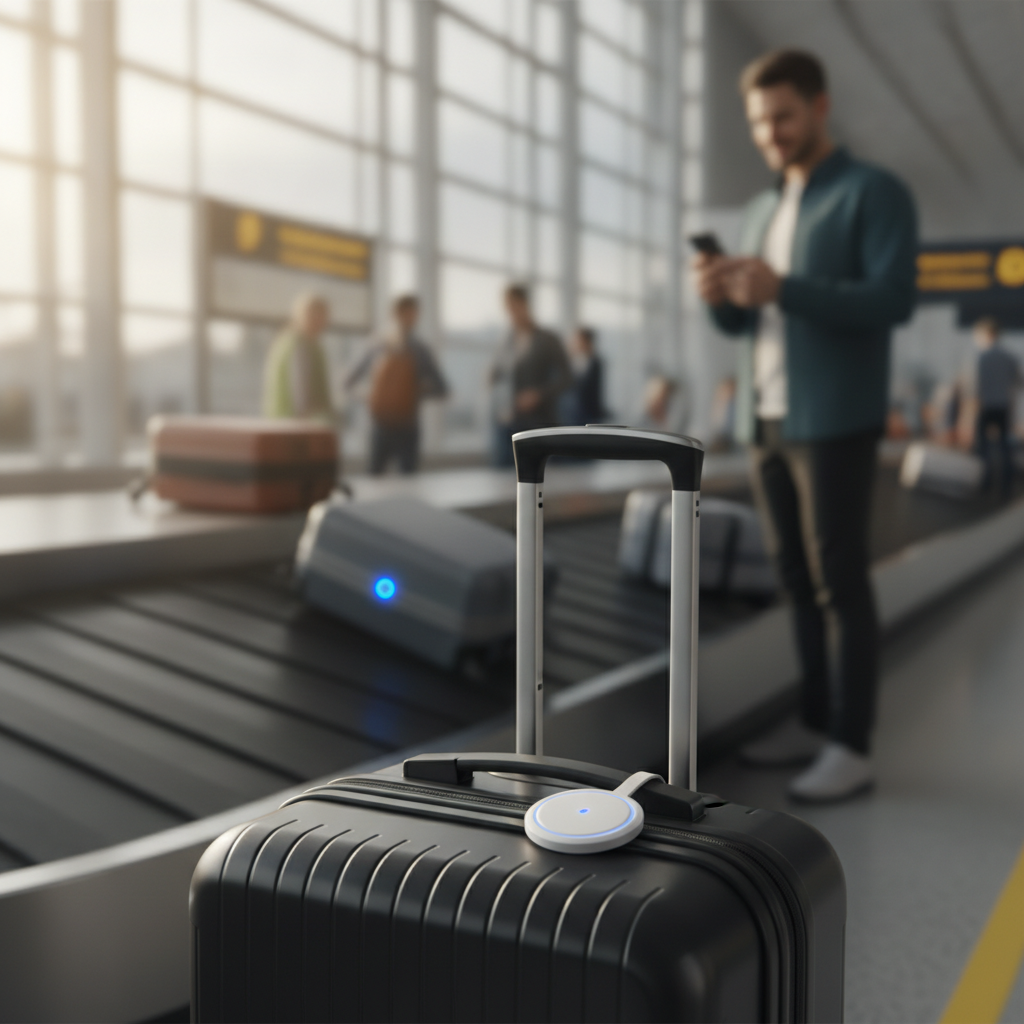
Few travel experiences are as deflating as standing at a baggage carousel, watching other passengers collect their bags while yours fails to appear. Lost and misdirected luggage has long been one of the most frustrating realities of air travel, affecting millions of passengers every year across every airline and airport system. What's changed recently is the technology available to deal with it — not just after something goes wrong, but in real time, from the moment a bag leaves someone's hands at check-in.
What Exactly Is a Smart Luggage Tag?
A smart luggage tag is a compact electronic device that attaches to a bag and communicates its location through a combination of GPS, Bluetooth, and cellular or satellite networks. Unlike older Bluetooth-only trackers that only work within short range, the latest generation of smart tags can report a bag's location from virtually anywhere in the world. Products like Apple AirTag, Samsung SmartTag2, and LugLoc have expanded what's possible, offering travelers persistent visibility into where their checked luggage actually is — whether it's on the right flight or sitting in a handling facility three time zones away.
How Does the Tracking Technology Actually Work?
Most smart tags rely on a layered approach to location reporting. Bluetooth connects the tag to nearby smartphones within a crowd-sourced network, while GPS or cellular modules provide direct positioning in open areas. Apple's Find My network, for example, uses hundreds of millions of iPhones as passive relay points, meaning a lost bag in a busy airport has a strong chance of pinging its location without any active search. Dedicated travel trackers like LugLoc use GSM networks instead, allowing them to report from international destinations where crowd-sourced coverage might be thinner. The combination of these systems means coverage is far more consistent than it was even three years ago.
Why Airlines Haven't Fully Solved This Problem on Their Own
Airlines do use internal tracking systems, and RFID bag tags have become more common at major hubs. However, those systems are designed for operational logistics, not passenger transparency. A traveler whose bag has been misrouted might receive a case number and a vague update window, but rarely gets minute-by-minute location data. The airline's system tells staff where a bag should be — a personal tracker tells the passenger where it actually is. That distinction matters enormously when someone is trying to decide whether to wait at the airport, file a delayed baggage report, or start replacing essential items for a business trip.
What Makes These Devices Worth Carrying?
The practical value of smart luggage tags goes beyond the rare worst-case scenario. Regular travelers report that simply knowing a bag made it onto the correct connecting flight reduces anxiety measurably during long-haul journeys. The tags are small, lightweight, and increasingly affordable, with many options requiring nothing more than a standard coin battery or a USB-C recharge every few months. Some travelers attach them inside bags rather than outside, making them harder to remove or overlook. The peace of mind they provide has made them a standard part of the carry-on kit for frequent flyers, road warriors, and anyone checking bags through multiple connections.
How Should You Choose the Right Tag for Your Travel Style?
Choosing a smart tag comes down to a few practical questions. If you travel primarily within countries where Apple or Android ecosystems are dominant, an AirTag or SmartTag2 will offer reliable performance at a lower cost. If your travel takes you to regions with thinner smartphone density — parts of Central Asia, rural Africa, or remote South America — a dedicated global tracker like LugLoc or Tile's premium options may offer more dependable coverage through direct cellular networks. Battery life, device size, and whether a subscription fee is required are also worth comparing. Most travelers doing two to three international trips per year will find a mid-range dedicated tracker covers their needs without overcomplicating the setup.
Simple Steps to Get the Most Out of Your Tracker
Getting real value from a smart luggage tag takes just a little preparation before each trip. Register your device and make sure the app is updated before you leave home — not at the airport gate. Attach the tracker securely inside a zippered pocket rather than clipping it externally, where it could be removed or damaged. Before checking your bag, open the app and confirm the tag is actively reporting. During a connection, check the app after landing to confirm your bag made the same flight. If the location shows a different terminal or city, you can alert baggage services immediately rather than waiting at the carousel. Keeping a screenshot of your bag's last known location also helps when speaking with airline staff, giving you concrete information rather than a vague description.
Smart luggage tags haven't eliminated the problem of lost or delayed bags, but they've fundamentally shifted the dynamic between travelers and the systems handling their belongings. Instead of relying entirely on airline reports and hope, passengers now have an independent source of real-time information — one that travels with the bag itself. As these devices become more affordable and their networks more expansive, carrying one is becoming less of a tech-enthusiast habit and more of a sensible baseline for anyone who checks a bag.