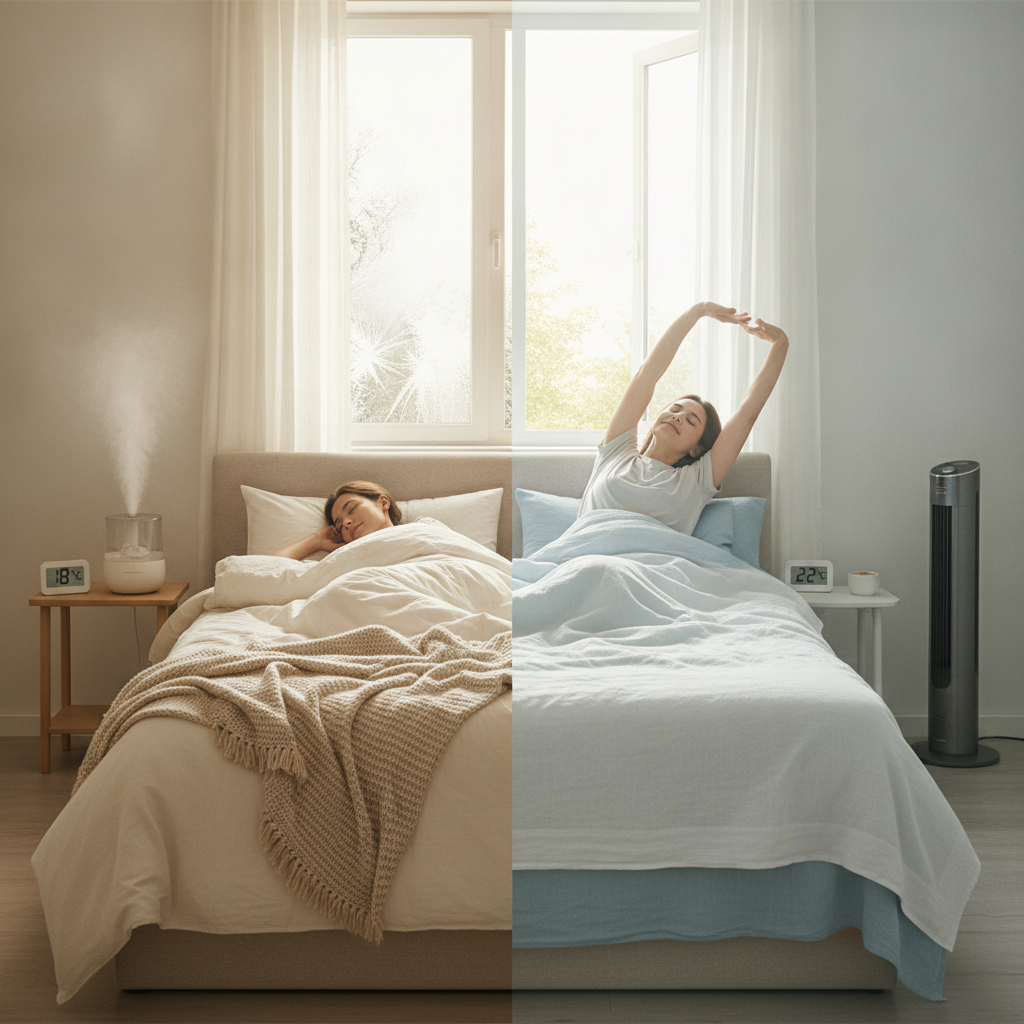
Temperature is one of the most powerful and least appreciated factors shaping how deeply you sleep and how quickly you bounce back the next morning. While most people focus on screen time, mattress quality, or bedtime routines, the thermal environment of your bedroom quietly runs the show. Your body follows a precise internal cooling process each night, and when your surroundings support that process, everything downstream — focus, mood, physical recovery — improves noticeably.
Why Your Body Cools Down to Fall Asleep
About an hour before natural sleep onset, your core body temperature begins to drop. This isn't a passive side effect of lying still — it's an active biological signal that tells your brain it's time to shift into rest mode. The drop triggers melatonin release and prepares your nervous system to cycle through the deep, restorative stages of sleep. When your bedroom is too warm, that cooling process stalls, making it harder to fall asleep and reducing the time you spend in slow-wave and REM sleep. Getting the environment right means working with your body's rhythm rather than against it.
What "Right" Looks Like in Winter
Cooler Than You Think
Many people assume that cold-weather months call for a warm, cozy bedroom — but that instinct can actually disrupt sleep. The ideal sleep temperature for most adults sits in the low-to-mid 60s Fahrenheit, which feels noticeably cool when you're standing in the room. In winter, central heating often pushes indoor temperatures well above that range without you realizing it. If you use a smart thermostat like an Ecobee or Google Nest, scheduling a drop of several degrees about an hour before bed is one of the more effective passive adjustments you can make.
Layering Without Overheating
Winter sleep comfort is really about surface warmth rather than ambient warmth. Layering lighter blankets gives you more control than one heavy duvet, since you can adjust without fully waking up. Keeping your face and arms slightly cool while your core stays warm actually mirrors the natural state your body wants to be in during sleep. Breathable materials — wool, cotton, and bamboo — help regulate that balance across the night without trapping the heat that interrupts deep sleep cycles.
Adapting Your Setup Through Spring and Fall
Transitional seasons are where sleep environments get inconsistently managed, mostly because temperatures swing widely from week to week and even night to night. A bedroom that was perfectly cool in early March might feel stuffy by late April without any change in your settings. Checking in on your room temperature weekly during these months, rather than setting a fixed thermostat schedule and ignoring it, keeps your sleep environment aligned with what's actually happening outside. Apps like Sleep Cycle can help you track whether your sleep quality shifts during these transitions, offering a practical feedback loop.
Managing Heat in Summer Without Sacrificing Sleep Quality
Timing and Airflow
Summer heat requires more active management, especially in homes without central air conditioning. One of the more effective strategies is cross-ventilating your bedroom in the evening — opening windows on opposite sides of the room once outdoor temperatures drop below indoor levels, typically after 9 or 10 p.m. Running a fan not only moves air but creates a modest cooling effect on skin, which supports your body's natural temperature-drop process. Timing this ventilation window matters: letting hot air sit in the room until midnight makes the first few hours of sleep significantly lighter.
Cooling Tools Worth Using
Beyond fans and open windows, a few targeted tools can make a real difference in summer. Cooling mattress pads with water circulation — like those made by BedJet — allow you to dial in a specific surface temperature without relying on room air conditioning alone. Sleeping with a slightly damp cloth nearby or using a cooling pillow insert helps maintain the surface-level temperature drop your body needs. Lightweight linen sheets, rather than cotton blends, breathe more efficiently and don't trap warmth against your skin during the hottest nights.
Tracking Whether Your Adjustments Are Working
Sleep improvement becomes much easier to sustain when you have some visibility into what's actually happening. Wearables like the Oura Ring or Whoop track deep sleep duration and heart rate variability, both of which respond measurably to changes in your thermal environment. If you adjust your thermostat schedule in early November and notice deep sleep increasing over the following two weeks, that's meaningful data you can build on. Most people are surprised by how much their metrics shift with temperature changes alone, before any other habit has changed.
Your sleep environment isn't static, and neither is the world it has to respond to. Treating bedroom temperature as something you set once and forget means you're working with a fixed solution against a constantly shifting problem. Revisiting your setup as each season changes — checking the thermostat schedule, adjusting your bedding weight, timing your ventilation windows — creates a consistent foundation for rest that compounds quietly over time. Small thermal adjustments, made at the right moments in the year, are among the most underrated tools available for waking up feeling genuinely restored.