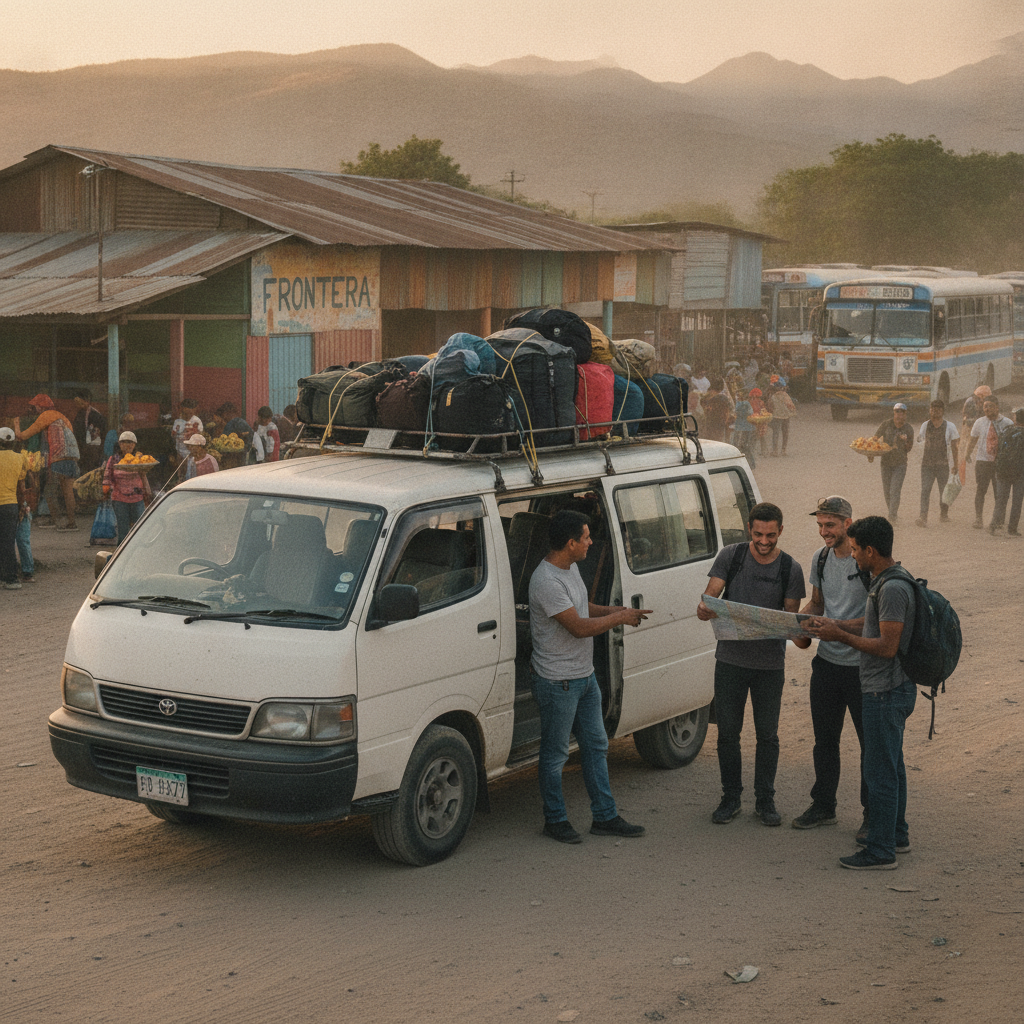
Crossing borders in Central America by public bus can eat up an entire day before you've even reached your destination. The classic chicken bus is an experience worth having once, but when you're trying to move between Guatemala, Belize, Honduras, or Nicaragua with limited time and a budget that needs to stretch, there's a smarter option most travelers overlook until someone at a hostel mentions it: the privately run minivan shuttle network that connects nearly every major backpacker hub across the region.
These aren't official services with government websites or ticketing apps. They're operated by small local companies — often just one or two vans, a dispatcher, and a network of guesthouse contacts — and they run on a model built around convenience. Once you understand how they work, they become one of the most efficient tools in your Central American travel toolkit.
Book Through Your Guesthouse or Hostel First
Most privately run shuttles in Central America don't advertise online in any consistent way. The best way to book is through wherever you're staying. Hostels in hubs like San Cristóbal de las Casas, Flores, or San Pedro La Laguna have relationships with local shuttle operators and can arrange seats on the next morning's departure, often at the same price you'd pay walking in off the street. This also gives you a layer of accountability — if something goes wrong, the hostel has an ongoing relationship with the operator and can help resolve it.
Understand the Door-to-Door Advantage
Unlike standard buses, most minivan shuttles pick you up at your accommodation and drop you at your next guesthouse or a central point close to it. That single detail saves more time than it sounds. On a long travel day from Antigua to Semuc Champey, for example, not having to haul your bag across town to a bus terminal and then repeat the process at the other end can cut an hour off your actual travel experience. It also reduces the disorientation that comes with arriving somewhere new and immediately having to figure out local transport.
Compare Shuttle Prices Against the Full Bus Cost
The upfront price of a shuttle looks higher than a local bus ticket, but it's worth doing a real comparison before writing it off. Factor in the cost of local transport to and from bus terminals, any meals you'd buy during a longer layover, and the time you'd spend waiting for connections. On routes like Managua to Granada or San José to La Fortuna, the shuttle often comes out within a few dollars of the total bus cost once all those extras are added in. For routes where the time savings are significant, the math tips even further in the shuttle's favor.
Learn the Key Operator Names Along Your Route
A handful of companies have built reliable reputations across the region. Adrenalina Tours operates widely through Guatemala. Tica Bus covers longer Central American corridors and is a useful benchmark for what direct routes exist. For shorter hops, smaller operators in Antigua, Lanquín, and Copán Ruinas run tight regional networks. Getting familiar with the names locals and hostel staff mention repeatedly helps you filter out one-off operators who may be less consistent. Reputation travels fast in a region where the traveler grapevine is active.
Use WhatsApp to Confirm Seats and Pickup Times
Once you've booked, confirm your seat and pickup time via WhatsApp the evening before departure. Nearly every shuttle operator in Central America uses it as their primary communication channel, and a quick message saves you from standing outside at 6 a.m. wondering if the van is still coming. This is also how you flag any last-minute changes to your pickup address, which operators are usually flexible about as long as it's within reason. It takes two minutes and removes most of the uncertainty from early-morning departures.
Know When a Shared Shuttle Becomes a Private Hire
If you're traveling with three or four people, it's worth asking what the operator charges for an exclusive van on the same route. The math sometimes works out so that a private hire costs only slightly more per person than individual shared seats, and you gain full control over rest stops, pace, and pickup time. This works especially well for families or small groups covering a long border crossing where customs wait times can vary unpredictably. Operators are generally happy to negotiate and prefer a guaranteed full payment over hoping to fill every seat.
Plan Border Crossings for Midweek Mornings
The minivan handles you to the border, but what happens at the crossing itself still depends on traffic and timing. Weekday mornings — Tuesday through Thursday before 9 a.m. — tend to move faster than weekend crossings at places like El Carmen or Peñas Blancas. Shuttle operators who run the same route daily know this and often time their departures accordingly. If you have flexibility in your schedule, ask which day and time the operator recommends for the smoothest crossing. That local knowledge is one of the most underrated parts of using a small regional shuttle rather than a large public bus.
Keep Small Bills Ready for Border Fees
Almost every Central American border crossing involves some form of exit fee, entry fee, or unofficial handling charge — sometimes all three. These are typically collected in cash, and the amounts vary by country and crossing point. Having small bills in both US dollars and local currency prevents the kind of delay that holds up an entire van of passengers while someone tries to break a large note. Shuttle operators usually brief passengers on what to expect at each border, but coming prepared regardless is a habit that makes the whole process smoother for everyone involved.
The minivan shuttle network in Central America continues to grow and professionalize, particularly along popular backpacker corridors that see steady year-round traffic. More operators are starting to maintain social media pages and accept card payments through local fintech platforms, which makes them easier to find and book without relying entirely on hostel introductions. As that infrastructure develops, these services will likely become even more accessible to travelers who don't speak Spanish or aren't comfortable with the informal booking process yet. For now, leaning into the informality — asking locals, confirming via WhatsApp, and showing up five minutes early — gets you most of the benefit with very little friction.