Reliable power has quietly become one of the most critical resources for modern travelers venturing beyond the reach of electrical grids. As remote destinations grow more accessible and off-grid adventures more popular, the ability to keep devices charged — phones, GPS units, satellite communicators, cameras — has shifted from a convenience into a genuine necessity. Portable solar chargers with multi-device output are filling that gap in ways that weren't practical even a few years ago, and the technology has matured enough to earn a permanent spot in serious travelers' kits.
Why Power Access Matters More Than Ever on the Trail
The modern outdoors traveler carries more electronics than any previous generation. Navigation apps, emergency beacons, weather monitors, and communication tools all depend on consistent battery life. Losing power in a remote canyon or along a multi-day coastal trekking route isn't just inconvenient — it can affect safety. The growing reliance on digital tools in wilderness settings has pushed demand for dependable off-grid charging solutions, and solar technology has responded. Panels are lighter, more efficient, and significantly more capable of delivering consistent output even in variable light conditions.
How Multi-Device Output Changes the Equation
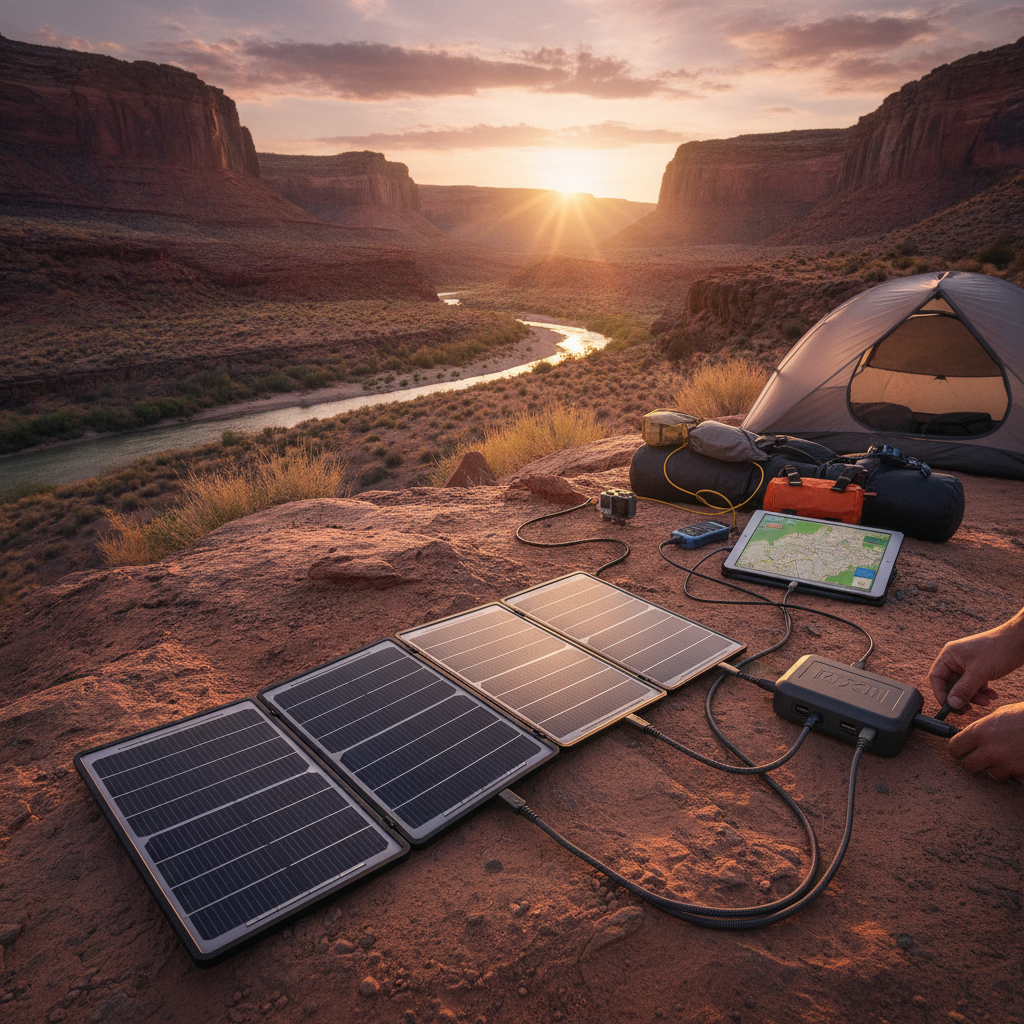
Early portable solar chargers were built for single-device use — slow, inconsistent, and barely sufficient for keeping one phone alive through a long hiking day. Current-generation models from brands like Goal Zero, BioLite, and Anker have changed that dynamic significantly. Multi-port designs now accommodate USB-A, USB-C with Power Delivery, and even wireless charging simultaneously, allowing travelers to top up a phone, a headlamp battery pack, and a GPS device from a single panel. That consolidation reduces the need to carry multiple charging sources and simplifies power management across a full kit.
The Technology Behind Improved Solar Efficiency
The performance gains in portable solar panels come from advances in monocrystalline cell design, which converts sunlight into electricity more efficiently than older polycrystalline models. Many current panels also incorporate smart charge controllers that optimize current output based on real-time conditions, preventing overcharge and reducing energy waste. Some units include integrated battery storage, allowing travelers to collect solar energy throughout the day and draw from it after dark. Foldable and rollable panel formats have made it easier to attach chargers to backpacks, tent rainflies, or kayak decks without adding significant bulk or weight.
Real-World Performance in Demanding Conditions
Performance in the field depends heavily on cloud cover, panel angle, and ambient temperature — factors that marketing specs rarely reflect accurately. Experienced overlanders testing gear across destinations like the Colorado Plateau and Patagonia's Torres del Paine circuit have noted that high-efficiency panels consistently outperform budget alternatives when skies are partially overcast. Models with larger surface areas, such as the Goal Zero Nomad series, tend to recover more energy during mixed-light days. Travelers who position panels to track sun movement — rather than leaving them flat — also see meaningful output improvements over the course of a full day.
Where Solar Fits Within a Broader Power Strategy
Portable solar chargers work best as part of a layered approach to off-grid power rather than a standalone solution. Pairing a solar panel with a high-capacity power bank — something in the range of 20,000 to 30,000 mAh — creates a buffer that absorbs solar energy during the day and delivers it on demand regardless of conditions. BioLite's SolarHome and Jackery's Explorer line both market integrated systems that combine panels with storage, giving travelers predictable power reserves. For long-haul trekkers spending weeks in remote areas, this combination tends to be more reliable than either a panel or a battery alone.
How to Choose the Right Setup for Your Style of Travel
Choosing the right portable solar setup comes down to understanding your own device load and travel style. If you're carrying a full camera setup alongside navigation and communication tools, a higher-wattage panel — 21 watts and above — with multi-port output is worth the extra weight. For lighter travelers using just a phone and a small GPS, a compact 10-watt panel attached to a slim power bank often covers the need without adding bulk. Look for panels rated for water resistance, since conditions in the field rarely stay dry. Check that charging ports match your existing devices before buying, since connector compatibility still varies across brands. Prioritize units with surge protection built into the charge controller, particularly if you're running sensitive electronics like satellite communicators or action cameras.
The direction portable solar is heading points toward even greater integration between panels, storage, and smart power management. Manufacturers are experimenting with flexible solar fabric that could be woven directly into tent materials or pack exteriors, reducing the need to carry separate panels altogether. As weight continues to drop and efficiency climbs, the gap between urban and off-grid power access will continue to narrow. For travelers who value both independence and connectivity in remote places, portable solar technology represents one of the more practical and steadily improving tools available right now.