Some of the most rewarding trekking experiences in the world happen outside the bounds of organized tours, on routes where the accommodation itself becomes part of the adventure. Monastery guesthouses scattered across the Himalayan ranges — from the Spiti Valley in northern India to the high trails around Bhutan's Paro region — offer solo and independent trekkers something no hotel chain can replicate: a living, breathing cultural context for every night you spend on the mountain. If you've been eyeing a multi-day Himalayan trek but feel uncertain about doing it without a guide company holding your hand, this approach might be exactly what opens the door.
Understand How Monastery Stays Actually Work
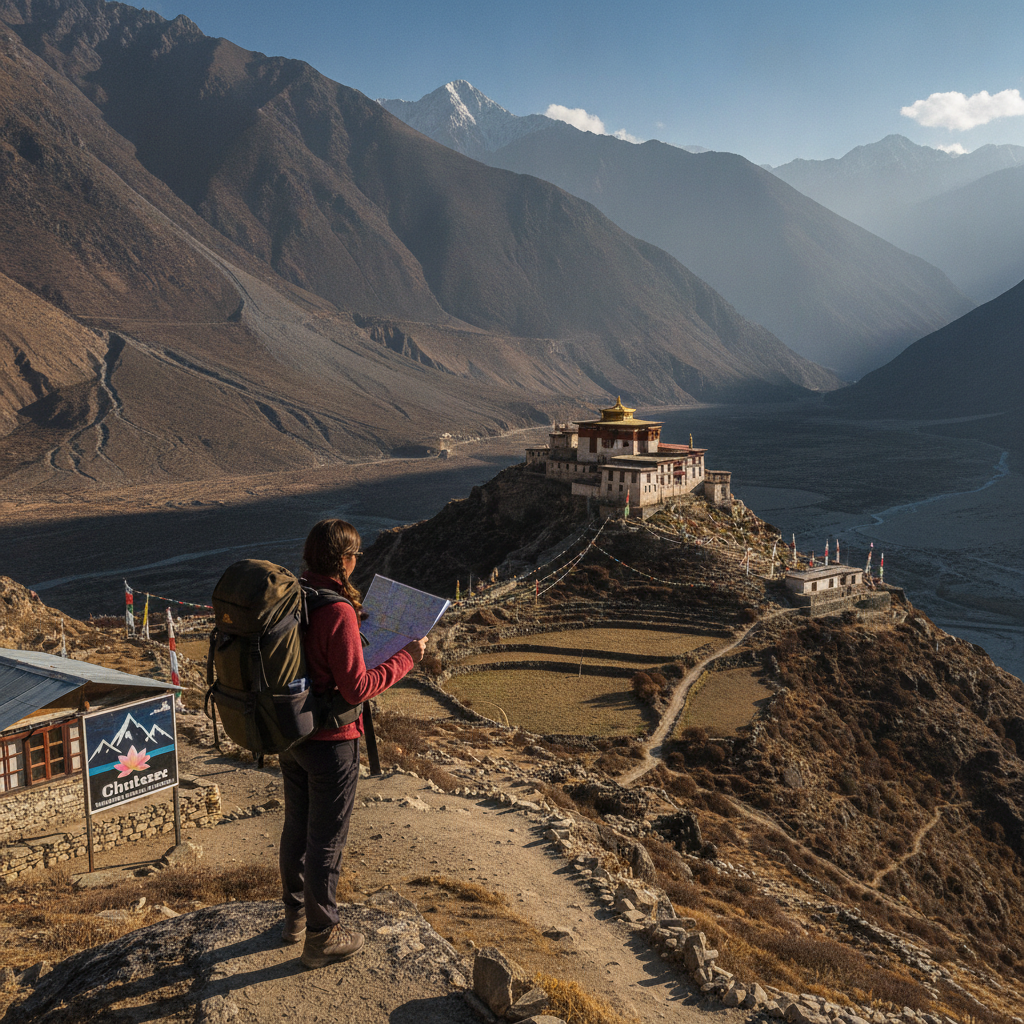
Monastery guesthouses aren't hotels with monk décor. They're functional lodging spaces — often simple rooms with basic bedding, shared bathrooms, and meals cooked in a communal kitchen — that monasteries open to travelers partly for income and partly as an expression of hospitality rooted in Tibetan Buddhist tradition. Some, like Tabo Monastery in Spiti or Key Gompa further up the valley, have been hosting trekkers for decades. You're expected to behave respectfully, observe quiet hours, and contribute modestly to the monastery's upkeep. The experience is genuine rather than curated, which is exactly the point.
Research Which Routes Have Reliable Guesthouse Access
Not every Himalayan trail has monastery accommodation at convenient intervals, so your route planning needs to reflect real logistics rather than wishful thinking. The Spiti Valley circuit, the trails around Tsum Valley in Nepal, and sections of the Ladakh high routes all have monastery guesthouses at distances that work for day-stage trekking. Apps like Maps.me and platform resources from trekking communities on sites like Wikiloc can help you map realistic daily distances. Aim for stages of roughly fifteen to twenty kilometers, factoring in altitude gain, which slows your pace considerably more than flat terrain.
Make Bookings the Low-Tech Way
Many monastery guesthouses don't have online booking systems, and that's not a problem — it's part of the rhythm of this style of travel. Local guesthouses in gateway towns like Kaza or Leh often have contacts for the monastery stays further along the route and can place a call on your behalf. Some monasteries accept walk-ins, though arriving unannounced during festival periods is a gamble. The better approach is to ask your first monastery stop to radio or call ahead to the next one. This informal chain of communication works surprisingly reliably and builds goodwill as you move through the region.
Pack for Self-Sufficiency Between Stops
Monastery guesthouses typically offer dal, rice, chapati, and simple noodle dishes — enough to fuel trekking, but not much variety. Between stops, especially on longer ridge-crossing sections, you should carry two to three days of supplementary food. Dried fruit, high-calorie trail mix, instant oats, and electrolyte powder cover the gaps without adding serious weight. A lightweight water filter or purification tablets are non-negotiable, since water sources vary in quality depending on elevation and season. Think of the monastery meals as your foundation and your pack snacks as the backup layer that keeps the whole system from depending on anything uncertain.
Respect the Rhythms of Monastic Life
Staying in a monastery guesthouse means integrating into a schedule that isn't built around you. Morning prayers begin early — sometimes before five a.m. — and the sounds of drums, horns, and chanting carry through thin walls. Rather than viewing this as an inconvenience, treat it as an early wake call that aligns perfectly with trekking logic: starting before eight means finishing your day stage before afternoon thunderstorms roll in, which is especially important at altitudes above four thousand meters. Meals are served at fixed times, lights often dim early, and loud conversation after dark is discouraged. Adjust to this, and the whole stay becomes more restorative.
Handle Permits Before You Leave the Gateway Town
Several Himalayan regions require inner-line permits or protected area passes that must be obtained in advance, and monastery guesthouses won't cover this administrative step for you the way a tour operator would. Spiti Valley requires an inner-line permit for foreign nationals, obtainable in Shimla or Kaza. Restricted areas of Nepal like Upper Mustang or Tsum Valley carry their own permit fees and requirements. Research the specific region you're targeting well before your arrival date, since processing times and office hours at district magistrate offices vary. Carry physical copies of all permits — digital copies are often not accepted at checkpoints on remote trails.
Budget Realistically for the Whole Route
Monastery guesthouses are among the most affordable accommodation options in the Himalayas, with nightly costs often covering both a bed and simple meals for a modest daily amount. That said, independent trekking without a tour operator means absorbing costs — transportation to trailheads, porter fees if you need them, permit charges, and emergency supplies — that organized trips bundle invisibly into one price. Carry more local currency than you think you'll need, since ATMs disappear quickly once you leave the main valley towns. Building a fifteen to twenty percent buffer into your daily budget handles the minor unexpected costs that accumulate on remote routes.
Know When to Adjust the Plan Without Guilt
Independent trekking through monastery country rewards flexibility above rigidity. Weather changes quickly at altitude, a trail may be washed out after recent rainfall, or your body may simply need an extra acclimatization day at a particular elevation. Monastery guesthouses are generally understanding about extended stays — a donation to the monastery's restoration fund or a modest additional night fee smooths things considerably. The absence of a fixed tour itinerary is the very thing that gives you permission to linger where something beautiful is happening or turn back when the mountain says no. That flexibility is the whole advantage of doing this independently.
Trekking the Himalayas without a formal tour, using monastery guesthouses as your nightly anchor points, is one of those travel experiences that stays with you long after the altitude headaches fade. It asks more of your planning instincts and your patience, but it returns something rare: genuine immersion in a place rather than a choreographed version of it. Start with a well-documented route, make a few quiet inquiries in the gateway town, and trust that the trail will open up in front of you one stage at a time.