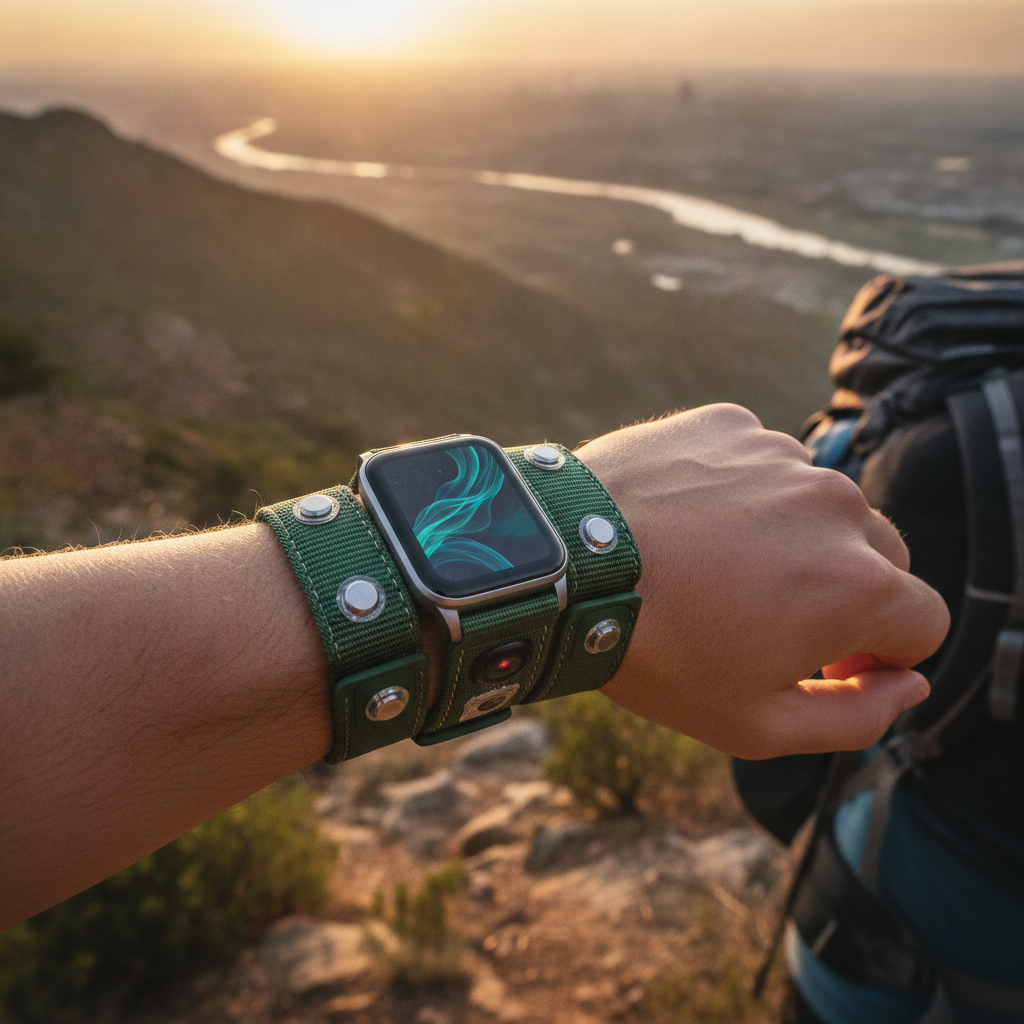
Wearable technology has always faced a quiet tension between what a device can do and how long it stays relevant. Smartwatches, in particular, tend to age quickly — not because the hardware fails, but because the sensors inside can't keep pace with evolving health monitoring demands. A new category of modular bands with embedded biosensors is beginning to resolve that tension, allowing the watch face and processor to remain unchanged while the band itself becomes the source of new capabilities.
When the Band Becomes the Sensor Platform
Traditional smartwatch design places most sensing hardware inside the watch case itself — optical heart rate monitors, accelerometers, and skin temperature probes are all packed beneath the display. Modular bands shift that model by embedding additional sensors directly into the strap. Companies like Withings and several emerging wearable startups have developed bands that communicate with the existing watch processor via Bluetooth or direct electrical contact, feeding new biometric data streams without requiring the user to buy a new device. This approach treats the watch as a stable computing hub and the band as an upgradeable peripheral.
What Modular Bands Are Currently Able to Track
The range of metrics that modular biosensor bands can measure has expanded considerably. Current offerings include continuous electrodermal activity monitoring, which tracks sweat-gland responses associated with stress, as well as passive blood glucose estimation using near-infrared spectroscopy. Some bands incorporate bioimpedance sensors capable of estimating hydration levels and body composition throughout the day. Garmin and Samsung have both explored band-adjacent modular accessories, while smaller hardware companies are pursuing respiratory rate monitoring through thoracic movement sensors woven into flexible band material. The list continues to grow as miniaturization improves.
How the Data Integrates With Existing Watch Software
For modular bands to be genuinely useful, their data needs to merge cleanly with the health ecosystems users already rely on. Most current implementations use companion apps — often syncing through Apple Health or Google Fit — to layer band-sourced metrics alongside native watch data. The result is a more complete biometric picture without fragmenting the user experience across multiple separate apps. Some manufacturers have developed open APIs that allow third-party developers to build specialized tracking tools on top of the band's raw sensor output, which has accelerated the pace of feature development beyond what any single hardware company could sustain alone.
The Engineering Challenge of Keeping Bands Comfortable and Accurate
Packing sensors into a wrist band introduces real engineering constraints. The band must maintain consistent skin contact to ensure accurate readings, yet remain flexible and breathable enough for all-day wear. Optical sensors are especially sensitive to motion artifacts — any gap between the sensor and skin introduces noise into the data. Manufacturers address this through contoured sensor housings, adaptive pressure algorithms, and materials borrowed from medical-grade wearable research. Some bands now include small haptic motors that prompt the wearer to adjust fit when sensor contact quality drops below a threshold, quietly maintaining accuracy without interrupting daily activity.
Why This Model Has Meaningful Implications for Device Longevity
From a sustainability standpoint, modular biosensor bands represent a meaningful shift away from the upgrade cycle that defines most consumer electronics. A smartwatch purchased two or three years ago can gain clinically adjacent capabilities simply by swapping the band rather than replacing the entire device. This has practical appeal for health-conscious users who want continuous monitoring improvements without the cost or electronic waste of full hardware replacement. The model also benefits manufacturers by creating a recurring accessory revenue stream that supports ongoing sensor research — meaning the bands themselves are likely to keep improving even as the core watch hardware remains stable.
How to Get the Most From a Modular Band Setup
If you're considering adding a biosensor band to your existing smartwatch, compatibility is the first thing to verify. Not all bands work across watch platforms — some are designed exclusively for Apple Watch series, others for Wear OS devices. Check whether the companion app supports the health platforms you already use, and look for bands that offer firmware updates, since sensor algorithms often improve significantly in the months after a product launches. Wearing consistency matters more than most users expect: a band that sits in a drawer three days a week will produce fragmented data that's harder to interpret meaningfully. Treating it like a standard watch band — always on, properly fitted — unlocks the full value of continuous monitoring.
The broader promise of modular biosensor bands is that a single device can grow alongside its owner's health awareness rather than becoming obsolete the moment a new sensor category emerges. What began as a niche engineering experiment is gradually reshaping expectations for what wearable hardware should be able to do across its entire lifespan — not just in the year it ships.