Small habits are surprisingly hard to keep. Not because they're difficult — two minutes of stretching or drinking a glass of water before coffee doesn't require much willpower — but because without some kind of feedback loop, they quietly disappear within a few weeks. Micro-habit tracking apps have gotten remarkably good at solving exactly this problem, using behavioral psychology principles baked into their design to keep you engaged long after the initial motivation fades.
Choose an App That Matches Your Motivation Style
Not every tracking app works the same way, and the one that keeps you consistent depends a lot on what actually motivates you. Apps like Streaks and Habitica take very different approaches — Streaks uses a clean, minimal design with visual chain-building to appeal to people who respond to visual momentum, while Habitica gamifies the whole process with RPG-style rewards. Spend a week with one before assuming it's not working. The behavioral nudge only functions if the format resonates with how your brain already tends to process reward.
Set Up Notifications That Prompt, Not Pester
Push notifications are one of the most powerful nudge tools in any habit app, but they only work when they're timed thoughtfully. The goal is a gentle contextual cue — something that arrives when you're already in a position to act. If you want to build a morning journaling habit, a notification at 7:15 a.m. works better than one at noon. Apps like Finch and Streaks let you customize notification timing precisely, so take ten minutes to map your daily schedule and align each habit reminder to a realistic window. Poorly timed reminders get ignored and eventually silenced.
Use Habit Stacking to Anchor New Behaviors
One of the most effective behavioral strategies built into modern tracking apps is the idea of stacking — linking a new habit to an existing one you already do automatically. Brushing your teeth, making coffee, locking your front door — these are solid anchors. When you log habits in an app like Way of Life, you can group behaviors that naturally follow each other, which helps the app surface them together and reinforces the sequence. Over time, the cue-routine-reward loop tightens, and the new habit starts feeling less like an effort and more like part of the flow.
Let the Streak Mechanic Work in Your Favor
Streak counters get a bad reputation for creating anxiety, but when used with the right mindset, they're genuinely effective. Seeing a 14-day streak on a hydration or movement habit creates a low-grade commitment that behavioral researchers call loss aversion — you don't want to break what you've built. The key is to let the streak motivate without letting it control. Apps like Streaks allow you to set a "flexible" streak that accommodates occasional missed days without resetting to zero, which keeps motivation intact without the all-or-nothing pressure that often causes people to quit.
Track Fewer Habits to Build Stronger Ones
One of the most common mistakes when starting with a habit app is loading it up with a dozen intentions at once. The app becomes overwhelming, the dopamine hit of checking boxes turns into a chore, and the whole system collapses. Research consistently points to a simpler rule: focus on two or three habits at most until they feel automatic. Most well-designed apps like Habitica and Streaks will actually prompt you to limit your active habits, which is behavioral design working in your favor. Narrow focus builds genuine consistency faster than ambitious tracking.
Review Your Data Weekly to Spot Pattern Gaps
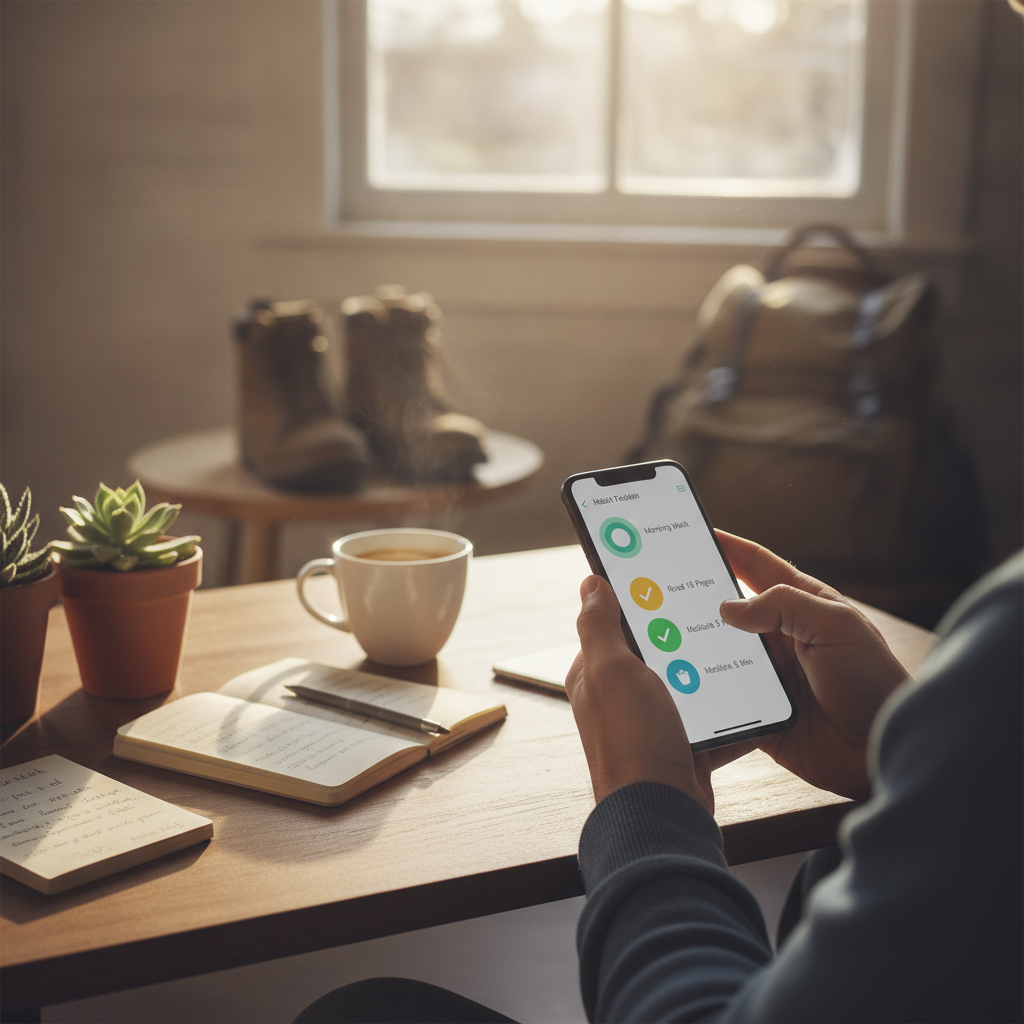
The analytics built into modern habit apps are more useful than most people realize. A weekly review — even five minutes on a Sunday — lets you see where your habits are slipping and whether there's a pattern. Maybe your water intake drops every Thursday. Maybe your evening wind-down habit gets skipped on days when you work late. Apps like Way of Life visualize this data in color-coded grids that make pattern recognition almost effortless. Once you can see the gap clearly, you can adjust the habit design rather than just trying harder.
Celebrate Progress Without Waiting for Perfection
Behavioral nudges work best when the reward cycle is short. Waiting until you've hit a 30-day streak to feel good about your progress is a long time to go without positive reinforcement. Most tracking apps build in micro-celebrations — completion sounds, visual animations, or milestone badges — specifically because small, frequent rewards keep the motivation engine running. Don't skip past these moments. A two-second animation acknowledging that you showed up today matters more to your habit formation than it probably seems. Progress recognition, even in tiny doses, is what keeps the loop alive.
Reassess and Refresh Your Habits Every Month
Habits that made sense in January might feel irrelevant or too easy by March. A habit that once required effort can become so automatic that tracking it adds no value. Revisiting your app setup once a month — swapping out habits that have solidified for new ones you want to develop — keeps the system feeling intentional rather than stale. Finch, for example, prompts users to set evolving goals tied to emotional wellbeing, which naturally encourages this kind of periodic refresh. Treating your habit stack as something that grows with you is what separates people who use these apps for years from those who abandon them after a month.
Building lasting routines doesn't require dramatic overhauls or perfect discipline — it requires a system that works with your psychology rather than against it. Micro-habit apps, when used with a bit of intention, provide exactly that kind of structure. Start with one habit, pick an app that fits how you think, and let the nudges do their job. The momentum you build in the first few weeks is real, and it compounds in ways that quietly reshape your days.