Most travelers return from a trip carrying photographs, souvenirs, and a rough chronology of places visited — but very few bring back the kind of understanding that only comes from standing inside a moment rather than watching it from the edge. The difference between observing a community festival and genuinely participating in one is not merely experiential; it reshapes how a place is remembered, what feels meaningful about the journey, and what kind of traveler a person becomes over time.
The Spectator Position and Its Quiet Limitations
There is nothing wrong with watching. Witnessing a lantern festival in Chiang Mai or a harvest procession winding through a Spanish mountain village is, by any measure, a beautiful thing. But the spectator position carries a built-in distance. Standing behind a rope line or photographing from across a square, even with the best intentions, keeps a traveler safely outside the social fabric of what is unfolding. The community performing the ritual is aware of this divide, and so, on some level, is the traveler. What gets carried home from that kind of encounter tends to be visual — images, general impressions, and the pleasant residue of novelty — rather than anything that requires the traveler to change how they think about a place or its people.
What Participation Actually Requires
Joining a community festival as a genuine participant rarely happens by accident. It usually begins with preparation — learning even a basic phrase or two in the local language, researching the cultural significance of the event, and approaching community members with the kind of sincere curiosity that reads as respect rather than tourism. Many festivals around the world, from the Onam celebrations in Kerala to the Inti Raymi sun festival outside Cusco, have specific roles open to visitors: helping prepare offerings, assisting with decorations, joining a particular procession segment, or learning a dance form from a local instructor in the days leading up to the event. These aren't manufactured tourist experiences; they're invitations extended by communities who can distinguish between genuine interest and passive consumption. Accepting that invitation requires humility and a willingness to look uncertain, make small mistakes, and ask for guidance.
What Shifts When the Role Changes
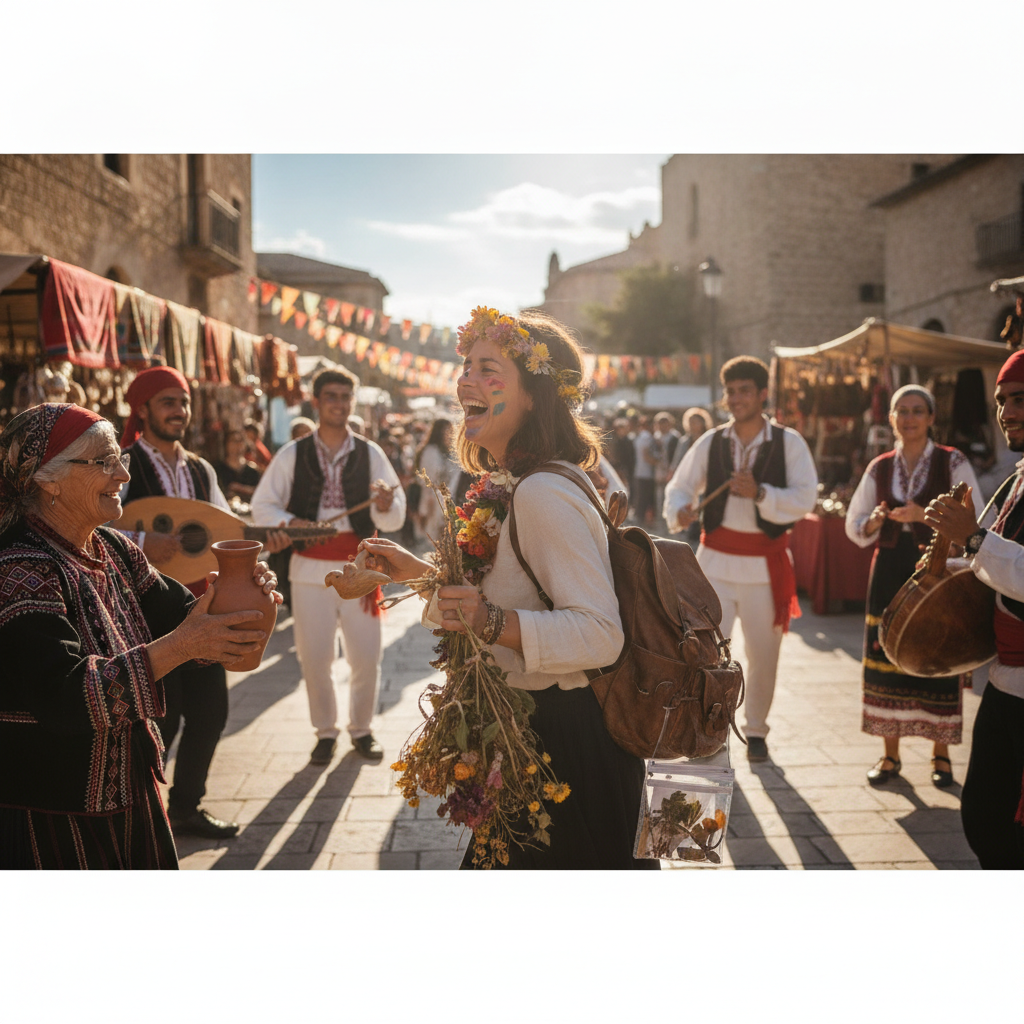
The most immediate shift that happens when a traveler steps from the sideline into the center of a cultural event is sensory. Sound changes — it surrounds rather than approaches. Rhythm becomes something the body follows rather than the eye observes. There is a particular quality to standing inside a *barrio fiesta* in the Philippines, for instance — the hyperlocal street festivals where neighborhoods cook communal meals, string lights between homes, and invite anyone present to eat — that no amount of watching from a nearby café can replicate. The smells, the casual physical proximity, the laughter directed at the traveler's earnest attempt to help with food preparation: these become the texture of memory. Researchers who study travel and meaningful memory consistently find that emotional and sensory engagement is what makes experiences durable. Participation creates both.
The Cultural Terms That Open Doors
Learning a handful of culturally specific terms before arriving at a festival does more than demonstrate effort — it signals that a traveler has engaged with the context of what they're attending. The Japanese concept of *matsuri* (a festival deeply connected to Shinto ritual and seasonal gratitude) carries a different weight than the word "festival" alone. Understanding that a *mela* in India (a large public gathering tied to religious or seasonal significance) involves structured zones of activity, specific vendor hierarchies, and layers of meaning invisible to first-time visitors helps a traveler know where to stand, who to speak with, and what questions to ask. These terms aren't passwords; they're frameworks. Carrying them into a festival changes the quality of every conversation that follows, and communities notice when visitors arrive having done that kind of respectful preparation.
The Specific Value of Small and Local
The festivals most worth joining as an active participant are rarely the ones that headline travel magazines. The massive, well-documented celebrations in cities like Rio de Janeiro or Venice are extraordinary to witness, but their scale — and the industrial tourism infrastructure surrounding them — makes genuine participation harder to find and easier to fake. Smaller regional festivals, by contrast, still operate on a human scale. A grape harvest celebration in a village in Georgia (the country), a neighborhood tamborrada drum festival in a town outside San Sebastián, or a floating market ritual in rural Cambodia — these events retain the quality of real community life because they haven't been scaled for an audience. A traveler who makes the effort to reach them and then asks how to help, rather than where to stand for the best photograph, will almost always be welcomed.
What Gets Carried Home
The souvenirs that matter most from this kind of travel tend to be invisible. They're the recipe for a sauce learned while helping prepare festival food. They're the name of a family in Oaxaca who invited a traveler to help hang marigold garlands during Día de los Muertos preparations. They're a corrected understanding of what a celebration actually means to the people who created it — which is almost always more complex, more tender, and more quietly resilient than any outside description suggests. These things reshape how a traveler speaks about places when they return home, what questions they ask when planning the next trip, and what they look for when they arrive somewhere new.
The traveler who watches a festival brings home a memory. The traveler who participates brings home a small piece of understanding — and that, more than any photograph or souvenir, is the kind of thing that doesn't fade when the jet lag clears. It compounds quietly, expanding what travel means and deepening the curiosity that makes a person want to keep going. That shift — from observer to participant — is what separates the experience of seeing the world from beginning, genuinely, to know it.