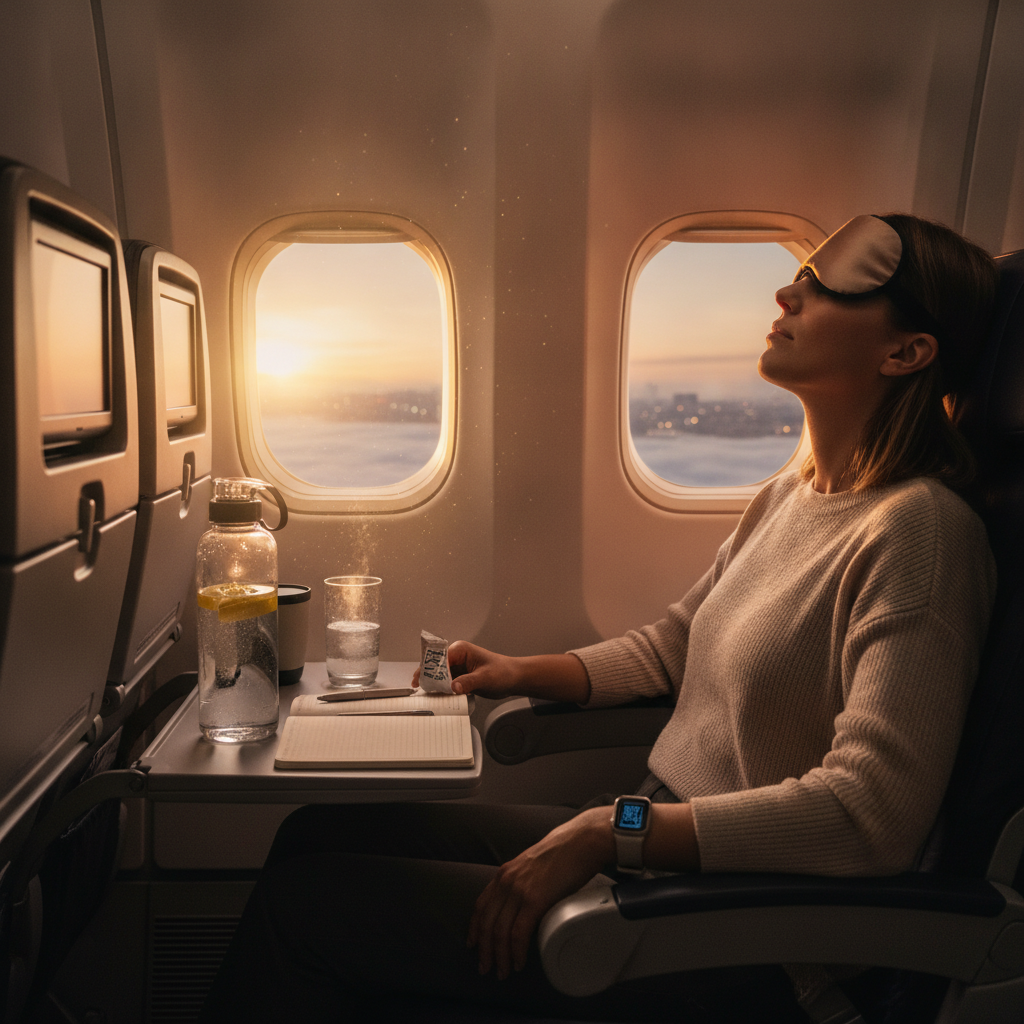
Long-haul flights are one of the most physically demanding parts of modern travel, and most of the discomfort people feel in the days after landing has less to do with time zones and more to do with how dehydrated their bodies became at 35,000 feet. Cabin air is notoriously dry, with humidity levels far lower than what your body is used to on the ground. That dryness accelerates fluid loss, disrupts sleep quality, and leaves your system struggling to adjust once you land. The good news is that a thoughtful hydration approach — started before you even board — can meaningfully reduce how rough those first 48 hours feel.
Start Hydrating the Day Before You Fly
Most travelers think about water once they're already on the plane, but the smarter move is to build up your hydration reserves the day before departure. Your body holds water in tissues and cells, and arriving at the airport already well-hydrated gives you a buffer against the drying effects of cabin air. Aim to drink consistently throughout that pre-flight day rather than gulping large amounts right before you leave. Coconut water is a solid option here because it delivers natural electrolytes alongside fluids, which helps your body actually retain what you're drinking rather than cycling it straight through.
Skip the Alcohol and Limit the Coffee
Both alcohol and caffeine are diuretics, meaning they push your body to expel water faster than it would otherwise. On a long-haul flight — say, a 14-hour route from Los Angeles to Singapore — even a glass or two of wine can leave you noticeably more depleted by the time you land. That depletion compounds fatigue, makes it harder to sleep on the plane, and intensifies the groggy, foggy feeling that defines bad jet lag. Swapping your in-flight cocktail for sparkling water or a light herbal tea isn't a huge sacrifice, and the difference you feel upon landing is noticeable.
Set a Drinking Schedule During the Flight
Waiting until you feel thirsty at altitude is not a reliable system — thirst signals are often blunted in pressurized cabins, so you can be losing fluids steadily without noticing. A better approach is to set a quiet reminder on your phone or watch every 45 to 60 minutes as a prompt to take a few sips. Apps like Hydro Coach let you track intake through the day and can be a helpful nudge even mid-flight. You don't need to overdo it — small, consistent amounts throughout the journey are far more effective than occasional large glasses.
Carry an Electrolyte Supplement in Your Carry-On
Plain water does most of the work, but adding electrolytes to part of your fluid intake makes a real difference on very long flights. Products like Liquid I.V. or Nuun tablets are compact, easy to pack, and dissolve quickly into a standard water bottle. Electrolytes — primarily sodium, potassium, and magnesium — help your cells absorb and hold water more efficiently, which matters when cabin air is pulling moisture from your skin and respiratory system all day. One or two servings during a long flight, rather than pounding tablets constantly, tends to be the right balance for most travelers.
Use a Refillable Bottle to Track Your Intake
Airlines offer water on request, but relying on flight attendants for every sip makes it easy to drink far less than you need. Bringing a refillable 500ml or 750ml bottle — emptied before security and filled at a terminal water station before boarding — gives you a visual, tangible sense of how much you're consuming. Brands like Hydro Flask and Nalgene make durable, lightweight options that fit in most seat pockets. When you can see how often you're refilling, you're naturally more consistent, and that consistency is what actually shifts how you feel on the other side of the flight.
Moisturize to Support Your Skin's Hydration Barrier
Hydration isn't only internal. Cabin air draws moisture directly from your skin, and that surface-level dehydration contributes to the tired, tight, uncomfortable feeling that makes jet lag worse. Applying a simple facial moisturizer and a small amount of lip balm every few hours during a long flight helps your skin hold onto what it has. Travel-sized products from brands like CeraVe are affordable, easy to pack, and won't trigger TSA concerns. When your skin feels comfortable and protected, your overall sense of physical wellbeing during and after the flight tends to be noticeably better.
Rehydrate Strategically in the First 24 Hours After Landing
The work doesn't stop when the wheels touch down. Your body continues to recalibrate for hours after a long flight, and what you drink in that first day on the ground shapes how quickly you adjust. Prioritize water and electrolyte-rich fluids, hold off on alcohol entirely for at least the first full day, and be cautious with heavy caffeine use if it's nighttime at your destination. Light broths, fresh fruit, and herbal teas like ginger or peppermint all support the rehydration process while being gentle on a travel-weary digestive system. The goal is to give your body the raw materials it needs to reset.
Time Your Fluid Intake Around Sleep Windows
One of the most overlooked jet lag strategies is aligning your hydration with your target sleep schedule at the destination. Drinking a moderate amount of water in the hours before your intended sleep time — but tapering off in the final hour or two — helps you avoid disruptive nighttime bathroom trips that fragment rest. Broken sleep is one of the primary reasons jet lag lingers into the second and third days after landing, so protecting those early sleep windows matters. Staying hydrated supports melatonin regulation and overall sleep quality, which are both directly tied to how fast your internal clock adjusts to a new time zone.
You don't need a complicated protocol to feel better after a long flight. Small, consistent choices around what you drink — and when — add up to a real difference in how your body handles the transition. Start before you board, stay steady in the air, and keep it going once you land. Your next long-haul adventure deserves a smooth arrival, and a smarter hydration strategy is one of the simplest ways to make that happen.