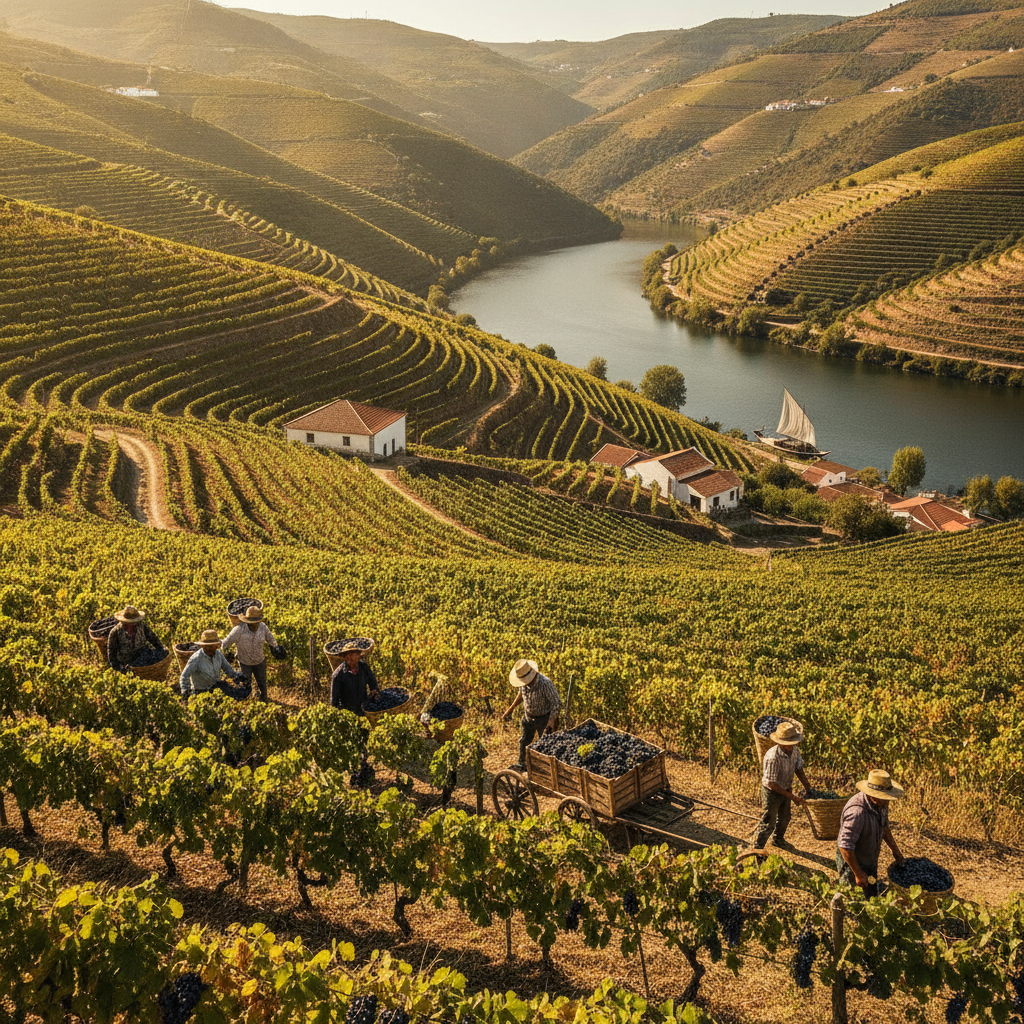
Few travel experiences align as perfectly as arriving in the right place at exactly the right moment in the natural calendar. Portugal's Douro Valley is breathtaking in any season — its terraced vineyards dropping in elegant tiers toward the river, the light warm and golden across stone quintas — but September brings something that no other month can replicate. The harvest, known locally as the vindima, transforms the valley from a scenic wine destination into a living, working landscape where centuries of tradition play out in full view. Visitors who time their trip around this window don't just observe a region; they step into its most defining annual chapter.
The Rhythm of the Vindima
The Douro harvest typically begins in the first two weeks of September and runs through early October, though the precise timing shifts slightly depending on the year's weather patterns and the altitude of individual quintas. Lower elevation vineyards along the riverbanks tend to ripen earliest, while plots higher on the schist slopes follow a few weeks behind, which means the harvest unfolds gradually across the valley rather than all at once. This staggered rhythm works in a traveler's favor. Spending even five to seven days in the region during this period almost guarantees encountering active harvest activity somewhere nearby, whether that's teams of pickers moving through the rows at dawn or the hum of equipment at a winemaking facility by afternoon.
What makes the vindima particularly special is that many of the valley's historic quintas — estate wineries like Quinta do Crasto, Quinta da Romaneira, and the iconic Quinta do Vesuvio — open their harvest operations to guests during this period in ways they simply don't at other times of year. Some offer formal harvest experiences where visitors join the picking or participate in the traditional foot-treading of grapes in stone lagares, a practice that continues at several Port wine producers who argue the technique produces superior results. These aren't staged performances for tourists; they're genuine production activities that visitors are invited to witness and, in some cases, participate in directly.
Planning Around the Harvest Window
Timing a Douro Valley trip for the harvest requires a degree of flexibility and advance planning that a standard summer wine trip doesn't demand. Accommodation across the valley fills significantly in September, particularly at the quintas that offer on-site lodging. Booking three to four months ahead is a reasonable minimum, and using platforms like Booking.com or Airbnb to compare quinta-style guesthouses with independent properties in towns like Pinhão or Peso da Régua gives a fuller picture of what's available at different price points. Pinhão sits at the heart of the upper Douro and functions as an excellent base — small enough to feel intimate, but connected enough to reach multiple quintas by road or by boat in a single day.
The Douro Valley train line, which runs from Porto's São Bento station eastward into the valley, remains one of the most scenic rail journeys in Europe and is worth building into the itinerary on its own merits. During harvest season, the train passes through vineyards at their most visually dramatic — the green of summer giving way to the first amber and rust tones — making the journey itself a meaningful part of the experience rather than just a transfer. Using the Comboios de Portugal app to check schedules and book tickets in advance is practical, since the valley trains can sell out on weekends in September when both tourists and Portuguese day-trippers head east from Porto.
For travelers who want to structure a more curated experience around specific quintas or tasting programs, the app Vivino is useful for researching Douro wines in advance and identifying which producers align with personal preferences before committing to visits. Understanding a little about the difference between Douro table wines and Port before arriving makes conversations with winemakers and estate staff considerably more rewarding, and most quintas appreciate guests who arrive with genuine curiosity rather than simply looking for a tasting.
What September Offers Beyond the Vineyard
The harvest season brings an energy to the Douro Valley that extends well beyond the vineyards themselves. Villages along the river host small festivals and communal gatherings tied to the vindima, and restaurants in towns like Lamego and Sabrosa adjust their menus seasonally, featuring local game, chestnuts, and regional dishes that appear only in autumn. The light in September is warmer and lower than it is in midsummer, which means photographs taken in the terraced vineyards carry a depth and richness that the harsher midday light of July simply doesn't produce. Temperatures are also more comfortable for walking the steep schist paths between vineyard rows — warm enough to be pleasant, cool enough in the evenings to make outdoor dinners feel genuinely atmospheric.
Boat cruises along the Douro River operate throughout the year but take on a different quality in September when the surrounding hills are in active harvest. Several operators running out of Pinhão offer half-day and full-day cruises that pass working quintas, and the combination of river-level perspectives and hillside activity gives a sense of the valley's scale that no single viewpoint from above can replicate. For travelers interested in a slower pace, renting a car and driving the N222 road along the south bank of the river — regularly cited as one of the world's great scenic drives — allows for spontaneous stops at roadside wine cellars and village bakeries that scheduled tours tend to bypass entirely.
Some experiences simply cannot be manufactured outside their natural season, and the Douro Valley's September harvest is one of them. The combination of sensory richness, genuine cultural activity, and a landscape at its most expressive creates a travel encounter that lingers well beyond the return flight home. For anyone who has considered a Portuguese wine trip and wondered whether the timing truly matters, the vindima offers a clear and compelling answer — it matters enormously. The valley exists beautifully year-round, but in September, it comes fully alive.