The human body responds to light with a precision that most people underestimate. Long before electric bulbs, screens, or overhead fixtures entered everyday life, the gradual dimming of natural light at dusk served as the body's most reliable signal that sleep was approaching. That ancient relationship between light and biology hasn't disappeared — it simply gets disrupted by modern environments that keep rooms bright long after the sun has set. Understanding how to work with that biological sensitivity, rather than against it, opens a remarkably simple path toward falling asleep faster and waking up feeling more restored.
The Biology Behind Light and Melatonin Release
At the center of the body's sleep timing system is melatonin, a hormone produced by the pineal gland that rises steadily as darkness increases. The challenge in modern households is that standard overhead lighting — particularly the cool, blue-toned light common in LED fixtures and device screens — suppresses melatonin production more aggressively than warmer wavelengths do. Blue-spectrum light signals the brain that midday conditions still exist, effectively pausing the hormonal shift that prepares the body for sleep. Amber and red wavelengths, by contrast, fall at the far end of the visible spectrum and trigger far less suppression, allowing melatonin to rise at its natural pace during the final hour of the evening.
Why Amber Light Works Where Other Adjustments Fall Short
Many people try dimming their screens or enabling night mode features — tools like Night Shift on Apple devices or the warm-tone setting on a Samsung display — and notice modest improvements. These adjustments help, but they address only one source of blue light exposure in a room that may still have bright overhead fixtures running at full intensity. Switching to dedicated amber or low-Kelvin bulbs, such as those in the 1800–2200 Kelvin range offered by brands like Philips Hue or LIFX, changes the entire light environment rather than just one screen. That room-level shift is what allows the nervous system to register a meaningful change in conditions, accelerating the hormonal cascade that leads to genuine drowsiness.
What the Body Actually Experiences During That Thirty-Minute Window
When the light environment shifts to dim amber approximately thirty minutes before the intended sleep time, a sequence of physiological changes begins with quiet efficiency. Core body temperature starts to decline slightly, a drop that is closely associated with sleep onset. Melatonin production accelerates without the interference of suppressive wavelengths. Heart rate variability, a reliable indicator of nervous system relaxation, begins shifting toward parasympathetic dominance — the calm, restorative mode that underpins quality sleep. Cortisol, the alertness hormone, tapers more smoothly under low-stimulation conditions. Together, these changes don't merely relax the body; they actively prime it to transition into sleep more quickly once a person lies down.
Building a Practical Amber-Light Routine That Sticks
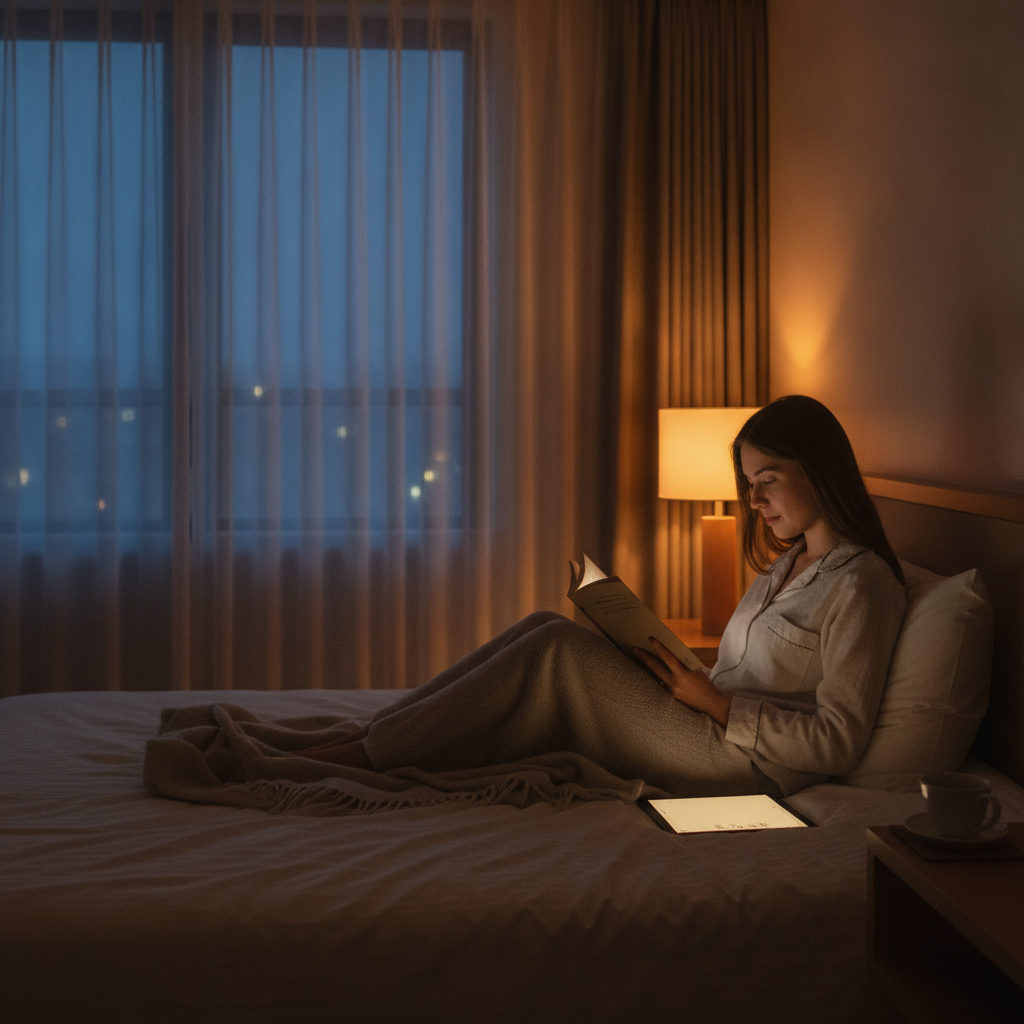
Creating this kind of evening environment doesn't require an elaborate smart-home setup or significant expense. A single amber-toned lamp on a bedside table can transform a bedroom's light quality in seconds, and brands like Casper — known primarily for sleep products — offer purpose-built sleep-aid lighting designed specifically for this wind-down window. The key is consistency: the brain learns environmental cues and begins anticipating sleep when the same conditions repeat night after night. Pairing the light shift with a calm activity — light reading, gentle stretching, or a brief journaling session — reinforces the signal further. Within a week or two of regular practice, the body often begins responding to the amber light itself as a cue to wind down, even before sleep pressure has fully built.
Common Mistakes That Undermine the Amber-Light Effect
The most frequent error people make is switching to amber lighting while continuing to use a bright tablet or scrolling through a phone at close range. Even a single screen held near the face emits enough blue-spectrum light to partially counteract the benefits of a warm room environment. Keeping overhead lights fully on in adjacent rooms — a bathroom or kitchen visited during that thirty-minute window — introduces additional blue-wavelength exposure that resets alertness in the brain's light-sensitive pathways. If you use amber bulbs in the bedroom but briefly walk into a brightly lit hallway, the transition back to cool light interrupts the hormonal momentum that had been building. Maintaining the warm-light environment consistently across every room you enter during that final half-hour protects the process.
Simple Ways to Set Up Your Evening Light Environment Tonight
The transition to an amber pre-sleep routine can start with a few small decisions made before the evening even begins. Swap one or two standard bulbs in your bedroom for warm-spectrum options in the 2000 Kelvin range — these are widely available at hardware stores and can be used in any standard lamp fixture. Set a consistent time each night, ideally thirty to forty minutes before your target sleep time, to dim the space and put overhead lights to rest. If smart bulbs are already part of your setup, use the scheduling feature in apps like the Philips Hue app to automate the transition so it happens without requiring any active decision-making. Silence notifications on devices during this window, or switch them to a warm-screen mode, and allow the room itself to do the biological work it's designed to support.
The simplest adjustments are often the ones with the most durable effects. Amber light in the final moments of the evening works precisely because it aligns with a system the body already has — one refined over thousands of years of responding to firelight and fading dusk. Restoring that natural signal, even briefly, gives the sleep cycle the conditions it was built to work within, and the results tend to speak for themselves in the quality of rest that follows.