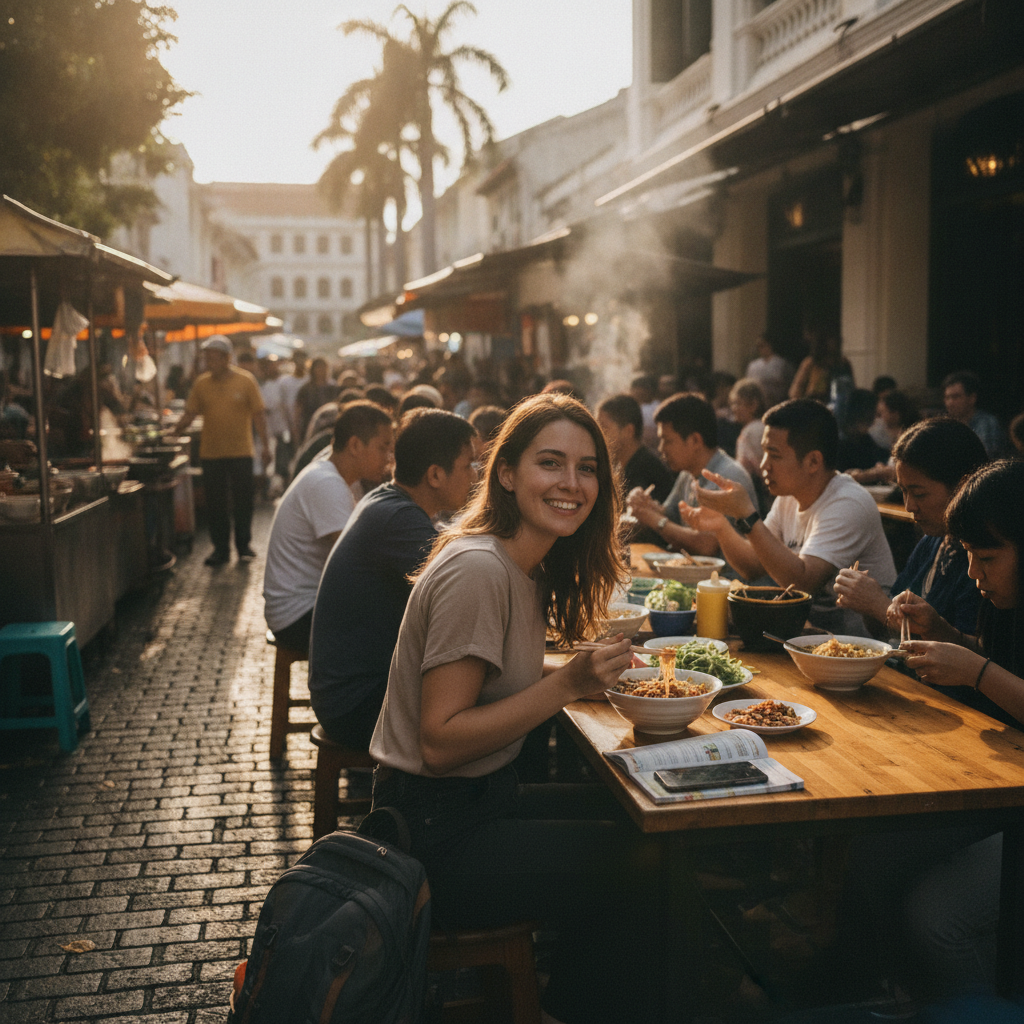
Eating in sync with local mealtimes is one of the most practical and underused tools for shortening jet lag recovery. When you land somewhere new and immediately reach for a snack based on what your stomach is used to back home, you're reinforcing the very rhythms your body needs to abandon. Anchoring your first proper meal to local lunch hours — regardless of what time your internal clock thinks it is — sends a clear signal to your circadian system that a reset is underway. The shift happens faster than most travelers expect.
Long-haul travel scrambles your body's internal timing in ways that go beyond simple tiredness. Your digestive system, hormone production, and alertness cycles are all linked to when you eat, not just when you sleep. Arriving in Tokyo or Lisbon and immediately eating according to your home schedule keeps those systems locked in the wrong timezone. The first meal you eat in a new place carries surprising weight in terms of how quickly your body begins to recalibrate.
Eat at the Local Hour, Not the Comfortable One
The most direct step you can take is to delay or advance your first meal after landing so it falls within the local lunch window — typically somewhere between noon and 2:00 p.m. local time. This feels uncomfortable at first, especially after a night flight when your body is convinced it's 3:00 a.m. and demanding either sleep or a full breakfast. Pushing through that discomfort matters. Eating at the right local hour reinforces the new timezone at a biological level, and the discomfort usually fades faster than you'd expect once the meal itself arrives.
Check Local Lunch Culture Before You Land
Not every destination runs on the same mealtime schedule. In Spain, lunch rarely begins before 2:00 p.m. and often stretches to 4:00 p.m. In Japan, the midday meal window tends to be tighter, often between noon and 1:00 p.m. Knowing this in advance means you can time your airport exit, hotel check-in, or transit accordingly. A quick search before departure — or a look at a destination-specific travel app like Tripadvisor's local dining filters — tells you what the norms are so you're not wandering around a closed restaurant district wondering where everyone went.
Skip the Airport Meal If Timing Works Against You
Airport food is convenient, but eating a full meal in the terminal because you're hungry from the flight can set your first local meal back by several hours. If you're landing close to local lunchtime, it's worth holding off. A light snack — something small enough to quiet hunger without replacing a real meal — is a reasonable bridge. The goal is to arrive in the city with enough appetite to sit down at a proper local restaurant during the actual lunch service, which does more than feed you; it places you physically and socially inside the local rhythm of the day.
Choose a Sit-Down Meal Over Quick Takeaway
There's a meaningful difference between grabbing a sandwich from a convenience store and sitting down at a neighborhood restaurant in, say, the Trastevere district of Rome or a local eatery near Chiang Mai's Nimman Road. The sit-down experience extends the time you spend in sync with local rhythms — ordering when locals order, eating at the pace the kitchen sets, finishing when the lunch crowd finishes. This extended engagement with local timing has a compounding effect on how quickly your body accepts the new schedule. It also makes for a far more enjoyable first impression of a place.
Use Hunger Strategically, Not Reactively
Jet lag often produces a strange relationship with hunger — you may feel ravenous at odd hours or completely uninterested in food when you should be eating. Rather than reacting to every hunger cue, treat them as information rather than commands during the first 24 hours. If hunger hits at what would be 3:00 a.m. back home but it's only 9:00 a.m. locally, a small piece of fruit or a coffee can tide you over without displacing the upcoming local lunch. Using hunger strategically — acknowledging it without immediately satisfying it — puts you in control of your adjustment rather than your adjustment controlling you.
Factor in Daylight When Planning That First Meal
Natural light and food timing work together to reset your internal clock. If you can eat your first local meal in a spot with good natural light — an outdoor café, a restaurant with large windows, a covered terrace — the combination of daylight exposure and local mealtime creates a stronger biological signal than either element alone. This is especially useful in destinations with significant time differences, where the gap between your home timezone and local time is six hours or more. Cities like Medellín or Bangkok, which sit well outside most Western travelers' usual timezone ranges, respond particularly well to this combined approach.
Avoid the Familiar Food Trap on Day One
Travelers often gravitate toward familiar cuisines on the first day — a burger, a pizza, something recognizable — usually because jet lag makes decision fatigue worse and familiar food feels safer. Eating local food at local mealtimes, however, adds an additional layer of environmental cueing that helps your body settle in. The unfamiliar flavors and textures are minor sensory inputs that, combined with the right timing and setting, further signal that the context has genuinely changed. This isn't about forcing yourself to eat something you dislike; it's about choosing something local when you have the option, which in most destinations is easy to do.
Keep Your Evening Meal Modest That First Night
Once you've anchored your day with a proper local lunch, the evening meal deserves some attention too. Eating heavily late into the night on arrival day can disrupt sleep quality and undo some of the progress made during lunch. A lighter dinner, eaten at whatever time locals typically eat it — earlier in the U.S. and Northern Europe, later in Mediterranean destinations — keeps the momentum going without overloading your digestive system right before your first local sleep. That first night's sleep is when your body consolidates much of the reset, so protecting it with a sensible dinner pays off by the following morning.
The relationship between meal timing and timezone adjustment continues to gain attention as travelers look for practical, low-effort ways to land feeling sharper. What's becoming clearer is that food timing works best not as an isolated tactic but as part of a broader approach that includes light exposure, movement, and sleep management. Travelers who treat that first local lunch as an intentional act — a deliberate entry point into the local rhythm — consistently report feeling oriented faster and more completely than those who eat whenever hunger or habit dictates. Getting this one detail right won't eliminate jet lag entirely, but it makes everything that follows a little smoother.