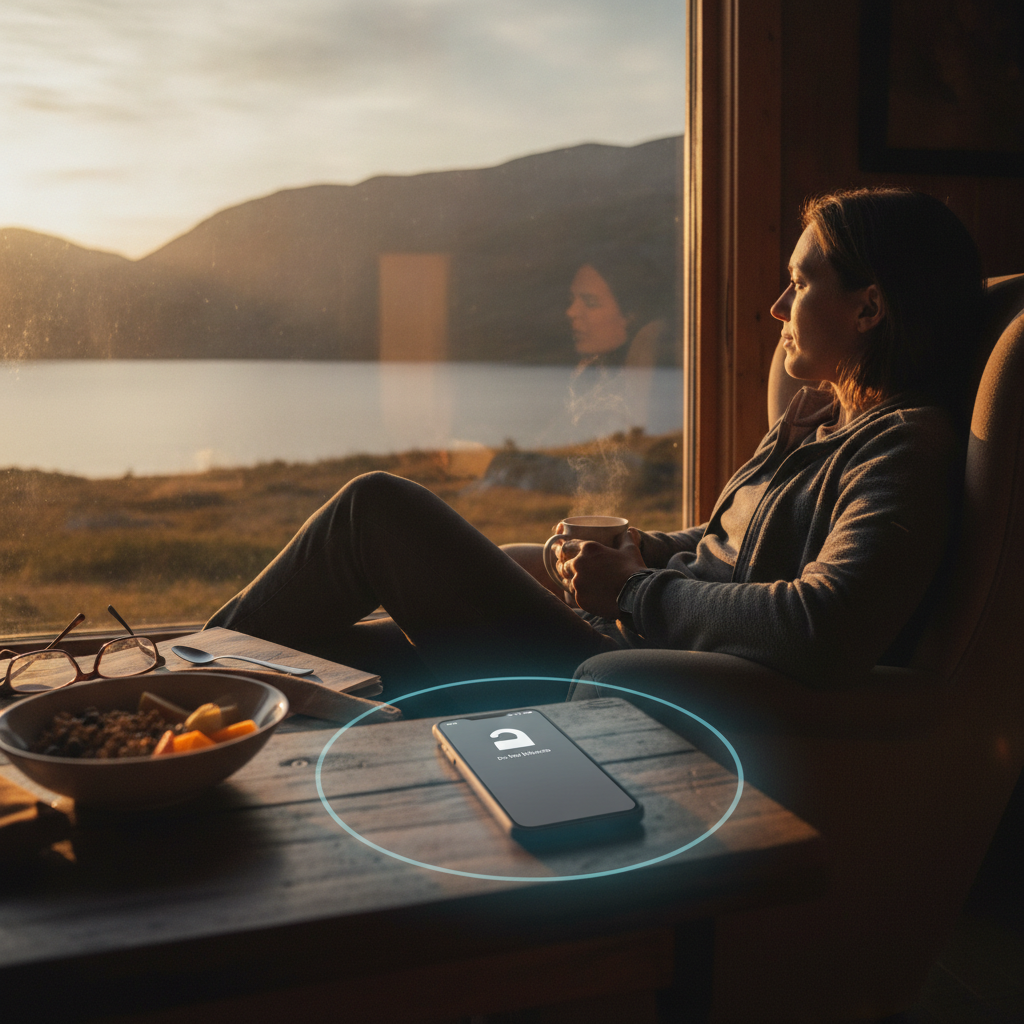
Attention has become one of the scarcest resources in modern life. Not because people are lazy or undisciplined, but because the devices designed to help them are also relentlessly competing for their notice. Every ping, badge, and banner carries an implicit demand — stop what you're doing, look at this now. For years, the standard solution was Do Not Disturb mode: a blunt instrument that silenced everything until the user remembered to turn it off, which they usually forgot. The result was either constant interruption or complete isolation, with little in between.
When Silence Stopped Being Enough
The older model of digital quiet was essentially manual labor dressed up as a feature. A person had to anticipate their own need for focus, set a timer, configure exceptions, and then remember to undo it all afterward. This placed the entire cognitive burden on the user — the exact person who already had too much to manage. Apple's iOS and Google's Android both recognized this friction early, but their initial solutions were still largely schedule-based rather than situationally intelligent. The shift toward genuine context-awareness arrived gradually, shaped by improvements in on-device machine learning and sensor fusion.
The Architecture of Contextual Awareness
Modern mobile operating systems now draw on a surprisingly rich stream of signals to determine when a person is most likely in focused work. Location data, calendar entries, Bluetooth connections, screen activity patterns, and even typing cadence all feed into what engineers sometimes call *ambient intelligence* — the device's quiet capacity to infer what a user is doing without being explicitly told. When an iPhone detects that someone has connected to their office Wi-Fi, opened a productivity app, and has a calendar block marked as a meeting, it can suppress non-essential notifications without a single tap. Android's adaptive notification system operates similarly, learning over time which alerts a user consistently dismisses during certain hours and quietly deprioritizing them.
Focus Modes as Behavioral Mirrors
Apple's Focus feature, introduced in iOS 15 and steadily refined since, represents one of the more culturally interesting developments in this space. Rather than simply silencing the phone, Focus modes create distinct behavioral profiles — Work, Personal, Sleep, Fitness — each with its own rules about which contacts and apps can break through. What makes the current generation of these tools genuinely useful is the automation layer beneath them. A Focus mode can now activate because a person arrived at a specific location, because a particular app opened, or because a scheduled time window began, all without manual input. The system becomes, in a sense, a behavioral mirror: it reflects the rhythms a person already lives and tries to protect them.
The Cultural Weight of Uninterrupted Time
In Japanese workplace culture, the concept of *ma* (間) — often translated as negative space or meaningful pause — has long been understood as essential to clear thought. Western productivity culture is only beginning to catch up with that intuition, and the technology is starting to encode it. There's something quietly significant about a device learning to recognize when its owner needs to think deeply and choosing, on its own, to step back. This isn't about phones becoming smarter in a flashy sense. It's about them becoming more socially literate — more attuned to the human rhythms they're embedded in.
Where the Technology Still Falls Short
For all its promise, context-aware silencing is not yet seamless. The systems occasionally misread situations — suppressing an urgent message during an unscheduled focus window, or failing to activate because a calendar entry was titled ambiguously. Google's Pixel devices and Samsung's Galaxy line have taken slightly different implementation paths, which means the experience varies meaningfully across Android hardware. Privacy considerations also sit at the edge of this conversation, since the same sensor data that makes contextual awareness possible also deepens what a device knows about its user's daily life. These are real trade-offs, and they deserve more than a settings toggle buried in a menu.
What Travelers Discover First
Interestingly, frequent travelers often notice the power of these features before anyone else. Crossing time zones, working from hotel lobbies in Lisbon or co-working spaces in Chiang Mai, and switching between personal and professional modes throughout a single day creates exactly the kind of irregular schedule that manual Do Not Disturb management handles poorly. Context-aware systems, by contrast, adapt — recognizing a booked accommodation's Wi-Fi network as a work environment or detecting that a boarding pass notification has appeared and holding other alerts until the flight lands. The phone becomes a quieter travel companion, one that reads the situation rather than demanding to be managed.
Finding Your Own Version of This
You don't need to architect a perfect system to benefit from what's already available. Start by spending twenty minutes in your phone's Focus or Digital Wellbeing settings — iOS and Android both have dedicated sections for this now. Link a Focus mode to one recurring calendar event, your deepest work block of the day, and let it run for a week without overthinking the exceptions list. Notice what gets through that shouldn't, and adjust. The goal isn't to build an impenetrable wall around your attention. It's to stop spending mental energy managing your own silence, so that energy can go somewhere it actually matters. The tools are ready. The only configuration required is a small act of trust in your own need for quiet.