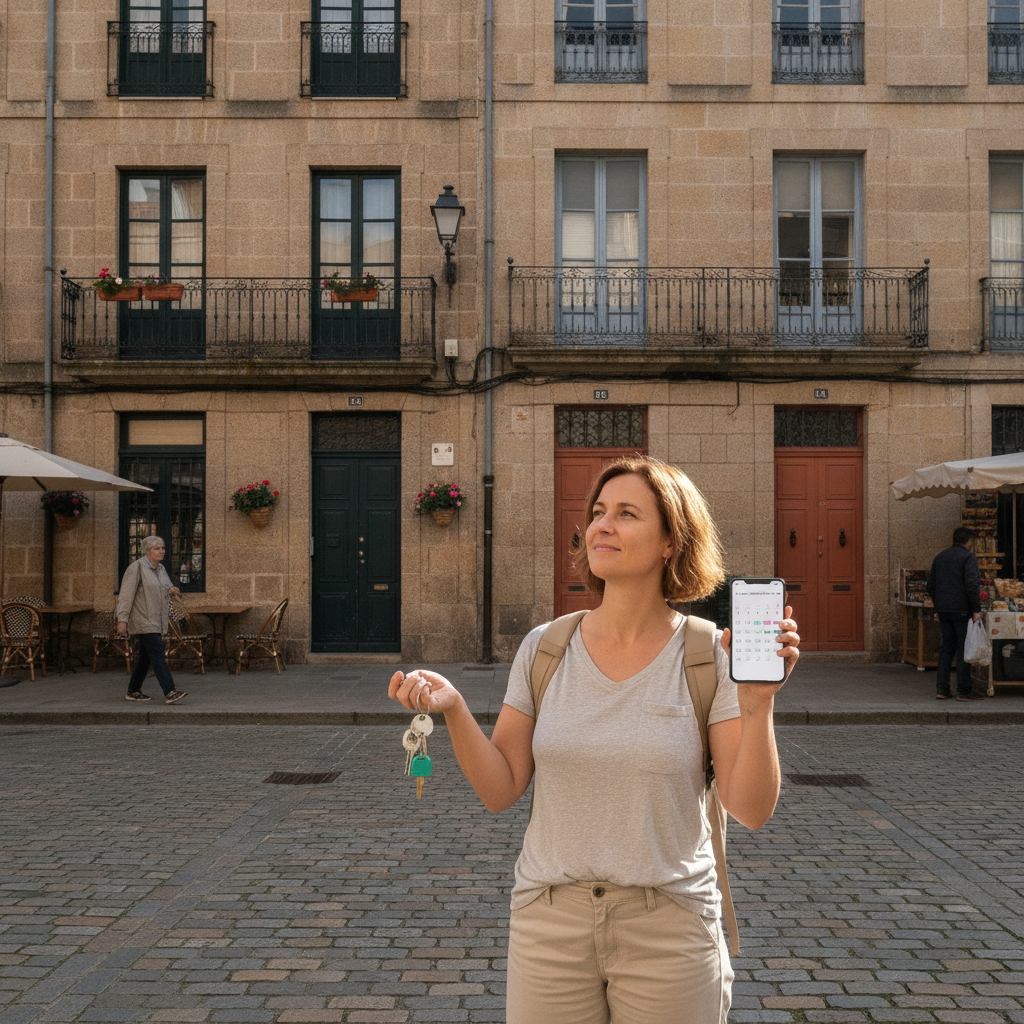
Staying rooted in a single neighborhood across multiple short-term rental bookings is one of the quietest efficiency tricks in modern urban travel. Rather than moving between districts or switching accommodation types mid-trip, travelers who book two or three consecutive stays within the same area discover something unexpected: the city gets easier to read, daily costs fall, and the constant low-level stress of orientation largely disappears. It's a strategy that rewards patience and a little advance planning.
The Logic Behind Neighborhood Anchoring
When travelers spend two weeks in a city, the instinct is often to spread out — one neighborhood for the first few nights, another for the middle stretch, a final district to close things out. The appeal is variety, but the reality is friction. Each move requires repacking, reorienting, and rebuilding a mental map from scratch. Staying within a single neighborhood, even across two or three separate rental bookings, eliminates that repetition. Areas like Pigneto in Rome or Eixample in Barcelona become familiar quickly, and familiarity itself has real practical value.
How Decision Fatigue Accumulates on Multi-Night City Stays
Decision fatigue is a well-documented pattern in which the quality of choices deteriorates after sustained periods of decision-making. For travelers, it tends to arrive quietly — through repeated questions about where to eat, which direction to walk, whether a local shop is trustworthy, and how far the nearest transit stop actually is. Each unfamiliar neighborhood resets that cognitive load to zero. Staying in one area means those small daily questions resolve themselves within two or three days, freeing mental bandwidth for the parts of travel that actually matter.
Why Consecutive Bookings Beat a Single Long Reservation
Booking the same rental for fourteen consecutive nights sounds simpler, but it's rarely the most practical approach. Many highly rated short-term properties on platforms like Airbnb or Vrbo have availability gaps, minimum-stay requirements, or pricing structures that shift after the first week. By booking two or three shorter stays in nearby properties — sometimes on the same block or within a five-minute walk — travelers can respond to pricing windows, maintain neighborhood continuity, and avoid being locked into a single unit that may not suit their needs midway through the trip. The geographic constraint stays tight even as the booking flexibility increases.
The Real Cost Advantages of Staying in One Place
The financial case for neighborhood anchoring is straightforward. Groceries bought at a local market like Mercato di Testaccio in Rome or a neighborhood Lidl in Lisbon become repeatable purchases rather than one-off experiments. Travelers learn which cafés offer fair pricing, which transit lines to avoid at peak hours, and where to find reliable, affordable lunch. These aren't minor savings — they compound across fourteen days into meaningful reductions in daily spend. Delivery apps, pharmacy runs, and even laundry services become efficient once the local options are understood, and that understanding only builds with time in a single area.
How to Structure the Booking Window for Best Results
The practical work of this strategy happens before the trip begins. When you identify a target neighborhood — whether that's Gracia in Barcelona, Prenzlauer Berg in Berlin, or the Marais in Paris — the next step is searching for two or three available properties within a tight geographic radius. Booking platforms allow map-view filtering, which makes this straightforward. Aim for properties within a ten-minute walk of each other, confirm that checkout and check-in windows are compatible, and identify at least one luggage storage option nearby in case there's a gap day between stays. Apps like Stasher or Bounce can handle short-term luggage gaps without disrupting the broader plan.
Settling In Without Losing the Sense of Discovery
One concern travelers raise about staying put is that it might feel repetitive or limit spontaneous exploration. The opposite tends to be true. When the basics of daily life are handled — a trusted coffee spot, a reliable grocery run, a transit route that works — travelers have more energy for genuine discovery. Day trips to other parts of the city, or to towns within an hour's reach, become more appealing when there's a familiar base to return to. The neighborhood doesn't become a constraint; it becomes a quiet anchor that makes everything else feel less effortful.
Spending two weeks anchored to one neighborhood across consecutive short-stay rentals trades the illusion of variety for something more durable: ease, familiarity, and real daily savings. The strategy won't suit every traveler or every city, but for those planning extended urban stays, it offers a reliable path to lower cognitive load and more grounded, present experiences. The city becomes less of a problem to solve and more of a place to actually inhabit.