There is a particular kind of traveler fatigue that has nothing to do with miles logged or hours spent in transit. It comes from moving too fast — from treating each new destination as a checkbox rather than a place that deserves to be understood at the pace of its own daily rhythms. Portugal's Alentejo coast, with its quietly weathered fishing villages and stubborn resistance to mass tourism, offers a practical and deeply satisfying antidote to that particular exhaustion.
The Quiet Logic of Settling in Rather Than Passing Through
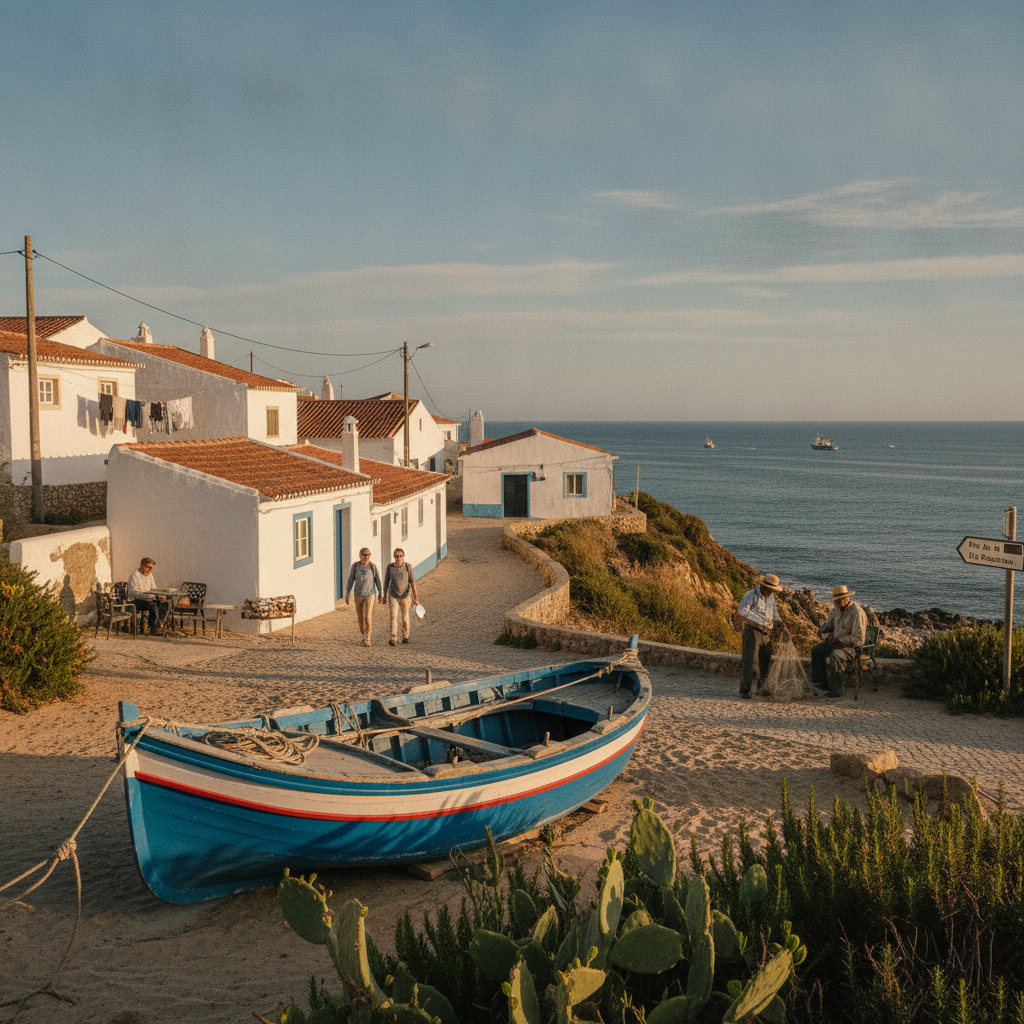
The Alentejo region stretches across a vast, sun-bleached interior before meeting the Atlantic in a stretch of coastline that remains remarkably unhurried. Villages like Vila Nova de Milfontes, Zambujeira do Mar, and Porto Covo have long served the communities of fishermen and farmers who built them, and they carry that history in their whitewashed walls and unhurried pace. What makes them strategically useful for the slow traveler is precisely their ordinariness — there are no theme-park attractions pulling crowds in at predictable hours, no queues forming before dawn. Instead, there are fish markets that open with the morning catch, bacalhau — the salted, dried cod that serves as something close to Portugal's national ingredient — prepared in a dozen different ways across a handful of family-run restaurants, and a rhythm of life that quietly rewards those willing to match it. Using one of these villages as a fixed base rather than a single night's stop changes the entire texture of a trip.
Staying in one place for five to ten days compresses the logistical overhead that drains both energy and money when moving constantly. There's no need to repack bags every morning, no scramble for transportation connections, and no adjustment period in each new room. The savings compound quickly: weekly rates at small guesthouses and self-catering apartments in Alentejo villages run considerably lower than nightly rates in Lisbon or the Algarve, and having access to a kitchen — even a modest one — means that breakfast and lunch can be assembled from the local market for a fraction of restaurant prices. The mercado — the local market — becomes a daily ritual rather than a tourist experience, and that shift in relationship to a place is where real travel value begins to accumulate.
What the Region Offers Beyond the Village Itself
The Alentejo coast sits within easy reach of a surprising range of landscapes and cultural sites that most visitors entirely overlook. The Comporta area to the north, with its rice paddies and black-pine forests meeting pale sand dunes, feels entirely different from the rugged cliffs further south near Odeceixe, yet both are accessible by regional bus or a short drive. The Serra de Grândola hills lie just inland, offering walking trails through cork oak forests — the sobreiro, or cork oak, is so central to Alentejo's identity that locals treat individual trees with something approaching reverence, and understanding why requires time in the region rather than a rushed afternoon. The medieval walled city of Évora, a UNESCO World Heritage site, is reachable on a day trip from the coast and offers Roman ruins, Gothic architecture, and the genuinely striking Capela dos Ossos — a chapel lined with human bones that is both unsettling and oddly beautiful — without the tourist density it might attract if it were positioned differently on the map. These excursions feel earned when returning each evening to a familiar village, a known table at a known restaurant, and the sound of the Atlantic doing what it has always done.
The pace of exploration that a fixed base encourages also changes what gets noticed. A traveler passing through might see the painted azulejo tiles on a village church façade and move on. Someone staying for a week begins to understand that the tiles tell a local story — a storm survived, a patron saint honored, a community memory preserved in cobalt blue and white glaze. These details don't appear in guidebooks and can't be scheduled. They accumulate through repetition and proximity, which is exactly what slow travel makes possible.
Making the Practical Work in Your Favor
For those considering this approach, the logistics are more straightforward than they might appear. Faro Airport serves as the most convenient entry point for the southern Alentejo coast, while Lisbon's Humberto Delgado Airport works well for the northern stretch near Comporta and Vila Nova de Milfontes. Rental cars offer the most flexibility for reaching smaller villages and inland destinations, though the regional Rede Expressos bus network connects the larger coastal towns reliably enough for a car-free trip if the itinerary stays flexible. Accommodation platforms like Booking.com and local rental agencies list self-catering options in most villages, and negotiating directly with guesthouse owners for weekly rates — always worth attempting — often yields meaningful discounts that platforms don't advertise.
Once settled, daily spending drops naturally. The *taberna* — a traditional tavern-style eating house — serves honest, filling lunches for prices that feel almost implausible compared to urban Portugal. A *prato do dia*, or dish of the day, typically includes bread, a main course of grilled fish or slow-cooked meat, a side, and sometimes a glass of local wine or a small dessert. It is the working meal of the region, priced accordingly, and eating it alongside locals rather than at a tourist-facing restaurant makes a quiet but tangible difference both financially and experientially.
You don't need a rigid itinerary to make this kind of trip work — in fact, having one is somewhat beside the point. What serves better is a loose framework: a village chosen for its character and central position, a handful of day trips loosely planned, and enough open time to follow whatever the place itself suggests. On some days, that might mean walking the cliffs at Cabo Sardão to watch black storks nesting on sea-facing ledges. On others, it might mean doing very little at all — sitting with a coffee at a café table, watching the fishing boats come in, letting the afternoon dissolve at its own pace. That willingness to let a place set the tempo is, in the end, what separates a memorable trip from one that simply accumulates stamps in a passport. The Alentejo coast doesn't announce itself loudly, and that restraint is precisely what makes it worth returning to, and staying in, long enough to hear what it actually has to say.