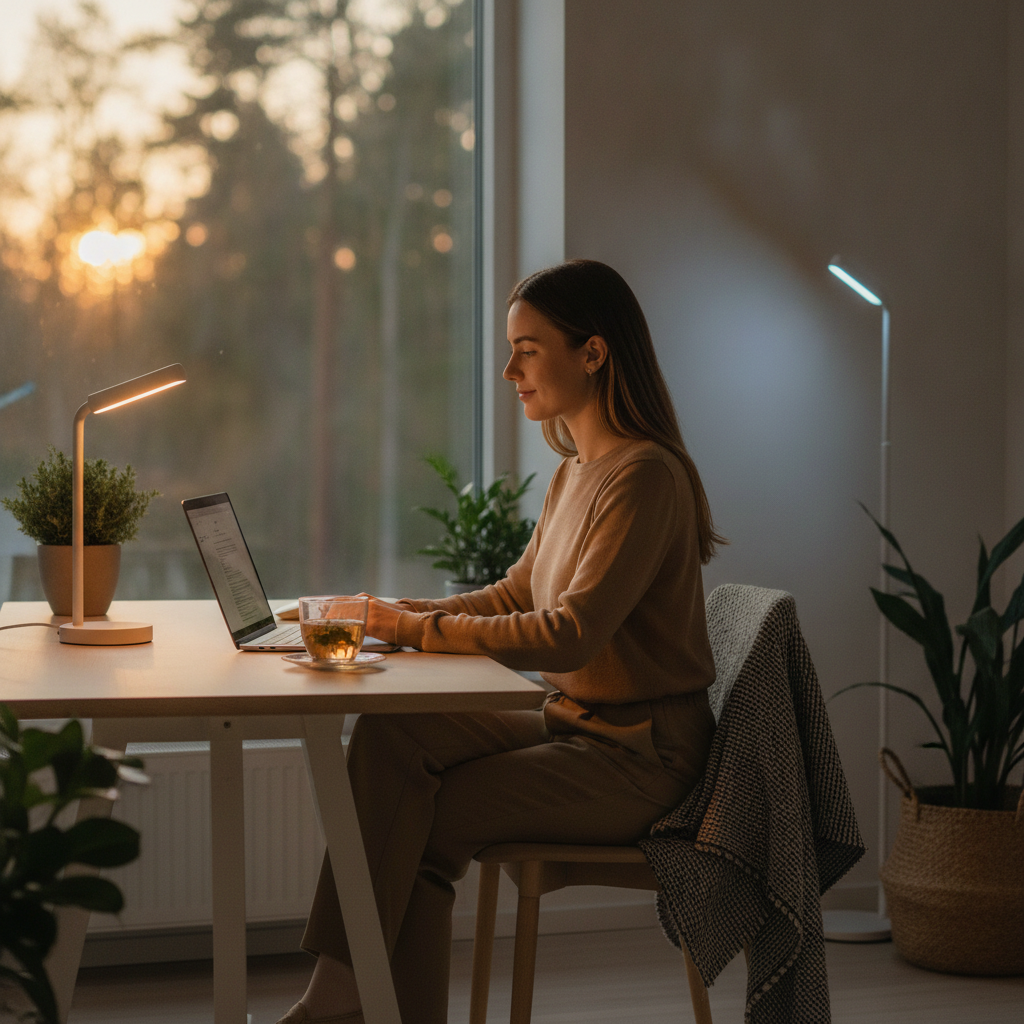
Light has always governed human biology far more than most people realize. Long before electric bulbs existed, the slow arc of sunlight across the sky — from cool blue morning light to warm amber dusk — was the primary signal the body used to regulate energy, mood, and sleep. Circadian lighting technology, now built into smart bulbs from brands like Philips Hue, LIFX, and Nanoleaf, is quietly restoring that natural rhythm inside homes and home offices. For remote workers especially, this shift is changing how the day feels from first coffee to final wind-down.
What Circadian Lighting Actually Does to the Brain
The human body contains a biological clock governed largely by light exposure. Specialized cells in the eye respond to different wavelengths, sending signals to the brain's suprachiasmatic nucleus — the region that controls hormone release, body temperature, and the sleep-wake cycle. Cool, blue-toned light mimics midday sun and suppresses melatonin, promoting alertness. Warm, amber light signals evening and allows melatonin to rise naturally. Circadian smart bulbs automate this spectrum shift across the day, replacing static artificial light with something far closer to what human biology evolved alongside.
The Remote Work Problem That Few People Name
Working from home introduced a subtle but significant biological disruption. Office workers, despite their complaints, moved between spaces throughout the day — commuting under open sky, walking to meetings, grabbing lunch outdoors. Remote workers often stay indoors for nine or ten consecutive hours, bathed in the same static overhead light from morning to late afternoon. That sameness confuses the brain's internal clock. Without shifting light cues, the body loses its sense of time's progression. Energy levels flatten, focus drifts in the early afternoon, and the transition into genuine evening rest becomes harder to achieve.
How Smart Bulbs Create a Working Day With Natural Shape
Systems like Philips Hue's Circadian Lighting feature and LIFX's schedules allow users to program a gradual color temperature arc across the day. Morning light starts around 6500K — a crisp, cool tone that closely matches natural daylight — and holds there through peak working hours. By mid-afternoon, the bulbs begin warming toward 4000K, signaling the body to ease out of its highest alertness state. After dinner, the shift continues to 2700K or lower, entering the amber territory that prepares the nervous system for rest. The transitions are slow and automatic, meaning most people don't consciously notice them happening.
Why Alertness Improves During Morning and Midday Hours
The early productivity gains reported by remote workers using circadian bulbs aren't coincidental. Cool-spectrum light actively suppresses melatonin and raises cortisol in ways that support focus, reaction speed, and working memory. When a home office is lit at the right color temperature during morning hours, the body receives a clear signal that it's time for high-output cognitive work. Products in the Nanoleaf Lines and Essentials ranges allow fine-grained control through their apps, letting workers align their lighting environment precisely with their most demanding tasks. The biological result is a morning that feels more like a proper start and less like a slow drift into wakefulness.
The Evening Wind-Down Effect That Matters Most
Perhaps the more meaningful benefit happens after the workday ends. Many remote workers struggle with a transition problem — they close the laptop but the body hasn't received a signal that the day is actually over. Circadian bulbs solve this by progressively warming the light throughout the evening, reducing stimulating blue wavelengths that would otherwise keep the brain in an alert state. By the time a person settles in for the evening, the room is bathed in the kind of soft, amber glow that the nervous system associates with rest. Sleep onset tends to arrive faster, and the quality of early sleep cycles often improves alongside it.
Setting Up a Circadian Lighting System That Works for You
Starting with circadian smart lighting doesn't require rewiring an entire home. You can begin with a single bulb in the primary workspace and another in the bedroom, which covers the two environments where light timing matters most. Philips Hue and LIFX both offer app-based setup with pre-built circadian schedules that require minimal adjustment. If you work across multiple rooms, consider adding a bulb to the kitchen or living space to extend the shift into evening leisure hours. Keep the schedule consistent across weekdays and weekends — irregular light patterns reduce the biological benefit even when individual nights seem fine. The key is repetition, not perfection.
The original observation holds: light shapes human biology in ways that static indoor environments have long ignored. Circadian smart bulbs don't replace outdoor time or natural light, but they do restore some of the rhythm that modern indoor life stripped away. For remote workers navigating long days without natural transitions, that restored rhythm can translate into sharper mornings, calmer evenings, and a clearer internal sense of when the day has genuinely ended.