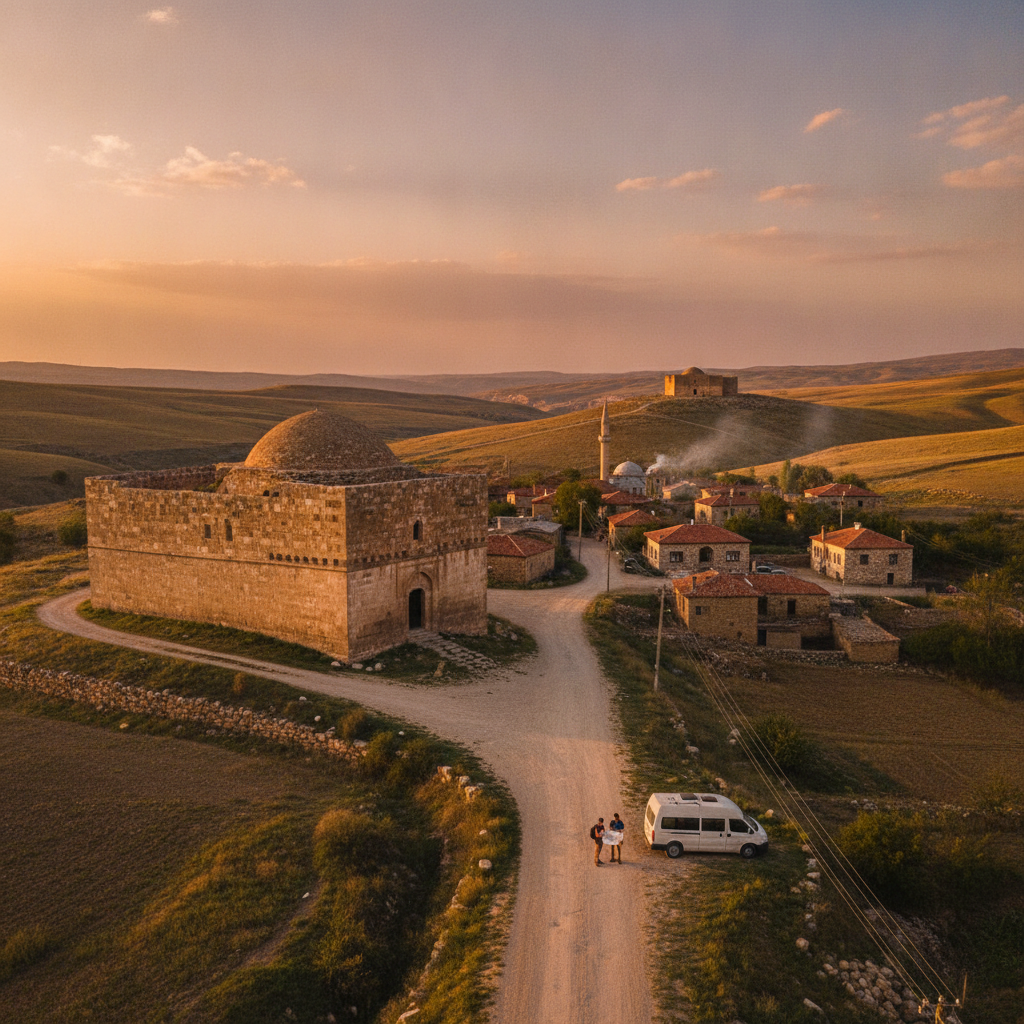
Centuries before budget travel became a cultural movement, merchants crossing the Anatolian plateau had already worked out the system. They moved goods along defined corridors, stopping at stone caravanserais spaced roughly a day's journey apart, and the villages that grew around those stops became some of the most quietly remarkable places in Turkey. Travelers today can still follow these corridors — and in doing so, discover a genuinely affordable way to experience Central Turkey that most package itineraries never touch.
Map Your Route Around the Old Silk Road Corridors
The old trade routes through Anatolia weren't random. They followed geography — valleys, passes, and river crossings — and the towns that anchored them still line up along predictable paths. Stretching between Konya in the southwest and Sivas in the northeast, with branches through Aksaray and Kayseri, these corridors remain the backbone of a budget-friendly road trip. Apps like Maps.me let you download offline regional maps and mark surviving caravanserais as waypoints, which doubles as a practical route-planning tool and a loose historical curriculum.
Use Surviving Caravanserais as Anchor Points
Some of Anatolia's caravanserais are UNESCO-listed landmarks; others are barely signed ruins at the edge of farmland. The Sultan Han near Aksaray and the Sultanhanı caravanserai just off the old Konya road are among the best-preserved, and both sit within reach of small villages that offer lodging. Finding a guesthouse within a few kilometers of a major caravanserai tends to put travelers in places where tourism hasn't fully normalized prices. That combination of historical weight and commercial obscurity is exactly where the best value hides.
Prioritize Pansiyon Guesthouses Over Hotel Listings
Central Turkey's village accommodation ecosystem runs largely on family-operated pansiyons — small guesthouses that often include breakfast and cost a fraction of what a Cappadocia cave hotel charges per night. These aren't on every booking platform, and that's part of the advantage. Searching directly through local tourism boards in Aksaray, Nevşehir, and Kayseri provinces often surfaces listings that major apps overlook. A quick message through a guesthouse's Facebook page or a WhatsApp number listed on a regional directory is frequently all it takes to lock in a room.
Time Your Stops Around Weekly Village Markets
Market days in rural Central Turkey follow a rotating weekly schedule, and arriving in a village on its market day transforms the experience entirely. Produce, textiles, and prepared foods are cheap and abundant, which means a traveler can eat well for very little. Beyond the practical savings, market days create a natural social entry point — locals are out, vendors are talkative, and the rhythms of the place become legible in a way that a quiet Tuesday afternoon simply doesn't offer. Regional tourism offices can provide market day calendars, or locals in one village will usually know the schedule for the next.
Stretch Your Budget With Cooperative Meal Arrangements
Many pansiyon owners in smaller villages will prepare evening meals for guests if asked in advance — not as a formal restaurant service, but as an informal arrangement that benefits both sides. This is particularly common along the Cappadocia fringe villages like Güzelyurt and Soğanlı, where restaurants are sparse but hospitality runs deep. The meals tend to be simple, regional, and made from local ingredients: lentil soup, lamb stew, fresh bread, and whatever the garden produced that week. Paying a modest fixed amount agreed beforehand is the standard approach, and it's almost always cheaper than driving to the nearest town for dinner.
Combine Public Minibuses With Strategic Walking Segments
The dolmuş network — Turkey's shared minibus system — still connects most of the towns and larger villages along the old trade corridors. Fares are low and routes run frequently enough during daylight hours to make car-free travel viable across long stretches of the route. Between stops, walking segments of two to five kilometers through open steppe or along dry riverbeds cost nothing and often reveal unmarked ruins, old stone bridges, or carved rock shelters that don't appear in any guidebook. Carrying a physical 1:100,000 topographic map from a Kayseri bookshop adds a layer of orientation that digital tools sometimes miss in low-signal areas.
Book Shoulder Periods for the Best Room Rates
May, early June, September, and October hit the sweet spot in Central Turkey — warm enough for comfortable travel, cool enough for long walks, and quiet enough that pansiyon owners are genuinely glad to negotiate. Summer months draw Turkish domestic tourists to the region, particularly around Cappadocia and the Ihlara Valley, which pushes prices up even in the smaller villages nearby. Arriving outside those peak windows means more room to bargain politely on multi-night stays, and it means a traveler is far more likely to have a centuries-old caravanserai courtyard entirely to themselves for an afternoon.
Engage Local Muhtars for Unlisted Accommodation Leads
Every Turkish village has a muhtar — an elected neighborhood headman whose role includes helping visitors navigate local resources. In small villages without a functioning pansiyon, a muhtar can often connect travelers with a family willing to host for the night in exchange for a fair payment. This isn't an official system, and it requires some patience and basic Turkish phrases to initiate, but it opens doors to accommodation that simply doesn't exist in any database. A few key phrases downloaded through Google Translate or a pocket phrasebook from a Ankara bookshop go a long way toward making those conversations possible.
As rural tourism infrastructure continues to develop across Central Anatolia, more village stops along the old caravanserai corridors are quietly building out their guesthouse offerings — adding Wi-Fi, private bathrooms, and multilingual hosts without raising prices to match. The window for genuinely off-the-radar travel along these routes is still very much open, and the travelers who move through it thoughtfully find a version of Turkey that rewards curiosity with history, affordability, and the particular warmth of places that haven't yet been asked to perform for a crowd.