There is a particular kind of traveler exhaustion that sets in after a string of one-night stays — the constant repacking, the unfamiliar check-in routines, the sense of never quite settling before it's time to move again. Many seasoned travelers eventually arrive at the same quiet revelation: that stillness, counterintuitively, is one of the most effective tools for seeing more. The practice of anchoring oneself in a single location and radiating outward on day trips is not a new idea, but it's one that rewards those who apply it thoughtfully, especially when the chosen base isn't the obvious tourist capital but rather a mid-sized city that sits at the crossroads of a broader region.
The Strategic Logic of the Mid-Sized Base
Capital cities and famous destinations earn their reputations, but they also tend to sit at the center of their own gravity. Tourists arrive, fill the central districts, and rarely venture far. Mid-sized cities — places like Porto in Portugal, Ghent in Belgium, or Chiang Mai in northern Thailand — occupy a different position in their regions. They're large enough to offer reliable infrastructure, good accommodation options, and cultural depth, yet positioned close enough to secondary towns, rural areas, and natural sites that a single morning's travel by train or bus opens up entirely different worlds. The regional logic becomes clear quickly: from Chiang Mai, for instance, one can reach the mountain villages of the Mae Hong Son loop, ancient temples in Lamphun, and elephant sanctuaries in the Mae Taeng valley, all within a day's return journey. The mid-sized city earns its keep not just as a place to sleep, but as a launchpad.
This positioning advantage is amplified by something less obvious: cost. Accommodation in mid-sized cities tends to run meaningfully lower than in the major tourist hubs, and because the traveler isn't checking out each morning, there's often room to negotiate a weekly rate at a guesthouse or aparthotel. The money saved on accommodation can be redirected toward regional day trips, local guides, or the kind of slow lunches in hill-town *trattorie* — small family-run Italian restaurants — that don't appear in any guidebook. The economics of a fixed base quietly work in the traveler's favor in ways that a hop-and-move itinerary simply doesn't allow.
What the Region Reveals Over Multiple Days
One of the less discussed advantages of a home-base approach is what repeated exposure does to perception. When a traveler returns to the same city each evening, they begin to read it more fluently. The market that seemed chaotic on the first morning starts to reveal its rhythms by the third. The coffee shop where the owner remembered the order by day two becomes a brief anchor of familiarity in what is otherwise a foreign world. This isn't tourism in the traditional sense — it occupies a middle space that French travelers sometimes call *flânerie*, the unhurried practice of wandering and absorbing without agenda. That quality of attention, built over several days in one place, tends to spill outward into how day trips are experienced as well. Arriving in a small hill town outside Ghent or a coastal village near Porto carries a different quality when the traveler isn't rushing to photograph it before catching a connection to the next city.
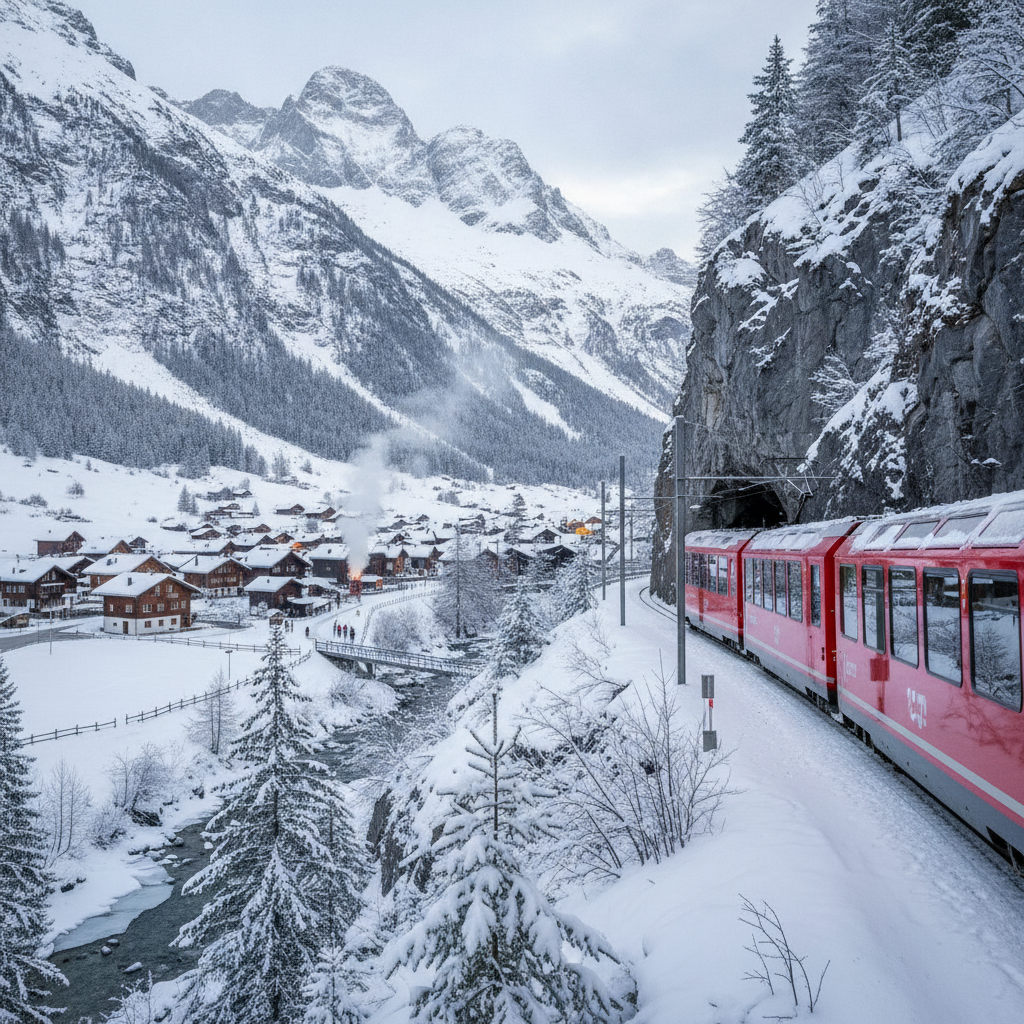
Regional rail networks reward this approach generously. In much of Europe, mid-sized cities serve as genuine rail hubs, with lines fanning out toward smaller towns that larger capitals often bypass entirely. The Eurail regional passes, available through the Eurail official platform, allow flexible day-trip travel without committing to specific departure times, which suits the unhurried rhythm of a home-base trip perfectly. In Southeast Asia, songthaew shared trucks and regional minivan services connect mid-sized hubs like Chiang Mai to surrounding towns on a rolling schedule that rewards flexibility rather than punishing it. The infrastructure, once understood, becomes freeing rather than constraining.
The Art of Choosing the Right Base
Not every mid-sized city earns the home-base designation equally. The ideal candidate shares a few consistent traits: it sits within roughly two hours of at least four or five meaningfully different destinations, it has accommodation options across a range of budgets, and it offers enough cultural and culinary life to remain interesting on the evenings when a traveler simply wants to stay put. Porto satisfies all three conditions admirably — the Douro Valley wine country, the coastal town of Aveiro, the historic center of Braga, and the beaches of the Atlantic coast all fall within comfortable day-trip range. Ghent, often overlooked in favor of Bruges and Brussels, offers similarly rich regional access to Antwerp, Mechelen, and the Flemish countryside, while maintaining a lived-in energy that feels genuinely local rather than curated for visitors.
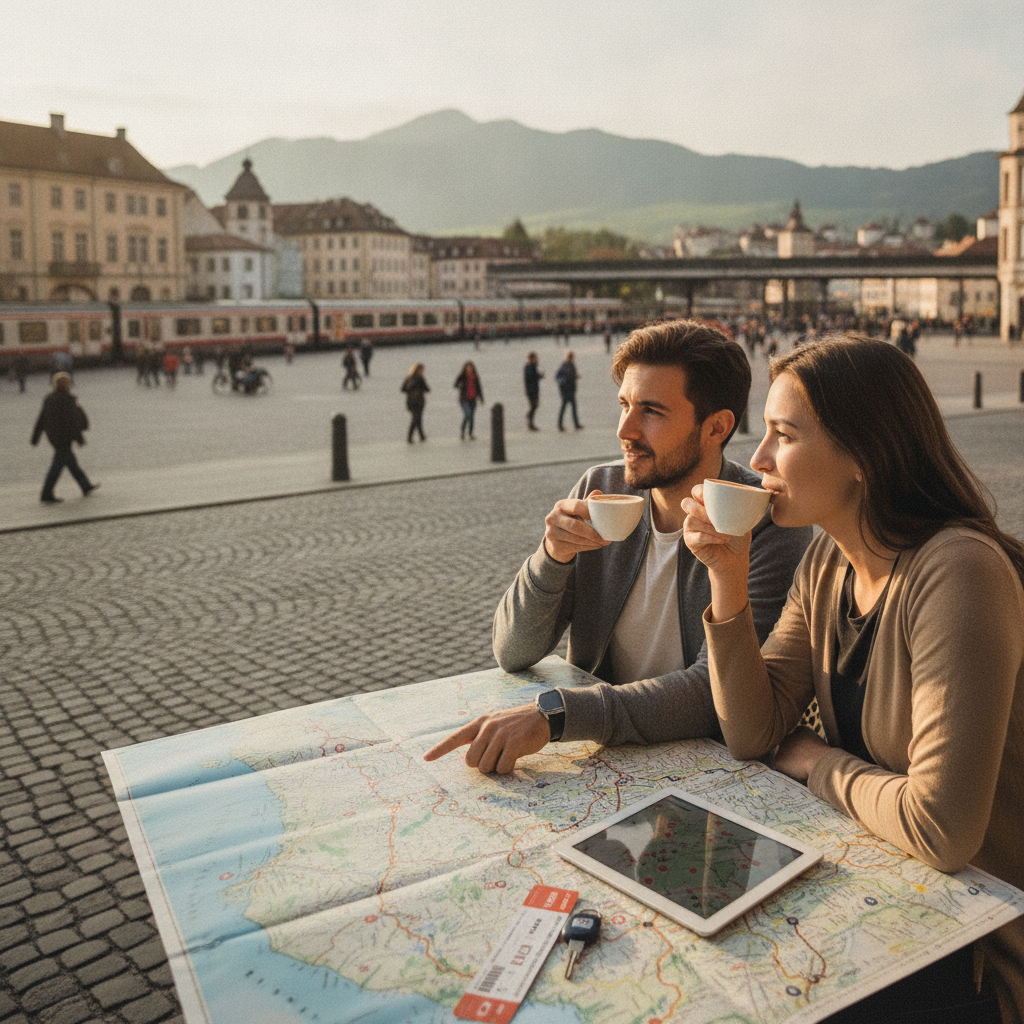
Research tools like Google Maps' transit layer and the Rome2rio journey planner are useful for mapping out what's reachable before committing to a base. Plotting concentric circles of travel time — one hour, ninety minutes, two hours — around a potential home city gives a clear visual sense of how much regional variety the base unlocks. It's a practical exercise that often surprises travelers who assumed a mid-sized city would feel limiting. The opposite, almost always, turns out to be true.
Making the Most of Your Anchor City
Once you've committed to a home base, the rhythm of the trip tends to organize itself naturally. Use slower mornings for the city itself — the neighborhood markets, the cathedral quarter, the riverside walks — and reserve full days for the regional excursions that require earlier starts. Let the day trips be shaped by weather and energy rather than a rigid schedule. If a visit to a nearby village runs long because a local festival turns out to be underway, there's no penalty for arriving back in the home city after dark. The accommodation is already paid for, the streets are already familiar, and the evening is yours to spend however the city offers it. That kind of ease is rare in travel, and it tends to make even ordinary moments feel like gifts.
The traveler who begins a trip dreading the constant motion of check-in and check-out eventually learns what generations of slow travelers have quietly known: that a good base doesn't limit the journey. It deepens it, widens it, and gives the surrounding region room to reveal itself on its own unhurried terms — which is, in the end, exactly the kind of travel worth planning for.