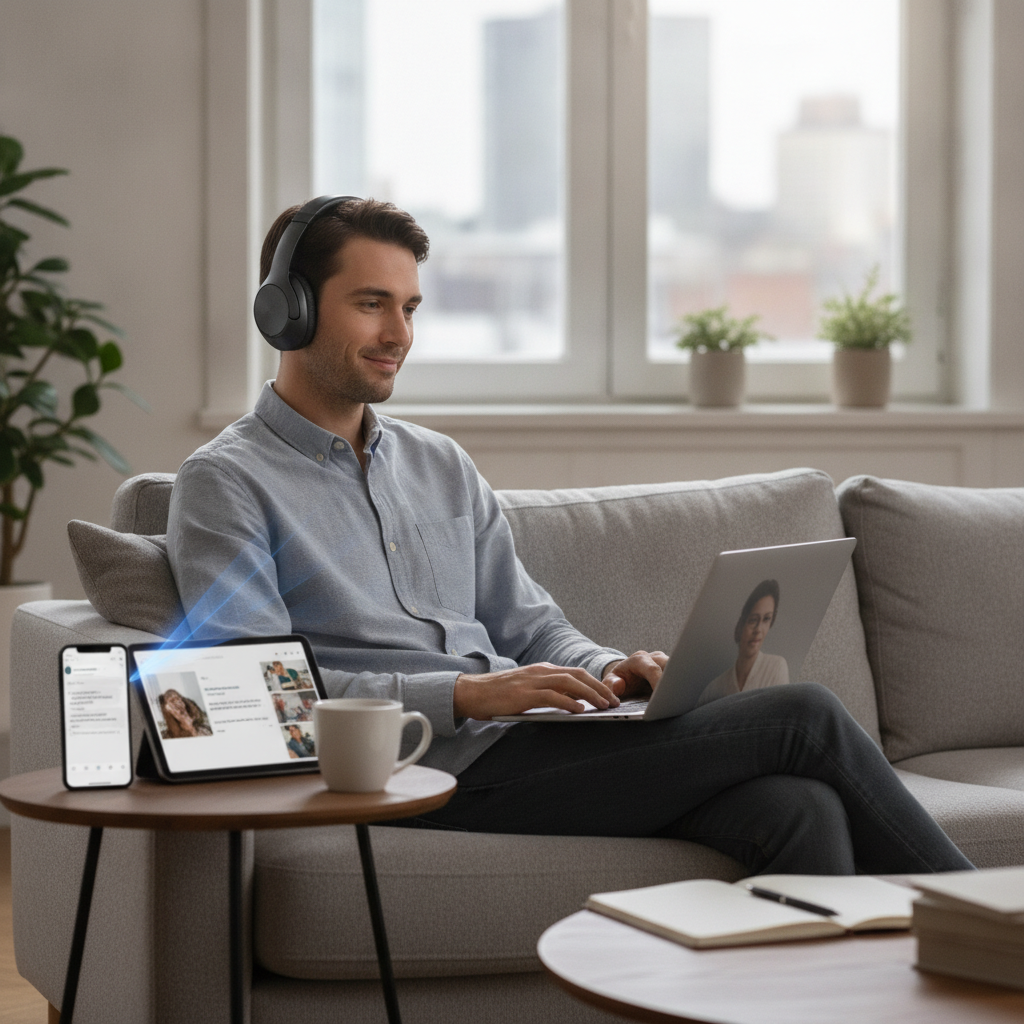
Bluetooth multipoint pairing has matured from a niche feature into one of the most practically useful technologies built into modern wireless audio devices. For anyone who regularly moves between a work laptop, a personal phone, and perhaps a tablet throughout the day, the ability to maintain active connections to multiple devices simultaneously — and switch between them without manual intervention — represents a meaningful shift in how audio technology fits into daily life.
The Problem That Made Device Switching So Tedious
For years, Bluetooth headphones and earbuds operated on a simple one-to-one model: pair to a device, use it, disconnect, and manually reconnect to something else. This worked tolerably when people used a single device at a time, but modern life rarely unfolds that way. A person might take a call on their phone, then immediately join a video conference on their laptop, then return to streaming music from a tablet — all within the same hour. Every transition required navigating Bluetooth menus, waiting for connections to drop and reform, and occasionally managing failed reconnections. It was a consistent source of low-grade frustration that most people simply accepted as normal.
What Multipoint Pairing Actually Does
Multipoint pairing allows a single pair of headphones or earbuds to maintain simultaneous active Bluetooth connections with two or more devices at once. The audio hardware manages both connections in the background, monitoring for incoming signals from either source. When a call arrives on a connected phone while music plays from a connected laptop, the headphones detect the priority signal and switch automatically — no manual input required. Devices from Sony, Bose, and Apple have each implemented versions of this capability, though the underlying behavior and switching logic varies meaningfully between manufacturers and product lines.
How the Technology Has Evolved Beyond Simple Two-Device Pairing
Early implementations of multipoint were limited and inconsistent. Switching was slow, audio quality sometimes degraded during transitions, and the feature worked reliably only under specific conditions. Recent hardware generations have improved substantially. Qualcomm's Snapdragon Sound platform, which powers chipsets used in many premium earbuds, introduced low-latency multipoint handling that reduced switching delays to near-imperceptible levels. Some current devices support connections to three or more devices simultaneously, with intelligent prioritization logic that determines which source takes precedence based on activity type rather than simple input order.
Why This Matters Most for People Who Blend Work and Personal Life
The daily rhythm of blending professional and personal technology use has become ordinary for a large portion of the workforce. Remote and hybrid work arrangements mean that personal phones and work laptops often share the same physical space — and the same pair of ears — throughout the day. Multipoint pairing removes the friction that previously made audio devices feel like a scheduling problem. A person can stream a podcast from their phone during a break, then rejoin a Microsoft Teams or Zoom call on their work machine without touching a single settings menu. The headphones manage the transition quietly and correctly, which is precisely the kind of invisible technology that earns long-term loyalty.
The Role of Companion Apps in Refining the Experience
Most premium audio brands now offer companion applications that give users direct control over how multipoint pairing behaves. Sony's Headphones Connect app, for example, allows users to set device priority rules and configure how automatically the headphones respond to incoming audio signals. Bose's companion app offers similar customization, letting users assign which connected source should take precedence. These controls matter because multipoint behavior that works well in one person's setup may feel disruptive in another's. A software developer who needs uninterrupted focus during deep work sessions has different switching preferences than someone who moves fluidly between calls all day. Companion apps bridge that gap.
What to Watch as Multipoint Pairing Continues to Improve
If you're evaluating wireless headphones or earbuds in 2026, multipoint pairing capability is worth treating as a baseline requirement rather than a bonus feature. Check how many simultaneous connections a device supports and whether the companion app allows priority customization. Consider how the switching logic handles your specific mix of devices — particularly if you use both Apple and Android ecosystems together, which can occasionally introduce compatibility nuance. Budget-tier earbuds are beginning to incorporate basic multipoint functionality as well, meaning the feature is no longer exclusive to premium price points. As the Bluetooth SIG continues developing the LE Audio standard, multipoint performance across all price ranges should become more consistent and reliable in the near term.
The broader trajectory for multipoint pairing points toward even more seamless integration with operating-system-level device switching. Microsoft and Apple are both refining how their platforms communicate preferred audio routing to connected hardware, which could eventually allow headphones to switch sources based on which application is currently active on screen rather than which device is generating audio. That level of contextual awareness remains a work in progress, but the direction is clear: wireless audio is moving toward a model where the user never has to think about device connections at all.