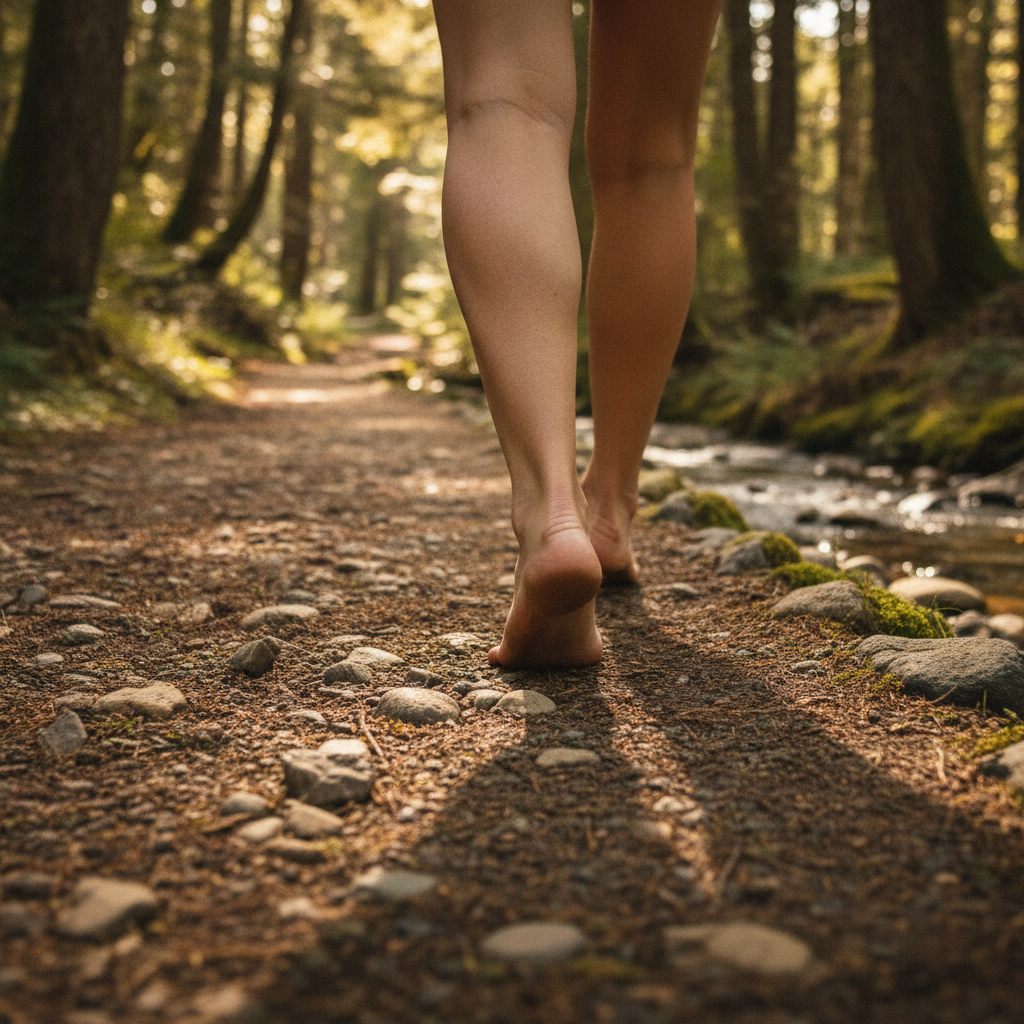
The human foot contains twenty-six bones, thirty-three joints, and over a hundred muscles, tendons, and ligaments — yet most people spend the majority of their waking hours inside shoes that do much of the structural work for them. Over time, this passive support can quietly reduce the foot's natural capacity to stabilize, absorb impact, and adapt to uneven terrain. Incorporating short, intentional barefoot walking sessions on natural surfaces is one of the more accessible ways to begin reversing that pattern, and the benefits extend well beyond the foot itself.
Why Natural Surfaces Engage Muscles Differently Than Pavement
The Sensory Feedback Loop
Walking barefoot on grass, packed earth, or sand creates a constant stream of sensory input that cushioned footwear blocks almost entirely. The nerve endings concentrated in the sole of the foot respond to texture, temperature, and surface variation, sending signals that activate small stabilizing muscles from the arch up through the ankle and lower leg. This feedback loop is known as proprioception — the body's awareness of its own position in space. When that system is regularly engaged, it becomes more responsive, which translates into better balance and more precise movement patterns during everyday activities.
How Footwear Habits Shape Muscle Tone Over Time
Modern athletic shoes, even high-quality ones, are engineered to limit pronation, cushion the heel strike, and provide arch support. These features serve real purposes during high-impact exercise, but they also reduce the demand placed on intrinsic foot muscles — the small muscles that run within the foot itself. When those muscles aren't regularly challenged, they tend to weaken gradually. This is part of why many adults experience reduced ankle stability, plantar discomfort, or a general sense of foot fatigue when walking on uneven ground. Barefoot sessions on natural surfaces give those muscles the stimulus they've been missing.
Starting With Grass and Sand Before Anything Else
The Safest Surfaces for Beginners
If you're new to barefoot walking, grass and damp sand are the most forgiving places to start. Grass provides a naturally cushioned surface with enough texture to engage proprioceptive nerve endings without excessive pressure on the heel or ball of the foot. Damp sand at a beach or riverbank adds gentle resistance that works the intrinsic foot muscles while allowing the toes to spread naturally. Both surfaces reduce the impact forces that concrete or asphalt would generate, making them ideal for the first several weeks of a new barefoot practice. Starting short — even ten minutes twice a week — is enough to produce meaningful adaptation over a month or two.
Building a Gradual Weekly Schedule
Progression matters more than duration when it comes to barefoot training. A reasonable structure for early weeks might involve two ten-minute sessions on soft ground, spaced at least two days apart to allow tissue adaptation. As the foot muscles strengthen and the skin on the sole becomes more resilient, you can extend sessions to fifteen or twenty minutes and begin incorporating slightly firmer natural surfaces like packed dirt trails. Apps like Nike Run Club and Strava can be useful for logging barefoot sessions alongside regular workouts, making it easier to track volume and spot patterns in how your lower limbs feel day to day.
The Lower Limb Benefits That Extend Beyond the Foot
Ankle Stability and the Kinetic Chain
The ankle joint is the first major point of force transfer between the foot and the rest of the body, and it relies heavily on the muscles surrounding the lower leg — particularly the peroneals and tibialis anterior — for lateral stability. Barefoot walking on uneven natural terrain asks these muscles to respond continuously to small surface changes, building reactive strength that gym-based exercises don't always replicate as effectively. Over several weeks of consistent practice, many people notice a reduced tendency to roll the ankle on uneven ground and a general improvement in confidence when walking on trails or cobblestones.
Knee Alignment and Hip Engagement
Foot position during walking has a direct influence on how load travels through the knee and into the hip. When the foot moves more naturally — without the rigid structure of a heavily supportive shoe — gait mechanics tend to shift in subtle but meaningful ways. The foot strike often becomes lighter and more midfoot-centered, which reduces the lever arm that causes excess rotational stress at the knee. Over time, this can ease pressure on the inner and outer knee structures. The glutes and hip stabilizers also tend to engage more actively when the foot is making nuanced adjustments to variable terrain, reinforcing the entire lower limb chain.
Timing Your Sessions for Maximum Benefit
Morning Sessions and Muscle Readiness
Early morning is a particularly well-suited time for barefoot walking on natural surfaces. Soft tissue is generally more pliable after a night of rest and horizontal sleep, and cortisol levels — which support tissue repair and anti-inflammatory function — are naturally elevated in the morning hours. A ten-to-fifteen minute barefoot walk on grass before the day's first shoe-wearing activity can serve as both a warm-up and a proprioceptive primer, setting the neuromuscular tone for how the foot and ankle respond during the rest of the day. The Oura Ring, which tracks readiness and recovery scores, can help you identify mornings when your body is best positioned to absorb new physical stimulus.
Seasonal Considerations for Outdoor Barefoot Practice
In warmer months, natural surfaces are accessible, the ground is soft, and extended sessions feel effortless to fit into a morning or afternoon routine. Late spring through early autumn is the ideal window for building a solid barefoot habit outdoors. As cooler weather arrives, indoor alternatives like textured balance mats or thick-pile natural rugs can help maintain the intrinsic muscle engagement you've built, even when outdoor sessions are less practical. The Correct Toes toe spacer system is one option used by practitioners interested in maintaining natural toe splay and foot mechanics year-round, indoors or out.
Listening to Your Feet as You Progress
Any new physical practice requires attention to how the body responds, and barefoot walking is no exception. Some mild tenderness in the arch or the ball of the foot is normal during the first few weeks — this is the intrinsic musculature adapting to new demands. Sharp or persistent pain in the heel, ankle, or along the plantar fascia is a signal to reduce session length or return to softer surfaces temporarily. Keeping sessions short and giving the foot adequate rest between efforts is far more effective than pushing through discomfort. Progress tends to be steady and cumulative when approached with patience rather than urgency.
Building barefoot sessions into a weekly routine doesn't require a major lifestyle overhaul — just a patch of grass, a stretch of sand, and a few minutes of intentional movement. The foot is a remarkably adaptive structure, and it responds well when given the right kind of challenge. Starting this season, even with the smallest commitment, puts you on a path toward stronger, more resilient lower limbs that serve you better in every kind of terrain.