There is a particular kind of arrival that airports were never designed to deliver. The pressurized cabin depressurizes, the wheels touch unfamiliar tarmac, and within an hour a traveler finds themselves blinking under fluorescent lighting, dragging luggage past duty-free perfume counters and currency exchange kiosks that look identical to every other airport on earth. The country has technically begun, but the feeling of it hasn't. Land border crossings offer something fundamentally different — a gradual, textured entry into a new place that shapes not just the first day but the entire psychological frame through which that country gets understood.
The Slow Accumulation of Place
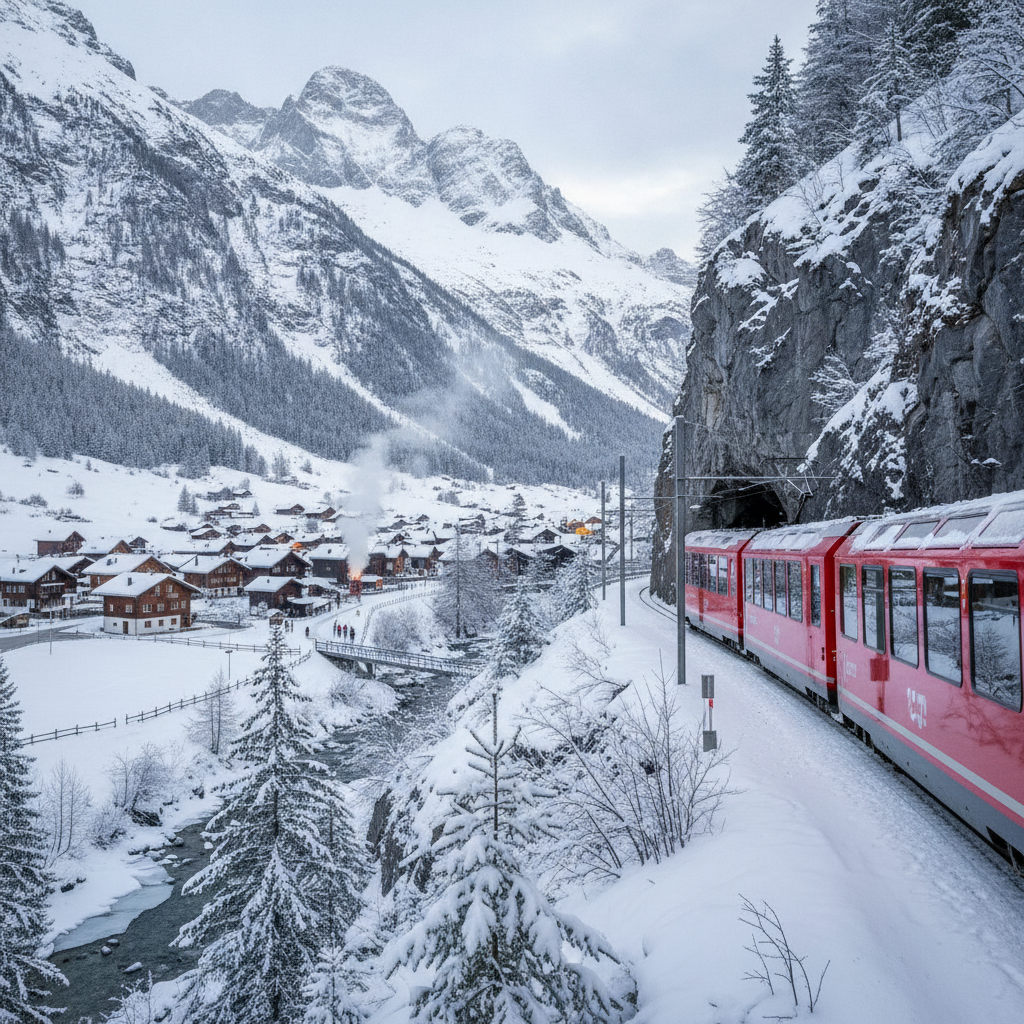
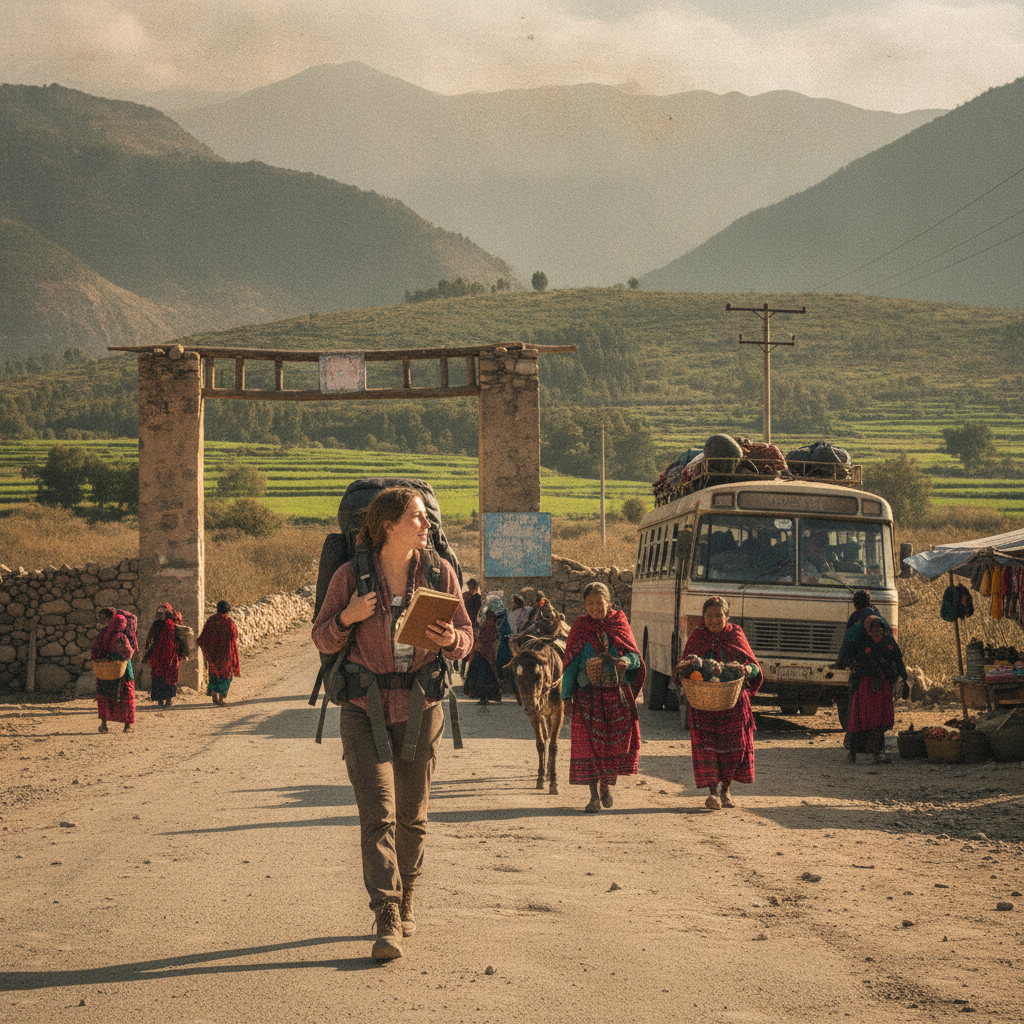
Crossing into a new country overland is rarely a single dramatic moment. It tends to unfold across several kilometers and several minutes, sometimes longer, as the landscape shifts in ways that are subtle at first and then impossible to ignore. The road changes character. Signage switches language mid-sentence on billboards that weren't designed for tourists. The architecture along the roadside — the shapes of rooftops, the colors of painted walls, the placement of market stalls — begins to tell a different story than the one from an hour ago. This kind of gradual immersion, known in travel circles as *passage* rather than arrival, allows the traveler's senses to calibrate slowly rather than being thrown directly into the interior of a capital city. The transition itself becomes part of the experience, rather than something to be rushed through before the experience begins.
What happens inside a person during this kind of crossing is less about logistics and more about attention. Without the distraction of baggage carousels, gate announcements, or the compressed social theater of airport queues, the mind tends to open outward. Small details register — the smell of diesel mixed with something floral, a vendor selling unfamiliar fruit at the roadside, a child watching the line of vehicles from a concrete step. These fragments wouldn't necessarily appear in a guidebook. They don't translate into Instagram captions easily. But they lodge somewhere deeper in memory, and they quietly set the tone for how the traveler will relate to everything that follows.
How the First Hours Unfold Differently
Airport arrivals tend to funnel travelers into a predictable sequence: immigration, baggage claim, a taxi or rideshare app, the hotel. The rhythm is efficient but insulating. By contrast, entering a country at a land crossing — say, between Thailand and Laos at the Friendship Bridge in Vientiane, or between Morocco and Spain via the Algeciras ferry port — typically means arriving in a smaller town, often one that caters more to locals than to international tourism infrastructure. That difference changes everything about the first few hours.
The traveler who arrives in a border town rather than a capital airport often has to problem-solve more immediately. Finding onward transport, exchanging currency with a local changer rather than a branded kiosk, locating a guesthouse without pre-loaded recommendations — these small acts of navigation create an early fluency with the place. The French term *débrouillardise*, meaning the ability to figure things out resourcefully, develops quickly under these conditions. And once established, that confidence tends to persist. The traveler who solved the minibus puzzle at the Poipet crossing into Cambodia on day one approaches the rest of the country with a different baseline of confidence than one who was shuttled from Phnom Penh airport to a hotel by a pre-arranged transfer.
Reading the Country Before the City
For travelers willing to embrace a slower entry, crossing by land often means spending time in places that exist outside the usual tourism circuit entirely. The towns straddling international borders are frequently overlooked precisely because so many people pass through them without stopping. But they tend to be genuinely revealing. Border economies are hybrid places, shaped by proximity, trade, and the constant movement of people in both directions. The markets at these crossings often stock goods from both countries. The food on offer tends to blend regional influences in ways that proper capitals have sometimes smoothed away in favor of more internationally legible cuisine.
Spending even a few hours in a border town before moving on gives the traveler a kind of baseline — a sense of what the country looks like at its edges before its center becomes the reference point. This matters more than it might initially seem, because first impressions in travel tend to anchor perception for days. The traveler who first sees Laos from the slow boat along the Mekong, after crossing from Thailand at Huay Xai, arrives in Luang Prabang carrying a mental image of the country that is layered, riverine, and rural. That image holds even in the city.
What You Carry Into the First Evening
You arrive by land, and something is different about how the first evening settles. The city or town where you stop for the night hasn't appeared out of nowhere — it has been approached, anticipated, glimpsed from a distance before it became real underfoot. The tiredness you carry is the honest kind, accumulated through motion and attention rather than the disorienting fatigue of time zones compressed into a metal tube. You find a place to eat not because an app surfaced it with four-star reviews, but because the smell from the doorway made the decision for you. The meal tastes the way first meals in new countries should taste — slightly uncertain, slightly thrilling, entirely present.
There is a term used among long-term travelers, particularly in parts of Southeast Asia and Latin America: *llegada lenta*, or slow arrival. It describes not just the physical pace of entry but a whole disposition toward a new place — one that prioritizes absorption over efficiency, texture over convenience. The traveler who chooses a bus over a plane, a border crossing over a terminal, doesn't lose time. They spend it differently, and the returns show up not in the itinerary but in the quality of what gets remembered. The fluorescent airport lights fade quickly from memory. The smell of the road, the sound of a language becoming suddenly audible, the dust on a border town street at dusk — those tend to stay.