Eating out three times a day adds up faster than most travelers expect, and in South America — where the local food scene is extraordinary but tourist-facing restaurants can quietly drain a budget — the gap between what you planned to spend and what you actually spend tends to widen quickly. The good news is that the region has a practical solution hiding in plain sight: apartment-style accommodations that come with real kitchens, neighborhood markets, and enough space to actually feel at home.
Staying in an aparthotel, vacation rental, or serviced apartment changes the whole equation. You're not just cutting costs — you're traveling differently, more slowly, more locally. Here's how to make it work.
Choose Properties With Full Kitchen Access
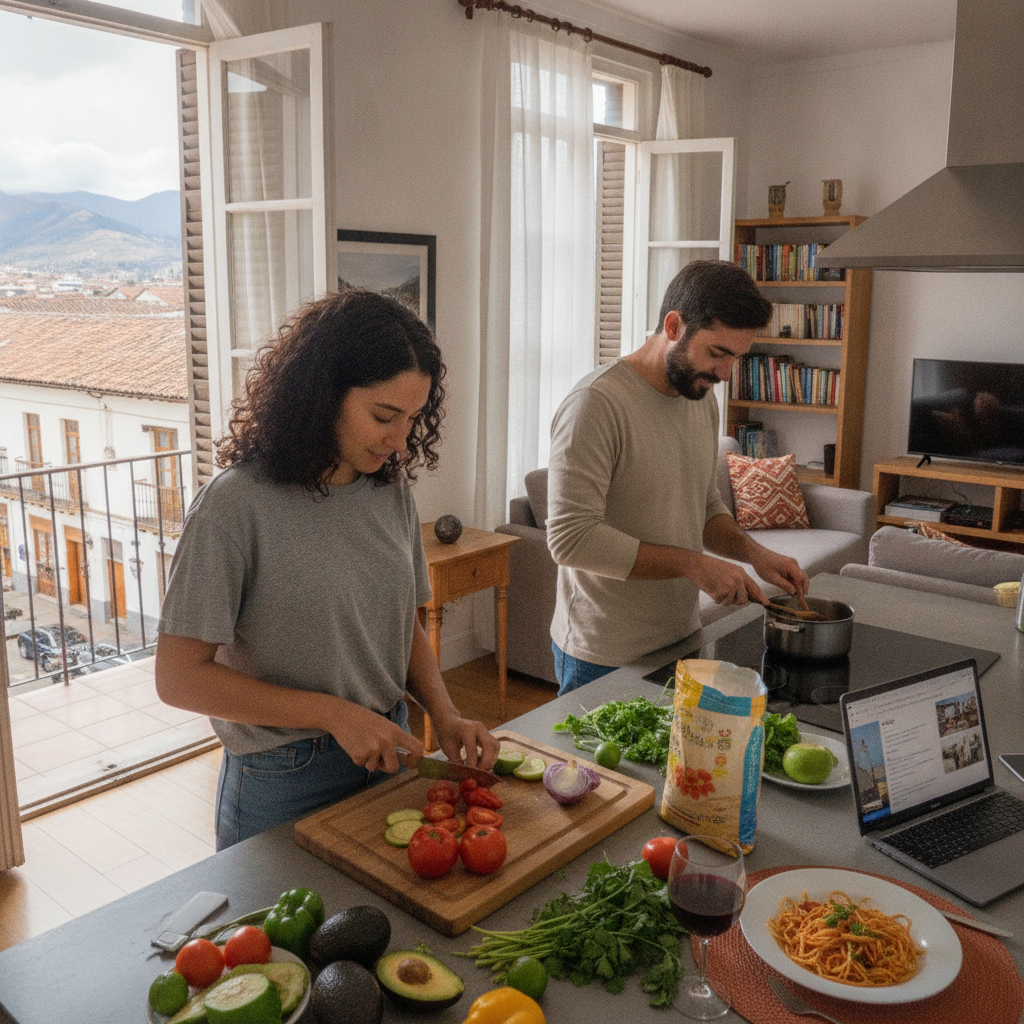
Not every property listed as an "apartment" gives you a real kitchen. Some offer little more than a kettle and a mini-fridge. Before booking, look specifically for listings that mention a stovetop, oven, and full-size refrigerator. Platforms like Airbnb and Booking.com both let you filter by kitchen amenities. In cities like Buenos Aires and Medellín, fully equipped aparthotels are common and often competitively priced against mid-range hotels, especially for stays of a week or longer. A functional kitchen is the foundation everything else builds on.
Stay in Residential Neighborhoods Near Local Markets
Where you stay matters as much as what you stay in. Tourist-heavy neighborhoods tend to have convenience stores with tourist-level prices and restaurants that cater to international expectations rather than local budgets. When you book in areas like Palermo Soho in Buenos Aires or Laureles in Medellín, you'll find yourself surrounded by carnicerías, produce stalls, and small grocery stores where locals actually shop. Prices in these markets are significantly lower than in the same city's tourist zones. Proximity to a good mercado — within walking distance — makes all the difference between a kitchen you use and one you ignore.
Shop Like a Local at Weekly Street Markets
Most South American cities run weekly or twice-weekly ferias, open-air markets where vendors sell seasonal produce, fresh bread, cheese, and prepared staples at prices that reflect what local residents actually earn. In Santiago, the Feria Libre system operates across different neighborhoods on rotating days. In Lima, smaller district markets offer exceptional produce at a fraction of what tourist-facing grocery chains charge. Making one or two market trips per week your routine keeps ingredients fresh, limits waste, and keeps you spending far less than daily restaurant meals would cost. It also puts you in contact with the neighborhood in a way no guided tour can replicate.
Cook Breakfast and Lunch, Eat Out for Dinner
One of the most effective habits for budget management while staying in an apartment is a simple meal rhythm: handle breakfast and lunch yourself, then allow yourself one proper sit-down meal in the evening. Breakfast is the easiest meal to manage — eggs, fruit, bread, and local yogurt are inexpensive staples almost everywhere in the region. Lunch can be just as simple, especially if you've picked up market items the day before. Saving your restaurant budget for dinner means you can actually enjoy the experience without guilt, and you'll still eat well across the full day.
Take Advantage of Apartment Kitchen Tools to Prep in Batches
Batch cooking is a traveler's underused advantage when staying in a well-equipped apartment. Spending an hour on a Sunday afternoon roasting vegetables, cooking a pot of rice or quinoa, and preparing a protein means you have building blocks for multiple meals over several days. South American staples like lentils, black beans, and sweet potato are cheap, filling, and widely available. This approach works especially well when you're based in one city for a week or more, and it's far more practical than it sounds — you don't need to cook elaborate meals, just have components ready to assemble quickly.
Use Apps Like Rappi to Compare Grocery Delivery Costs
On days when getting to the market isn't practical, grocery delivery apps can save both time and money — if you use them strategically. Rappi operates across major South American cities including Bogotá, São Paulo, and Santiago, and allows you to compare prices across multiple stores in real time. It's useful for stocking up on non-perishables, pantry staples, and household items without paying the markup of convenience stores near accommodation hubs. Delivery fees are generally modest for in-city orders, and some stores offer free delivery above a modest minimum. The key is using delivery as a supplement to market shopping, not a replacement.
Negotiate Weekly or Monthly Rates to Unlock Better Value
One pricing reality most travelers don't act on is that nightly rates are almost always negotiable for longer stays. Whether you're booking through a platform or dealing directly with a property manager, asking about weekly or monthly pricing can reduce your accommodation cost enough to free up meaningful budget for food, activities, or day trips. In cities like Cartagena and Quito, direct-contact rentals listed on local Facebook groups or WhatsApp networks often undercut major platforms significantly. Combining a lower nightly rate with your own food preparation can cut your overall daily spend to a fraction of what standard hotel-and-restaurant travel costs.
Treat the Apartment as a Base, Not Just a Place to Sleep
The mindset shift that makes this whole approach work is thinking of your apartment as a genuine home base rather than a place to drop your luggage. When you have a kitchen, a table, and a living space, you start to slow down in the best possible way. You have coffee in the morning without rushing to find a café. You eat lunch on your own schedule. You come back from a full day of exploring and cook something simple rather than hunting for a restaurant while hungry and tired. This rhythm reduces impulsive spending, improves how you feel across the trip, and makes the experience feel more grounded. The comfort doesn't diminish — it shifts into something more personal.
South America rewards travelers who are willing to step slightly off the beaten path of convenience, and apartment-style accommodations are one of the clearest examples of that principle in action. Start by booking just one longer stay somewhere that excites you — Buenos Aires, Medellín, Lima — with a proper kitchen and a market nearby. You might find that a different way of traveling feels more like living, and that the savings are almost beside the point.