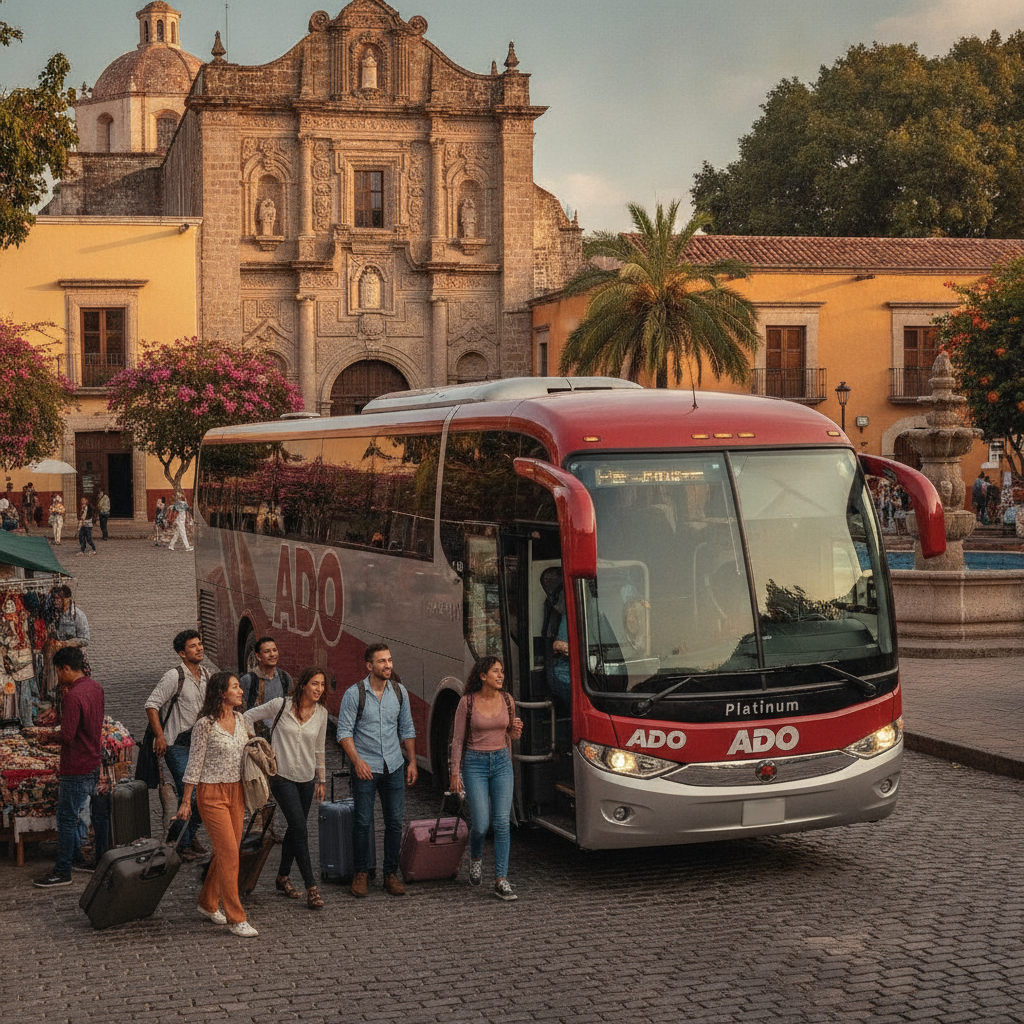
Mexico's most rewarding destinations aren't always the ones with airports. While most international visitors land in Cancún, Mexico City, or Puerto Vallarta and stay tethered to resort zones or obvious tourist circuits, a well-run network of long-distance coaches quietly connects dozens of extraordinary colonial towns that rarely appear on mainstream itineraries. That network is ADO — Autobuses de Oriente — and understanding how to use it changes the entire texture of a Mexican journey.
Why Does ADO Reach Places That Flights Simply Can't?
ADO operates one of Latin America's most reliable intercity bus systems, covering routes across southern and southeastern Mexico with a frequency and comfort level that surprises many first-time users. The network links major hubs like Oaxaca, Puebla, Veracruz, and Mérida with smaller colonial gems like Tlaxcala, Campeche, Palenque, and San Cristóbal de las Casas — towns that either lack regional airports or charge prohibitive connection fares to reach by air. For travelers willing to spend a few extra hours in transit, the reward is access to a Mexico that feels genuinely unhurried and unprocessed by mass tourism.
The buses themselves run in tiered classes. ADO GL and Platino services on major routes offer wide reclining seats, onboard Wi-Fi, and air conditioning, making a five-hour overnight leg far more comfortable than budget airlines often manage on short domestic hops. Booking in advance through the ADO app or the TicketBus platform gives you reserved seating, fare comparisons across service tiers, and digital tickets that work offline — useful when connectivity is spotty in smaller towns.
When Is the Best Time to Travel These Routes?
The dry season running roughly from November through April delivers the most pleasant conditions across southern Mexico, especially in highland colonial towns like San Cristóbal and Oaxaca City where rainy-season afternoons can turn unpredictable. During this window, roads are cleaner, festival calendars fill up, and the light across colonial plazas and market streets takes on the warm, golden quality that makes these towns so photogenic. Traveling on weekday mornings — particularly Tuesday through Thursday — tends to mean quieter buses, faster boarding, and better availability of premium class seats.
Semana Santa in spring and the weeks around Day of the Dead in late October and early November bring significant domestic travel surges. Booking through ADO's website or the Busbud platform at least a week ahead during these windows protects your preferred departure time and ensures you land in smaller towns before accommodation options tighten.
How Do You Actually Build a Route Around the ADO Network?
The most practical approach is to anchor your trip around two or three hub cities and use ADO to extend outward in both directions. Oaxaca City serves as an excellent base for reaching Monte Albán by local transport while catching ADO coaches toward Puebla or the coast. Mérida works similarly as a staging point for Campeche to the southwest — a colonial walled city of pastel facades and uncrowded plazas that sees a fraction of the visitors Cancún absorbs on any given week.
For the southern highlands, a Puebla-to-San Cristóbal segment through Oaxaca creates a multi-day overland arc that passes through distinct landscapes, languages, and culinary traditions. Each overnight stop rewards slow exploration: Puebla's tilework and mole negro, Oaxaca's mezcal distilleries and weavers, San Cristóbal's indigenous markets and cloud forest trails. None of these places feel like destinations designed for transit — they feel like places people actually live, which is precisely the point.
What Should You Pack and Plan for the Journey Itself?
Long-distance bus travel in Mexico rewards a small amount of preparation. A lightweight travel pillow, noise-reducing earbuds, and a power bank matter more than they might seem on a six-hour route. Stations in larger cities like TAPO in Mexico City or the ADO terminal in Mérida have luggage storage, food vendors, and ATMs, but smaller town terminals may offer fewer services, so arriving with local pesos and snacks already on hand saves friction.
For booking, the ADO app handles the full purchase process in English and Spanish, generates QR codes for boarding, and shows real-time availability. The Busbud platform is useful for comparing ADO against regional carriers on less-traveled corridors. TicketBus rounds out the toolkit for routes where ADO doesn't operate directly, filling in the regional gaps that occasionally exist between colonial towns off the main arteries.
What Makes the Colonial Towns Themselves Worth the Journey?
Campeche is perhaps the strongest argument for overland travel in Mexico. A UNESCO World Heritage city ringed by 17th-century fortifications and colored in pastels that glow at dusk, it draws a small fraction of the tourism that Tulum or Cancún sees despite being genuinely extraordinary. The streets are walkable, the markets are local, and the restaurants serve Yucatecan cuisine without tourist-menu pricing. Reaching it overland from Mérida — roughly two and a half hours by ADO — deposits you in the city's central station within walking distance of the historic core.
Tlaxcala, one of Mexico's smallest and least-visited states, is accessible from Puebla in under two hours and contains a colonial centro so intact and quiet that it can feel like stumbling into the 18th century. Palenque, while known for its ruins, reveals more of itself to travelers who arrive by overnight coach from Oaxaca or San Cristóbal — spending extra time in the town itself and the surrounding jungle before the day-tripping crowds arrive.
Mexico's colonial interior is extensive, layered, and deeply rewarding precisely because most international visitors skip it in favor of faster routes to beach resorts or capital-city highlights. The ADO network makes that interior genuinely accessible — not as a rugged adventure requiring local knowledge, but as a comfortable, bookable, well-structured alternative to flying. Travelers who take the time to plan a route through this system tend to return with a far richer picture of the country than a week of resort stays or capital-city hotels could ever offer. That, more than any single destination, is what a good bus journey through Mexico actually delivers.